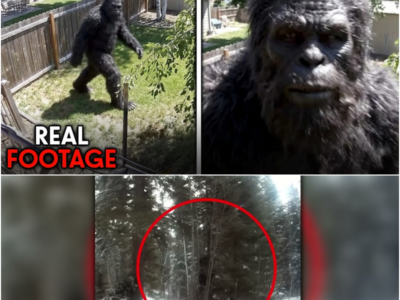
The Most HAUNTING Bigfoot Encounters Caught on Camera
The fog didn’t just roll into the Umatilla National Forest; it breathed. It was a thick, damp presence that tasted of pine needles, wet loam, and the faint, unsettling tang of ancient decay. For Elias Thorne, a man who had spent forty years tracking everything from elusive elk to shadow-dwelling cougars in the Blue Mountains of Oregon, the woods were usually a sanctuary—a place where the chaotic noise of humanity was replaced by the predictable rhythms of nature. But tonight, the sanctuary felt like a meticulously laid trap.
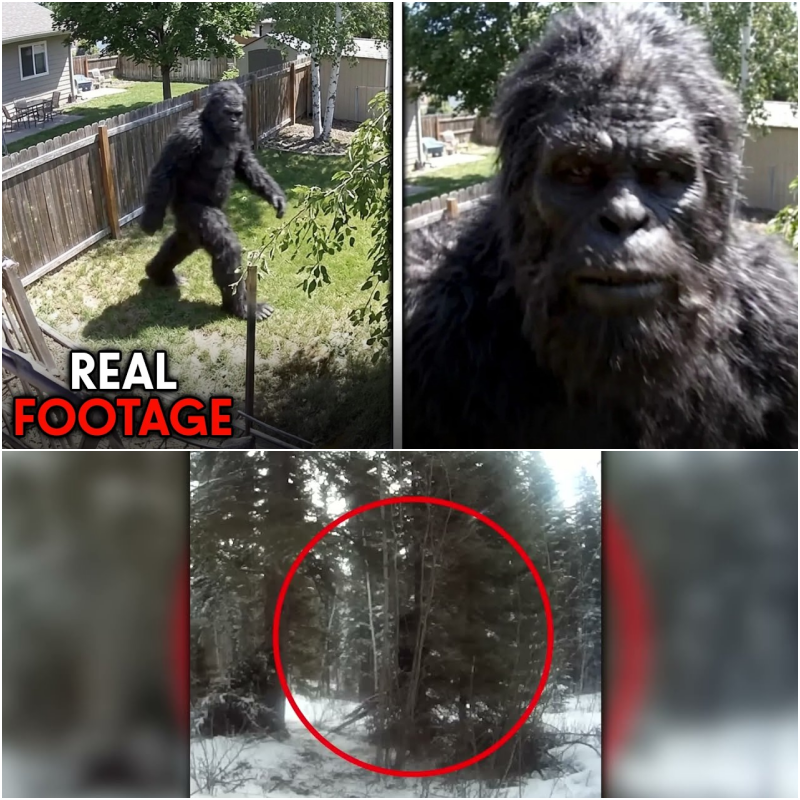
Elias adjusted the leather strap of his vintage Winchester. He wasn’t a hunter of monsters, nor was he a man prone to flights of fancy. He was a man of science, or at least he used to be, before the cold reality of university budget cuts sent him retreating back to the cedar-plank cabin his grandfather had built during the Great Depression. He was a biologist by trade, a tracker by heritage, and a skeptic by necessity. He knew the statistics of the forest better than anyone. In his mind, he had cataloged them into a neat hierarchy: 90% of “cryptid sightings” were black bears caught on their hind legs in bad lighting; 9% were hoaxes fueled by oversized flannel, cheap synthetic fur, and the desperate human need for attention; and then there was the 1%.
The 1% was the silence that followed a question no one wanted to answer. It was the anomalous footprint that defied skeletal physics and the vanishing of livestock that left no trail of blood. Elias was currently deep in the backcountry chasing that elusive 1%.
The Warning in the Wood
The obsession had taken hold three days prior. High up near a jagged ridge that locals referred to as King’s Castle, Elias had stumbled upon a scene that defied his forty years of expertise. He found a Douglas fir, a healthy specimen nearly a foot thick, snapped like a brittle toothpick exactly six feet off the ground. He examined the break with a forensic eye. It wasn’t the work of lightning—there were no scorch marks, no charred sap. It wasn’t a windstorm; the surrounding trees stood tall and untouched. The wood at the break was shredded and twisted with a raw, kinetic violence that suggested a massive amount of torque. It looked as if something had simply reached out and wrung the tree’s neck.
As he trekked deeper into the drainage today, the atmosphere of the forest shifted. It grew unnaturally, oppressively quiet. The morning birds, usually a cacophony of nuthatches and jays, had stopped their chatter. Even the wind, which usually whistled through the high boughs of the hemlocks, seemed to hold its breath. Then, the scent hit him.
It wasn’t the gamey musk of a grizzly or the sweet rot of a cougar’s kill. It was a heavy, metallic odor—like wet copper mixed with the spray of a skunk and the acrid tang of old woodsmoke. It was a smell that triggered something primal in the back of Elias’s brain, an ancient alarm bell that told him he was no longer the apex predator in this canyon.
“I know you’re there,” Elias whispered. The sound of his own voice felt thin and fragile against the vastness of the timber.
A sound echoed from the dark ravine below. It wasn’t a growl or a huff. It was a rhythmic, wooden percussion—a sharp thwack that vibrated through the air. Then another. Thwack-thwack. It was the sound of wood knocking against wood with incredible force. In the world of primatology, it was a known form of communication, a way to mark boundaries or issue a warning to intruders. Elias reached into his pack and pulled out his thermal imaging camera, a high-end piece of gear similar to those used by the professional investigators at Grizzly Ridge.
He scanned the treeline, his heart hammering against his ribs. The screen was a monochrome wash of cool blues and deep greens until he panned toward a dense cluster of hemlocks near the water’s edge. There, the screen ignited. Two white-hot pillars of heat stood perfectly motionless. They were humanoid in shape but gargantuan in scale. The heat signature revealed shoulders so broad they seemed to merge into the thick column of the neck, and the head sat low, tucked into the frame. Based on the surrounding foliage, the figure was standing at least eight feet tall.
Elias felt the fine hairs on his arms rise in a wave of electricity. He remembered the controversial footage from 2013 near San Benito—how a dark figure had towered over the brush before vanishing into the shadows of the Rio Grande. He had called it a hoax back then. But this wasn’t a grainy, low-resolution video clip on a computer screen. This was a direct thermal reading. This was mass. This was a living, breathing biological entity.
The Encounter at the Ridge
Driven by a mixture of scientific fervor and a tracker’s pride, Elias began to move. He moved with the practiced silence of a predator, stepping on moss and stone to avoid the crunch of dry needles, circling downwind so his scent wouldn’t betray him. He climbed a steep, rocky outcropping that overlooked a small clearing where the drainage widened.
Below him, the “1%” was no longer a statistic or a ghost story. It was a physical reality.
There, crouched near a massive fallen cedar, was a creature covered in thick, matted hair. In the fading light, the fur appeared dark, almost black, but with a faint russet or yellow tint where the sun hit the highlights. It was digging into the heart of a rotted stump with hands that looked terrifyingly human—long, thick fingers, dark nails, and a grip powerful enough to peel back layers of seasoned bark as if they were wet paper. It was foraging, perhaps for grubs or small rodents, moved by a hunger that required a massive caloric intake.
Elias reached for his digital SLR camera, his hands shaking with a tremor he couldn’t suppress. Just as he brought the viewfinder to his eye and framed the creature in the center of the lens, the entity froze. It didn’t turn its head with the sudden jerk of a startled deer; it tilted it slowly, almost inquisitively, as if it were listening to the very rhythm of the blood pumping through Elias’s veins.
Suddenly, the creature rose. It didn’t stand up with the awkwardness of a man rising from a chair; it unfolded like a collapsible ladder. It kept going up and up, expanding in height until it seemed to blot out the pale, sickly light of the rising moon. Elias estimated its weight at easily 800 pounds—a solid wall of muscle, bone, and mystery.
Elias didn’t take the photo. He found, to his own surprise, that he couldn’t. The creature turned its full attention toward the outcropping, and for a fleeting, crystalline second, Elias saw its face. It wasn’t the face of an ape, nor was it the face of a modern man. It was something from the deep dawn of time—a face with deep-set, amber eyes that glowed with a reflected light, a heavy, prominent brow ridge, and an expression of such profound, ancient intelligence that Elias felt like a trespasser in his own century. It looked less like an animal and more like a lonely king of a forgotten realm.
The creature let out a sound—a low, sub-sonic vibration that Elias didn’t just hear; he felt it in the enamel of his teeth and the marrow of his bones. It wasn’t a roar of cinematic anger; it was a heavy, weary sigh of endurance, the sound of a creature that had spent centuries hiding from the encroaching noise of the world. Then, with a speed that defied its massive bulk, it turned and sprinted into the dense treeline. It moved with a fluid, heavy stride—the “Patterson-Gimlin” walk that had been debated for decades—where the knees remained slightly bent and the arms swung in a long, powerful arc. It didn’t crash through the brush like a panicked elk; it seemed to merge with the forest, becoming a shadow among shadows.
The Long Descent
Elias sat on the cold, damp stone of the outcropping for nearly an hour, his Winchester lying forgotten in the dirt at his side. The silence that returned to the forest was different now—it was heavy, pregnant with the knowledge of what lived within it. He thought about the hikers in the remote mountains of British Columbia, the truckers on the lonely industrial roads of Alberta, and the families in the snowy woods of Minnesota who had reported seeing these towering figures behind their garages or along the roadside.
For years, he had categorized them as victims of pareidolia or active imaginations. He realized now that they weren’t crazy, and they weren’t lying. They were simply the lucky—or perhaps unlucky—few who had seen the curtain of the natural world pulled back just far enough to reveal the actor standing in the wings.
As the temperature dropped and the fog thickened into a grey shroud, Elias began the long, treacherous hike back to his truck. The forest began to reclaim its usual voice. The crickets started their rhythmic chirping again. A great horned owl hooted from a distant snag. But as Elias reached the old logging road where his Ford was parked, he stopped dead in his tracks.
There, pressed into a patch of soft, silty mud directly beside his driver’s side tire, was a footprint. It was seventeen inches long and nearly seven inches wide at the ball. He could see the distinct “mid-tarsal break,” a flexibility in the middle of the foot that primatologists insisted was a hallmark of a non-human biped. No human boot could have made it, and no bear paw possessed that anatomy.
Beside the print lay a small, curious object: a crown made of twisted willow branches, neatly arranged and placed with obvious purpose on the hood of his truck. It was a gift, a warning, or perhaps a simple acknowledgment of a shared moment between two trackers.
Elias climbed into his truck and turned the key, the engine’s roar feeling like an insult to the quiet majesty of the mountains. He looked down at his camera, sitting on the passenger seat. The memory card was empty. He hadn’t pressed the shutter. The “evidence” was non-existent, and he knew that if he told the board at the university, they would simply look at him with the same pitying smile they gave to the “Bigfoot hunters” on cable television.
He realized then that some things in this world aren’t meant to be caught on a dashcam, pinned under a microscope, or dissected in a laboratory. Some mysteries exist to keep us humble, to remind us that despite our satellites, our high-speed internet, and our sprawling cities, there are still corners of the earth where the old rules apply.
He drove away, his headlights cutting twin paths through the Oregon mist. Behind him, high on the jagged ridge of King’s Castle, a single, eerie howl echoed through the canyon. It was a long, rising note that transitioned into a deep, guttural bark—a sound that was neither man nor beast, but the very voice of the wilderness itself. It was a sound that reminded the world that while we may think we own the land, there are those who truly belong to it, and they prefer to stay in the dark.
The Geography of the Unexplained
The experience of Elias Thorne is not a solitary one. Across the North American continent, the legend of the large, hairy biped manifests in various forms, tailored to the terrain it inhabits. To understand why these stories persist, one must look at the sheer scale of the wilderness that remains untouched.
In the Pacific Northwest, the “Sasquatch” is a cultural icon, rooted in the oral traditions of Indigenous peoples long before European settlers arrived. Here, the dense, vertical forests of Washington and Oregon provide the perfect canopy for a creature of immense size to remain undetected. The reports from this region often emphasize the creature’s massive height and its ability to traverse steep, mountainous terrain with ease.
Further north, in the snowy reaches of Western Canada and Alaska, the sightings take on a more rugged tone. Truckers on the North Klondike Highway and industrial workers in Alberta often report “Yeti-like” figures standing near the treeline, blending into the white and grey landscape. These encounters often involve the discovery of massive tracks in deep snow—tracks that start in the middle of a clearing and vanish just as abruptly.
In the humid, moss-hung swamps of the American South, the creature is known as the “Skunk Ape.” These reports, centered largely in Florida and Georgia, describe a slightly smaller but more aggressive entity characterized by a pungent, overwhelming odor. Here, the creature is often seen wading through waist-deep water or crouched in the thick palmetto scrub, a master of a landscape that is nearly impassable for humans.
The Appalachian Mountains offer a different flavor of the phenomenon. In the ancient, rolling hills of Ohio, Kentucky, and West Virginia, the “Bigfoot” is often associated with strange vocalizations and “wood-knocking.” It is in these regions that investigators frequently find the “log structures”—complex arrangements of fallen timber that appear to be huts, markers, or hunting blinds.
The Science of the Shadow
Skeptics rightfully point to the “missing link” in the Bigfoot debate: the lack of a biological specimen. There is no skeleton in a museum, no roadkill on a highway, and no DNA sequence that doesn’t return as “unidentified primate” or “contaminated human.”
However, proponents of the “Relict Hominid” theory argue that we are looking for the wrong kind of evidence. They suggest that these creatures may be the last surviving remnants of Gigantopithecus or a rogue branch of the Neanderthal lineage that retreated into the deep woods to avoid competition with Homo sapiens. Their low population density, high intelligence, and nocturnal habits would make them nearly impossible to track using traditional methods.
The “nesting sites” found in places like the Kyhoga Valley or the remote ridges of Alberta provide the most compelling physical evidence. These aren’t the random piles of brush created by a sleeping bear. They are woven structures, sometimes featuring “archways” made by bending saplings and securing them with heavy stones. These sites suggest a creature that uses tools, understands structural integrity, and possesses a culture—however primitive—of its own.
Ultimately, the phenomenon of Bigfoot is a mirror held up to our own relationship with nature. In an age where every square inch of the planet is mapped by Google Earth, the idea that something “wild” still exists—something that refuses to be tamed, tagged, or tracked—is both terrifying and deeply comforting.
As the sun sets over the Umatilla National Forest, and the shadows stretch out to reclaim the hiking trails and logging roads, the question remains for the next person who ventures too far into the green: Was that snap of a branch just the wind, or was it the sound of a neighbor we’ve forgotten how to speak to? For Elias Thorne, the answer is written in the silence of the 1%. He no longer looks at the forest as a collection of resources or a subject of study. He looks at it as a veil, and he knows exactly what is standing on the other side, watching back.
News
He Signed an NDA About Bigfoot for 10 Years — Here’s What They Don’t Want You to Know
The motel room in Grangeville smelled of stale coffee and the ozone scent of an approaching storm. Judith Emmerick sat by the window, her silhouette sharp against the fading Idaho…
DON’T GO THERE — Bigfoot Himself Begged Him Not to Hunt the Monster Devouring His Kind in Missouri
The mist in the Mark Twain National Forest doesn’t just sit; it breathes. It clings to the limestone ridges and the dense canopy of oak and hickory like a living…
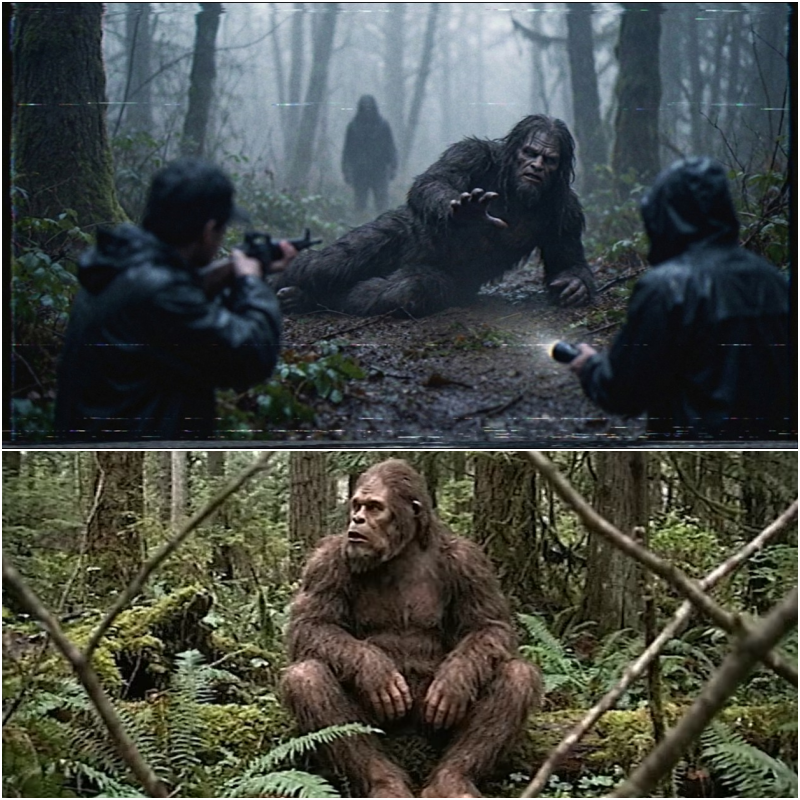
Park Rangers Followed an Injured Bigfoot for 3 Days… Then They Found Something They Were Never Supposed to See
The Obsidian Canopy: The Account of Sector 4 The survival manuals tell you that the forest is a neutral entity. They say the trees do not hate you, the rain…
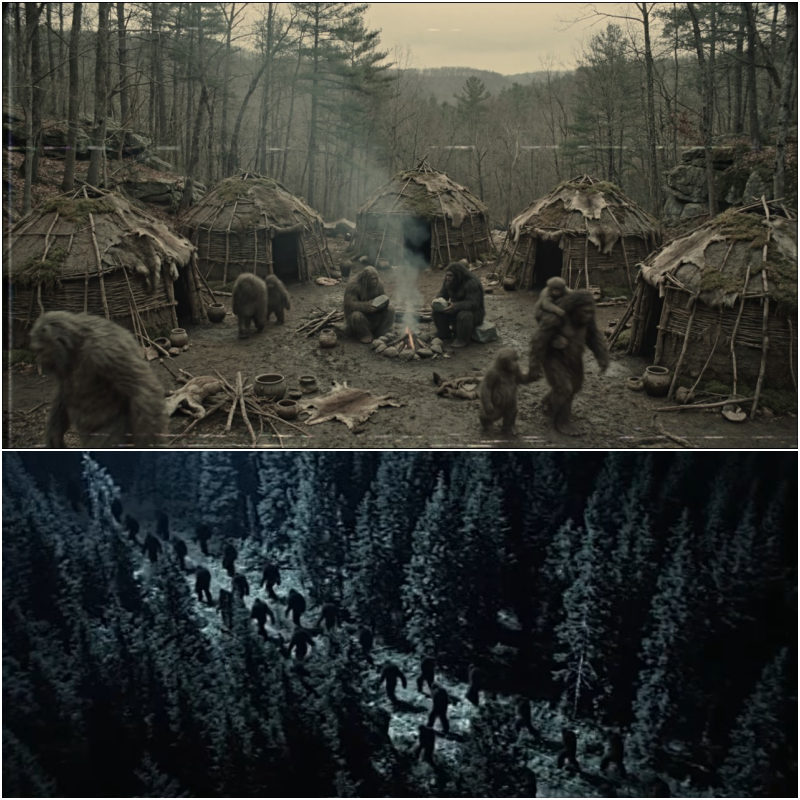
The U.S. Forest Service Has a Secret Bigfoot File… What It Reveals Is Worse Than Anyone Imagined
The Resonance of the Pines The manila envelope arrived on a Tuesday, looking as unremarkable as a utility bill. No return address, postmarked from a sorting facility in Denver, and…
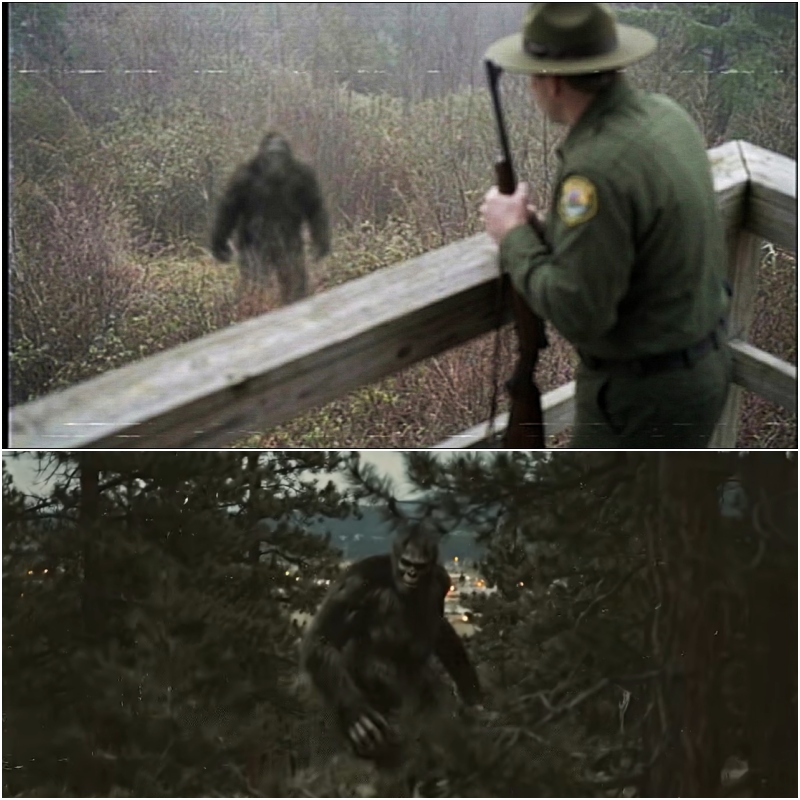
He Spent 20 Years Searching for Bigfoot… Then a Park Ranger Finally Revealed the Truth
The Ghost Map of the Olympics The progress bar was a thin, glowing sliver of blue light, crawling across the monitor like a glacier. 99.8%. Twenty years of my life,…
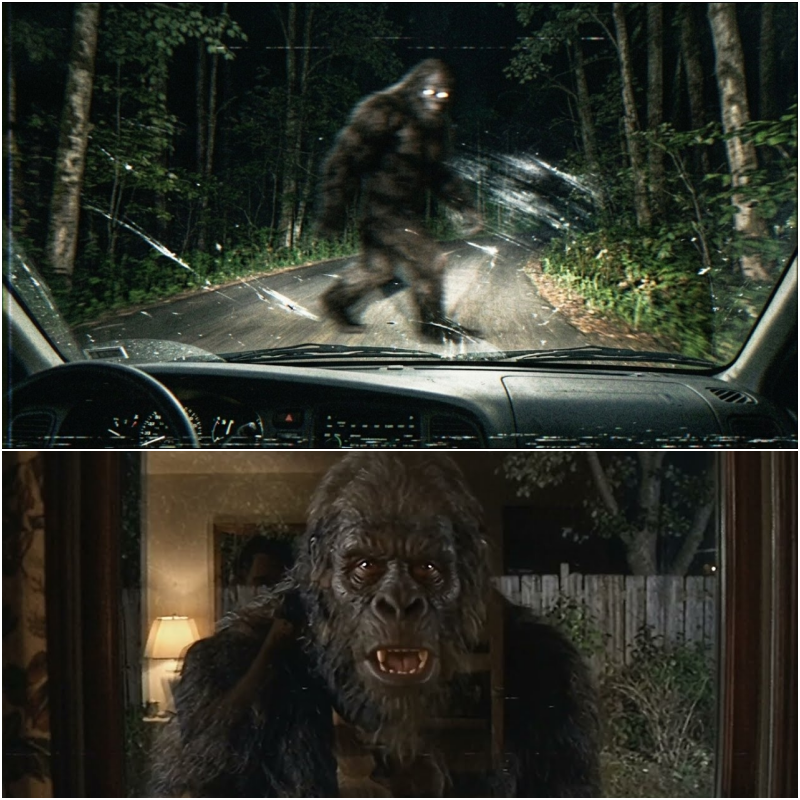
A Researcher Proved Bigfoot Exists… Then He Vanished Without a Trace
The canopy of the Olympic Peninsula doesn’t just shade the ground; it claims it. There is a specific stretch of old-growth forest out there, west of the Elwha River, where…
End of content
No more pages to load