“Iran Has No Idea What Trump is Going To Do…”
Iran, Trump, and the Debate Over “Endgame” Strategy in a Fractured Middle East
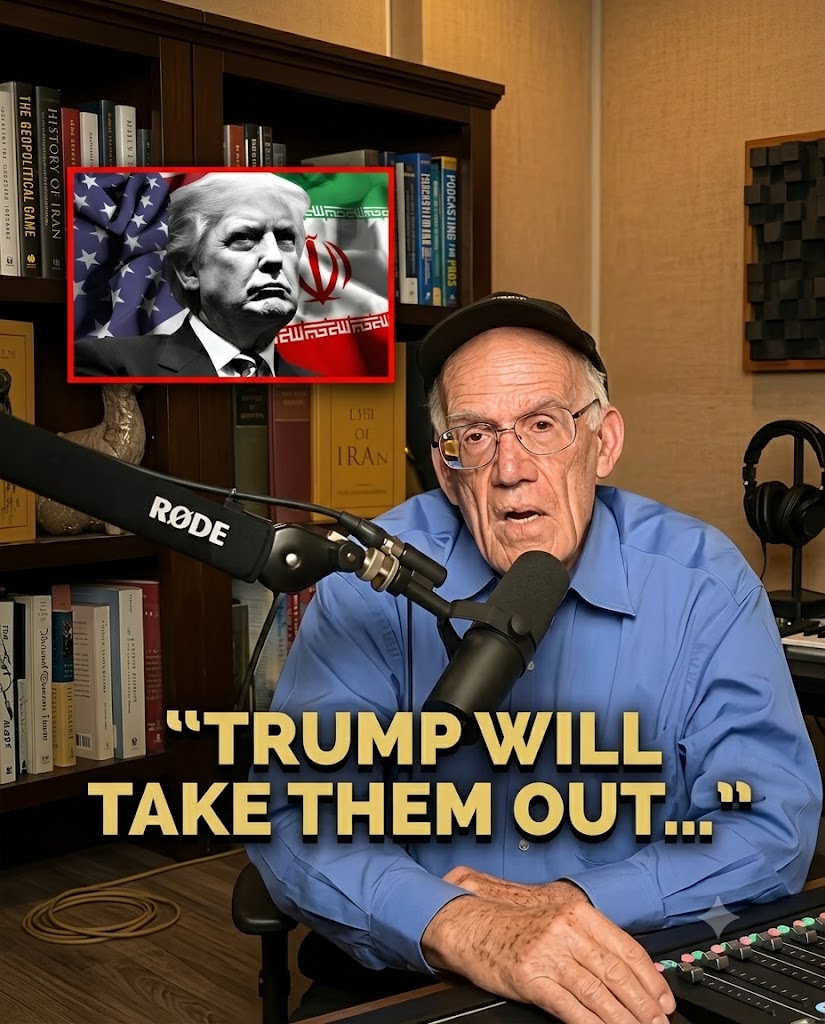
As tensions continue to simmer across the Middle East, renewed debate has emerged in Washington and among political commentators over whether the United States is pursuing a sustainable strategy toward Iran—or whether the current approach risks prolonging instability in one of the world’s most volatile regions.
The discussion has been intensified by recent military developments, diplomatic negotiations, and sharply divided interpretations of how the conflict with Iran should ultimately be resolved. At the center of the debate is a fundamental question that has shaped U.S. foreign policy for decades: can adversaries like Iran be managed through negotiation and deterrence, or must they ultimately face decisive military defeat to ensure long-term stability?
Conservative commentator Ben Shapiro has argued forcefully that partial measures and negotiated frameworks fall short of what he describes as the necessary strategic objective: preventing Iran from ever acquiring nuclear weapons capability and dismantling its regional influence through decisive pressure rather than incremental agreements.
His comments reflect a broader ideological divide within American foreign policy circles, particularly among those who believe the United States must adopt a more maximalist approach to adversarial regimes.
Iran’s strategic leverage and the Strait of Hormuz
At the center of the geopolitical confrontation is the Strait of Hormuz, one of the most strategically important maritime chokepoints in the world. Roughly 20 percent of global oil exports pass through the narrow waterway, making it a critical artery for global energy markets.
For decades, Iranian military doctrine has treated the Strait of Hormuz as a strategic leverage point. The Islamic Revolutionary Guard Corps (IRGC) has invested heavily in coastal missile systems, naval mines, fast-attack boats, and drone capabilities designed to threaten or disrupt maritime traffic if necessary.
The underlying logic is straightforward: by making the strait dangerous or costly to operate in, Iran can exert pressure on global energy prices and, by extension, on Western economies.
Critics of recent diplomatic efforts argue that any agreement which allows Iran to retain even partial leverage over this chokepoint risks undermining broader strategic goals.
Trump’s approach and the concept of deterrence by escalation
Former President Donald Trump’s approach to Iran, as described by supporters, has centered on a strategy of overwhelming deterrence combined with rapid escalation when red lines are crossed.
In recent commentary, Shapiro and others have described Trump’s posture as one that leaves adversaries uncertain but cautious, arguing that credible threats of military action have historically forced adversaries into concessions.
According to this perspective, Iran’s leadership is highly sensitive to cost calculations, particularly regarding its economic dependence on oil exports and its vulnerability to infrastructure strikes.
Supporters of this view argue that the combination of sanctions, military pressure, and targeted strikes has significantly degraded Iran’s ability to project power across the region.
They further contend that Iran miscalculated by assuming that its ability to threaten the Strait of Hormuz would compel the United States to avoid confrontation.
Instead, they argue, that assumption has been inverted—becoming a vulnerability rather than an advantage.
Economic pressure and the cost of escalation
One of the central arguments in favor of a hardline approach is the economic imbalance between prolonged confrontation and rapid de-escalation.
Iran’s economy is heavily dependent on oil exports, and prolonged disruption to maritime trade routes has historically resulted in significant revenue losses. At the same time, global markets react sharply to instability in the Gulf, creating pressure on all sides to stabilize the situation quickly.
Supporters of Trump’s strategy argue that sustained economic pressure on Iran—combined with targeted military deterrence—creates an unsustainable environment for Tehran if it attempts prolonged escalation.
In this framework, Iran faces a difficult choice: maintain aggressive posture and suffer economic strain, or de-escalate and accept negotiated constraints.
Critics, however, warn that such pressure-based strategies risk unintended escalation and may reinforce hardline elements within Iran’s political and military structure.
The debate over negotiation versus decisive outcome
A central theme in the current debate is whether modern conflicts can be resolved through negotiated frameworks or whether certain adversaries require more definitive outcomes.
Shapiro and like-minded analysts argue that historical precedent supports the latter interpretation. They cite examples such as World War II, where unconditional surrender—not negotiated settlement—ultimately ended hostilities, as well as Cold War deterrence dynamics built on overwhelming military superiority.
From this perspective, negotiated agreements with adversarial regimes are seen as inherently unstable, particularly when enforcement mechanisms are limited or reversible.
In contrast, proponents of diplomatic engagement argue that modern geopolitical conflicts differ fundamentally from total wars of the past. They emphasize that nuclear proliferation risks, global economic interdependence, and regional proxy networks make negotiated restraint not only preferable but necessary.
Iran’s regional network and proxy dynamics
Another key factor shaping the debate is Iran’s extensive network of regional allies and proxy forces, including Hezbollah in Lebanon, Hamas in Gaza, and the Houthi movement in Yemen.
These groups have historically served as instruments of Iranian influence, allowing Tehran to project power beyond its borders while maintaining plausible deniability.
Critics argue that any agreement that does not fully address Iran’s support for these groups leaves significant sources of instability intact.
They point to continued rocket attacks, drone strikes, and regional conflicts as evidence that Iran’s influence remains operational despite military pressure.
Supporters of a more aggressive posture argue that only sustained military and economic pressure can degrade these networks sufficiently to prevent future escalation.
Nuclear concerns and enforcement skepticism
At the core of U.S.-Iran tensions remains the issue of nuclear development. Iran’s enrichment activities have long been a focal point of international concern, with Western governments seeking to limit or eliminate the country’s ability to produce weapons-grade material.
Critics of diplomatic agreements argue that past frameworks, including the Joint Comprehensive Plan of Action (JCPOA), failed to adequately prevent enrichment pathways or ensure long-term compliance.
They highlight provisions that allowed delayed inspections or temporary concealment of sensitive activity as evidence of structural weaknesses.
Shapiro and others argue that any viable agreement must eliminate enrichment entirely, rather than attempting to manage it through inspection regimes.
Opponents of this position argue that such maximalist demands are unlikely to be enforceable without significant military escalation, which could trigger broader regional conflict.
Israel, Hezbollah, and regional fragmentation
Adding further complexity to the situation is Israel’s ongoing conflict with Hezbollah along its northern border with Lebanon.
Israeli officials have repeatedly stated that Hezbollah’s continued rocket fire and cross-border attacks necessitate sustained military operations. Iranian officials, in turn, have framed Israeli actions as violations of broader regional understandings.
This divergence highlights a key challenge in any regional framework: multiple interconnected conflicts are occurring simultaneously, each with its own escalation dynamics and political constraints.
Some analysts argue that attempting to resolve these issues through a single overarching agreement may be unrealistic given the fragmentation of authority and competing objectives among regional actors.
Strategic ambiguity and long-term uncertainty
One of the defining features of the current moment is strategic ambiguity. While public statements from political leaders suggest confidence in negotiated outcomes, the underlying military and political realities remain fluid.
Iran continues to maintain significant military capabilities, including ballistic missiles, drone production capacity, and regional influence networks. The United States and its allies continue to maintain robust military presence and deterrence structures across the Gulf region.
This creates a situation in which neither side has achieved decisive dominance, but both retain sufficient capability to escalate if necessary.
Analysts describe this as a “managed instability” scenario—one in which conflict is contained but not fully resolved.
Conclusion: unresolved questions about end states
At the heart of the debate is a fundamental disagreement about what constitutes a successful end state in U.S.-Iran relations.
For critics like Ben Shapiro, success requires the complete elimination of nuclear threat potential, the dismantling of proxy networks, and the establishment of irreversible deterrence through overwhelming pressure.
For others, success is defined more modestly: preventing nuclear proliferation, avoiding major regional war, and maintaining stability through a combination of deterrence and negotiation.
What remains clear is that no single framework currently resolves all of these competing objectives simultaneously.
As diplomatic efforts continue and military tensions persist, the United States and its allies face a familiar challenge in the Middle East: balancing immediate stability with long-term strategic goals in a region where neither is easily achieved.
The outcome of this latest phase will likely depend not only on formal agreements, but on how both sides interpret—and respond to—the next escalation, misunderstanding, or opportunity.
For now, the situation remains in motion, and the final chapter has yet to be written.