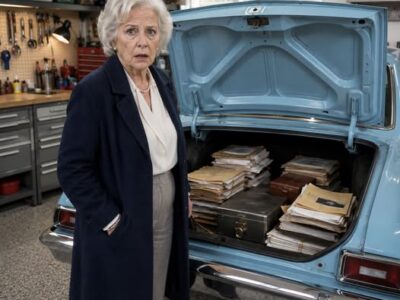
The mafia boss had installed 11 cameras to catch a thief… but the woman on the screen was feeding his starving daughters.
The mafia boss had installed 11 cameras to catch a thief… but the woman on the screen was feeding his starving daughters.
PART 1
“—If they start crying again, leave them both without dinner,” said the woman who earned 180,000 pesos a month to take care of Don Mateo Valdés’ daughters.
At 11:47 p.m., Mateo saw on his security cameras a stranger stepping out from the ravine behind his mansion in Lomas de Chapultepec. She was wrapped in an old sweater, her gray hair tangled, a shopping bag hanging from her shoulder.
His finger hovered over the panic button.
One press, and twelve armed men would surround the garden before that woman could even breathe.
But Mateo didn’t press it.
Because Lucía, his three-year-old daughter, wasn’t crying.
She was running.
Barefoot, thin, her nightdress slipping off her shoulders, she crossed the children’s room toward the barred window as if she had been waiting all night for the only person who still remembered her.
Behind her came Camila, two years old, dragging a stuffed rabbit by one ear.
The woman outside wasn’t reaching in to steal.
She wasn’t looking for jewelry.
She wasn’t looking for a safe.
She pulled a small enamel pot from her bag, wrapped in cloth, and slid it through the bars.
Mateo watched his daughters eat like starving little birds.
And in that instant, the most feared man in half of Mexico City understood that the thief was not outside his house.
The thief had been inside for months.
The Valdés mansion was a fortress: black gates, cameras, drivers, security guards, bulletproof glass, and a children’s wing staff quietly called “the iron cradle.”
Mateo Valdés hadn’t always been cold. Before losing his wife Mariana, he used to laugh in the kitchen, carry Lucía on his shoulders, and let Camila smear baby food on his shirts.
But Mariana died of a stroke one morning, before Camila ever learned to say “mom.”
Since then, Mateo turned grief into rules.
Locked doors.
Barred windows.
Guards in every hallway.
Vetted staff.
Controlled menus.
Everything to keep his daughters safe.
Safe.
Safe.
Safe.
The one responsible for it all was Doña Águeda Montiel, head housekeeper for eight years. She always wore black, her hair tightly tied back, a leather folder under her arm. Every Monday she entered Mateo’s office with flawless reports.
“Fresh salmon, sweet potato purée, Greek yogurt, strawberries, organic chicken broth, chopped fruit. The girls eat very well, sir.”
Mateo signed.
Always signed.
60,000 pesos in groceries.
90,000.
120,000.
Receipts from luxury markets in Polanco, premium butcher shops, imported goods, special milk, children’s vitamins.
Everything was documented.
Everything looked perfect.
Until one morning, Mateo picked up Lucía and felt she weighed less than she should.
Not active-child thin.
Fragile.
Bones.
Silence.
“Are you eating properly, my love?”
Lucía hid her face in his neck.
Camila stared from the floor with huge eyes—too tired for a toddler.
That same day, he requested full reports.
Águeda arrived with photos: beautiful plates, star-cut fruit, soups served in white bowls, silver spoons.
Mateo looked at an image that was too perfect.
“Who takes these photos?”
“I do, sir.”
“Before they eat?”
Águeda smiled faintly.
“To prove service.”
Mateo closed the folder.
“Thank you.”
When she left, he messaged Chuy Molina, his trusted man.
I need new cameras. Eleven. No one must see them.
To the staff, they invented an external threat.
But Mateo wasn’t looking for an enemy outside.
He was looking for a truth.
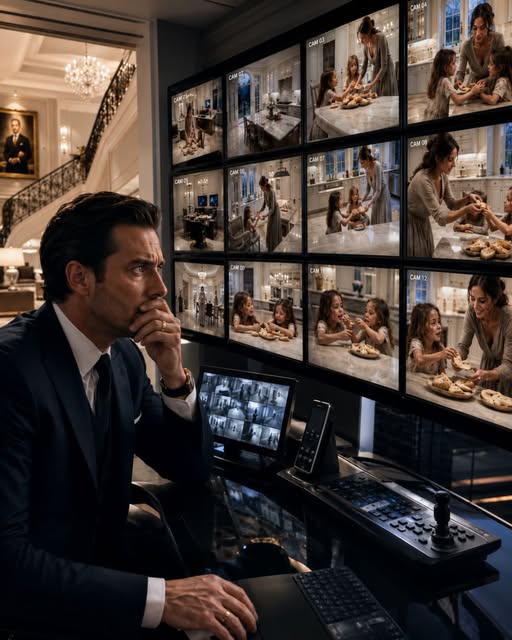
For three nights, he watched the monitors from his office.
At first, nothing.
Then the children’s hallway camera showed Sandra, Águeda’s assistant, entering with two trays.
Lucía approached with hope.
Sandra lifted a bowl of oats, glanced at the door, and poured most of it into a hidden container under the cart. She did the same with Camila’s plate.
Then she placed two small portions in front of them.
“Eat quickly,” she said without looking at them.
Camila took her spoon.
Lucía stared at her nearly empty plate.
Minutes later, Sandra collected everything and left.
Then came the sound that broke Mateo’s chest.
The external lock clicking shut.
The door locked from the outside.
His daughters weren’t protected.
They were trapped.
Mateo replayed the video.
Once.
Twice.
Again.
Morning, afternoon, night.
The same routine.
Photographed food.
Removed food.
Locked door.
Girls crying behind wood.
At 11:47 p.m., the woman from the ravine appeared again, holding a warm pot.
Lucía ran toward her like she was running toward life.
And when Mateo turned up the volume, he heard the stranger say:
“Slow down, my girl… don’t eat so fast. It’ll hurt your tummy. I brought more.”
Mateo went cold.
A homeless woman was feeding his daughters.
While he paid a fortune for them to go hungry.
Then Camila slipped her tiny hand through the bars, and the woman kissed it gently.
“I’ll come back tomorrow, if God gives me another night.”
Lucía whispered something.
The woman leaned in.
“Yes, my love,” she said softly. “I know you’re hungry.”
Mateo shut off the monitor.
And for the first time in a year, he didn’t feel fear of his enemies.
He felt shame for himself.
Because the truth had just opened the door… and what stood on the other side was impossible to ignore.
PART 2
At 6:15 a.m., Mateo called Chuy.
“Come alone. Bring Héctor.”
Héctor Salazar was the head of internal security, a former soldier who could search an entire house without moving a single glass.
Mateo showed them the footage.
No one spoke.
Chuy clenched his jaw.
Héctor only asked:
“How far do you want us to go?”
Mateo looked at the frozen image of Lucía holding a spoon with both hands.
“All the way.”
They started in Águeda’s office.
In a hidden drawer, they found stacks of cash held with rubber bands. Over 300,000 pesos in cash.
Then duplicated invoices, buyer lists, printed messages, and a notebook with names of restaurants, private chefs, and suppliers who paid for “leftover goods.”
But the worst was in the cold storage room.
When Héctor opened the door, the smell came first.
Sweet.
Rotten.
Sour.
Mateo stepped into the white light and saw what his money had bought.
Spoiled premium meat.
Gray vacuum-sealed salmon.
Moldy cheeses.
Imported fruits collapsing in boxes.
Expired baby milk.
Closed yogurt packs.
Rotting vegetables in clear bags.
Águeda bought expensive food, plated it, photographed it, recorded that the girls had eaten, and then diverted part of it to sell.
What she couldn’t sell, she let rot.
For Lucía and Camila, they gave leftovers.
Sometimes nothing at all.
“Since when?” Mateo asked.
Chuy lifted an old receipt.
“At least a year.”
One year.
Mateo closed his eyes.
One year signing papers.
One year believing reports.
One year thinking his daughters were grieving their mother, when they were also starving.
“Bring everyone tomorrow,” he ordered. “Dining room.”
“Police?” Chuy asked.
“Not yet.”
“Mateo…”
“First, I want to hear how deep this rot goes.”
The next morning, the dining room table was set like breakfast.
Glasses aligned.
Napkins folded.
Chairs facing a large screen.
Águeda arrived last, folder under her arm.
Sandra sat trembling near the window.
No one understood why Héctor blocked the door.
Mateo picked up the remote.
“I want to show you something.”
On the screen appeared the woman from the ravine.
Lucía running to the window.
Camila waiting her turn.
The pot sliding through the bars.
The stranger’s voice filled the room:
“Slow down, my girl… I brought more.”
Sandra began to cry.
Águeda did not move.
Mateo set the remote down.
“A woman sleeping under cardboard heard my daughters crying from the ravine. She did what all of you were paid to do. She stepped forward.”
Silence.
Mateo looked at Sandra.
“The door was locked from the outside.”
Sandra covered her face.
Then looked at Águeda.
“The office has been searched. The cold storage too. Messages are copied. Money counted. Buyers identified.”
Águeda lifted her chin.
“Sir Valdés, I understand this looks bad, but the girls are difficult. They reject food. Perhaps Sandra mismanaged portions.”
“You controlled every invoice.”
Her voice turned cold.
“I managed this house while you buried yourself in grief. You approved the gates. You approved the locks. You signed every menu. Your signature is on every page.”
The room went silent.
Because it hurt.
And because it was partly true.
Águeda hadn’t built the cage alone.
Mateo had ordered the bars.
She only learned how to profit from them.
Mateo rested his hands on the chair.
“You’re right about one thing. My signature is on every page.”
Águeda smiled faintly.
“Then you understand blaming me won’t fix—”
“I’m not trying to fix it,” Mateo interrupted. “I’m looking for justice.”
Her smile disappeared.
“Lawyers already have copies. Police will receive everything after this meeting. So will suppliers. And every family you ever worked for will know.”
Sandra collapsed.
“She said the girls were picky,” she sobbed. “That if we gave full portions, they’d waste it. That you wouldn’t notice as long as reports looked perfect.”
Mateo looked at her.
“And you believed it?”
Sandra lowered her head.
“No. I just needed the job.”
Mateo nodded.
Not forgiveness.
Just a quieter kind of judgment.
“Anyone who stole will be charged. Anyone who helped will be charged. Anyone who watched and stayed silent will leave this house today.”
Águeda stood.
Héctor stepped forward.
For the first time, she lost control.
“You can’t imprison me here.”
“No,” Mateo said. “But I can make sure you don’t leave with anything that belongs to my daughters.”
Then he walked out.
Because the real truth was still waiting outside.
In the ravine.
PART 3
The ravine behind the Valdés mansion wasn’t what it seemed from above.
From the office, it looked like darkness and danger. But inside, the city vanished. Trees swallowed sound. Wet stones, stray dog tracks, broken branches, and the smell of extinguished fire filled the air.
Chuy wanted to go with him.
Mateo refused.
“If she’s alone, she might not run.”
“And if it’s a trap?”
Mateo looked back at the children’s room.
Lucía and Camila were eating breakfast for the first time in months. Warm eggs, toast, strawberries, oats with milk. At first, they ate cautiously. Then with a hunger that broke him.
Lucía asked:
“Will the window lady come?”
Mateo almost couldn’t answer.
“I’m going to find her.”
He went alone.
No weapon.
No guards.
Only borrowed boots and an old jacket.
He found her twenty minutes later.
She lived under a blue tarp tied to three trees. Cardboard on the ground. A folded blanket. A bucket of clean water. Two dented pots. A broken cup. A bag of oats.
She was sitting on a stone, cleaning berries.
She saw him before he spoke.
She didn’t scream.
Didn’t run.
Just watched him.
“I saw you on my cameras,” Mateo said.
“I figured one day you would.”
Her voice was rough but steady.
“What’s your name?”
“And yours?”
Mateo almost smiled.
“Mateo Valdés.”
“That I know. Your guards say your name like prayer.”
“And you?”
She hesitated.
“Remedios Cruz.”
“Doña Remedios.”
One eyebrow rose.
“Don’t call me ‘Doña’ if you came to throw me out.”
“I didn’t.”
“To report me?”
“No.”
“To pay me off?”
“Also no.”
Remedios returned to the berries.
“How are the girls?”
That question hit harder than any accusation.
“This morning… they’re okay.”
Her shoulders dropped slightly.
“Since when have you been helping them?” he asked.
“Nineteen nights.”
Mateo swallowed.
“What did you give them?”
“What I had. Oats, rice, mashed beans, fruit. Once I brought chicken soup from a church in Tacubaya, but the little one didn’t want it.”
“Camila.”
“Camila,” she repeated softly. “Lucía told me.”
Lucía.
His daughter had spoken her name to a stranger because no one inside the house listened.
“I didn’t know,” Mateo said.
It sounded weak.
Insufficient.
“You should have,” Remedios replied.
“Yes.”
She studied him.
“Why are you here?”
“To ask you to come inside.”
She laughed once.
“Inside your mansion?”
“Yes.”
“I don’t accept charity.”
“I’m not offering charity. I’m offering work.”
“What kind?”
“Take care of Lucía and Camila. Proper salary. Insurance. A room if you want. Or help finding your own place. No locked doors. No cages. No one above you except me—and I’ve already learned what ignoring people costs.”
She watched him.
“Because I passed a pot of oats through bars, I’m suddenly a nanny?”
“No,” Mateo said. “Because nineteen nights in the dark say more than any reference ever could.”
Remedios looked at her shelter.
The tarp.
The cardboard.
The small life built from leftovers.
“I had a son,” she said finally.
Mateo froze.
“Emiliano. He was four. He had a fever. No insurance. No money. By the time I got him to the hospital, it was too late.”
Her voice didn’t break.
It deepened.
“After that, everything collapsed. My husband left. The rent failed. One thing falls, then another. Until you wake up and you’re sleeping where nobody sees you.”
Mateo said nothing.
“When I heard your girls crying, I told myself it wasn’t my business. Big house, rich father, guards, cameras. Someone would come. Someone had to come.”
A faint tremor.
“But no one came.”
Silence covered them.
“I’m sorry,” Mateo said.
“Don’t say that unless you mean to change something.”
“I will change it.”
“Not just for them.”
“Not just for them.”
Remedios handed him the berries.
“Carry these. If I’m going inside your mansion, I’m not arriving empty-handed.”
Lucía saw them from the window.
“Remedios!”
Camila ran behind her.
Mateo expected hesitation.
She walked straight inside.
And for the first time, the iron cradle stopped being iron.
Lucía ran into her arms. Camila clung to her skirt and cried.
Remedios knelt.
No speech.
No performance.
Just a woman holding two children who had finally been heard.
Mateo stood at the doorway.
Chuy arrived quietly.
“She accepted?”
“She accepted to review the kitchen.”
“That’s more than enough.”
“More than I deserve.”
Chuy didn’t argue.
Because some truths don’t need correction.
PART 4
The mansion changed quickly.
Águeda was arrested. Sandra cooperated. Investigations widened. But Mateo didn’t wait for judgment to understand his responsibility.
He had failed.
And now he had to prove, every day, that he wouldn’t fail the same way again.
The bars were removed first.
Lucía watched the workers.
“Were the windows sick?”
Mateo knelt beside her.
“No, my love.”
“Then why fix them?”
He breathed in.
“Because Daddy made a mistake.”
“A big one?”
“A very big one.”
She touched his cheek.
“Don’t do it again.”
“I won’t.”
Then came the locks.
The room stopped being “the iron cradle.”
It became a playroom filled with books, warm light, cushions, and a wooden kitchen where Camila made imaginary soup for everyone—including Héctor, who accepted invisible meals like sacred offerings.
Remedios inspected the kitchen for three hours.
She threw out expired food.
Demanded oats, rice, eggs, fruit, vegetables, milk, broth.
Food a child could pronounce.
A new cook, Marisol, learned quickly.
“What title do I put on the payroll?”
“Remedios is fine,” she said.
“That’s not a title.”
“It’s the only one I answer to.”
Mateo registered her as Director of Child Welfare.
She rolled her eyes.
“That sounds like someone who wears a blazer and judges people.”
“You judge people.”
“Only when necessary.”
Lucía laughed for the first time in months.
Camila joined because joy was not something she wanted to miss.
Three months later, the mansion opened its gates for a different kind of dinner.
No politicians.
No businessmen.
No shadows in corners.
Just folding tables, lights in the garden, tacos, fruit water, children from shelters running with Lucía and Camila, and Remedios making sure everyone ate before anyone went back for seconds.
The House of Open Doors was born.
Not named after Valdés.
Not named after Mariana.
Named after the only thing that saved his daughters:
A door that finally opened.
That night, Remedios stood near the ravine’s edge.
“You always stand like someone’s going to shoot you,” she said.
“Habit.”
“Not anymore.”
Mateo looked at the garden.
“Do they feel stronger?”
“I know they do.”
“They ask less in fear.”
“Yes.”
A pause.
“Mariana would have liked you,” he said.
“Don’t place me next to a dead woman.”
“I’m not.”
“Good.”
“Just saying she would have liked you.”
She accepted that quietly.
Later, Lucía asked for a story.
“About a bad castle,” she said.
Remedios sat on one side of the bed.
Mateo on the other.
“And then?” Remedios asked.
“And a window lady,” Lucía said. “And a daddy who opens the door.”
Mateo closed his eyes briefly.
When he opened them, Lucía was watching him.
So was Remedios.
And he told the story.
A man who built walls out of fear. Two girls who survived behind them. A woman who heard what others ignored. And a father who finally learned that doors are not meant to stay closed.
“Daddy?” Lucía whispered.
“Yes.”
“Never bars again.”
His throat tightened.
“Never bars again.”
She took his hand. Then Remedios’. And pulled them close as if anchoring the world in place.
Mateo Valdés once believed power was making people fear him.
Then he believed it was locking everything out.
Now he understood:
Power was the courage to open the door… when everything inside you wanted to keep it shut.
Outside, the ravine moved with the wind of the city.
Inside, every door stayed open.