The LEGO Lawsuit Story Just Got CRAZY
Inside the $200,000 LEGO Dispute That Spiraled Into Multi-State Lawsuits, Police Investigations, and a YouTube-Fueled Legal Firestorm
What began as a straightforward consignment agreement for a rare LEGO collection has escalated into a sprawling legal saga involving competing lawsuits, allegations of theft, corporate takeover disputes, and a controversial online investigation that now sits at the center of multiple legal battles.
At the heart of the case is a collection valued by its owner at more than $200,000—an assemblage of rare Star Wars LEGO sets that, according to court filings and public statements, may now be partially missing, unaccounted for, or sold without proper compensation.
But as the dispute deepens, so too does its complexity. What was once a private disagreement between a collector and a toy reseller has expanded into a multi-jurisdictional conflict involving corporate franchising law, criminal investigations in Oregon, civil litigation in Utah, and a YouTube creator whose efforts to “help solve the case” have triggered legal consequences of their own.
A Consignment Deal That Started It All
The dispute traces back several years to a consignment agreement between collector Brian Mansell and a Bricks & Minifigs store operated by franchisee Crystal Law Gorman.
Under the agreement, Mansell retained ownership of his LEGO collection while the store was responsible for selling individual sets on his behalf. In return, the store would take a percentage of each sale and remit the remainder to the owner.
On paper, it was a standard arrangement used frequently in collectible and resale markets.
But the arrangement began to unravel when the store’s franchise relationship changed.
According to multiple accounts, the franchisor BAM Franchising—the corporate entity behind Bricks & Minifigs locations—terminated the franchise agreement with Gorman and took control of the store. Gorman has alleged that the takeover involved changing locks and removing her access to the premises, effectively ending her operational control.
BAM, however, disputes this characterization, arguing that the termination was lawful and tied to alleged contractual violations, including financial issues and operational decisions that breached franchise rules.
A Store Taken Over—And a Collection Left Behind
When Mansell later attempted to check on his collection, he discovered that the store was now under different management. What followed is the central legal dispute: what happened to the LEGO inventory that remained inside the store during the transition?
Gorman maintains that BAM took control of the location while fully aware that consignment items—including Mansell’s collection—were inside. She has claimed that security footage and internal communications support her position that corporate leadership knew about the consignment arrangement before assuming control.
BAM, by contrast, argues it was not a party to the consignment agreement and therefore bears no responsibility for its terms. The company has emphasized that its franchise agreement prohibits unauthorized consignment arrangements unless specifically approved.
That distinction—between franchise policy and property law—has become one of the case’s central legal fault lines.
Even if BAM did not directly sign Mansell’s agreement, legal experts note that liability could still hinge on whether the company had “notice” of the consignment arrangement at the time it took possession of the store.
Disputed Records and Missing Inventory
As the conflict escalated, Mansell requested the return of his LEGO sets, payment for items already sold, and full sales records. He gave the store a 10-day deadline, according to correspondence cited in the dispute.
That deadline passed without resolution, and Mansell alleges that neither inventory, funds, nor documentation were fully provided.
The question of what happened to the collection has only grown murkier.
BAM has stated that after review, it located only a small portion of items potentially connected to the Mansell collection—valued at between $2,000 and $5,000. The company has suggested that the majority of the inventory may have been sold prior to its takeover.
However, independent third-party estimates referenced in the dispute place the value of the sealed LEGO sets alone between approximately $60,000 and $98,000, significantly higher than BAM’s internal assessment.
Mansell’s own valuation places the total collection at over $200,000.
That discrepancy has become a focal point for investigators and attorneys alike, particularly because Oregon law allows for elevated charges in theft cases exceeding $10,000. In some circumstances involving elderly victims—Mansell’s father is reportedly 83—civil penalties for financial exploitation could also apply, including potential treble damages.
The Yellow Dot Allegation
One of the most contentious claims involves a system used by the Mansell family to track their inventory: yellow dot stickers placed on product UPC codes.
According to the family, after BAM took over operations, at least one item bearing the identifying yellow dot was purchased from the store and never properly accounted for in payments to the owner.
Even more seriously, Crystal Gorman alleges that BAM staff removed identifying stickers from items, a claim that, if proven, could significantly affect both civil and criminal interpretations of the case.
Removing identifying markers from disputed property could be interpreted by courts as an effort to obscure ownership—an allegation BAM has not publicly substantiated or formally acknowledged.
Enter the YouTuber: Reckless Ben and the Investigation That Went Too Far
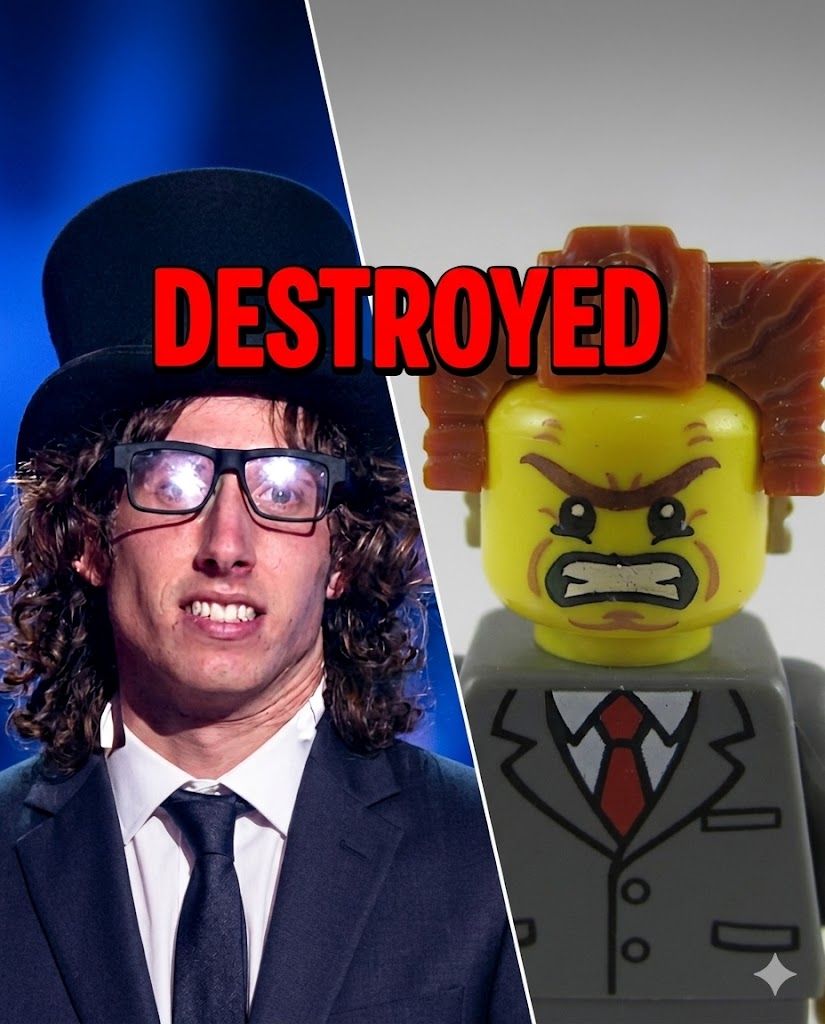
The case took a dramatic turn when YouTuber “Reckless Ben” began investigating the dispute independently.
Motivated by online coverage of the missing LEGO collection, Ben traveled to Bricks & Minifigs locations and attempted to speak directly with store employees and operators. In one widely circulated clip, he is seen asking staff about the Mansell collection and referencing specific Star Wars sets.
His involvement quickly escalated beyond commentary.
According to Ben’s own account, he also conducted in-person investigations at multiple locations, using hidden cameras and interacting with individuals tied to the franchise system. That approach raised immediate legal concerns regarding recording laws, particularly in Oregon, where audio recording generally requires all-party consent.
Legal analysts note that while video recording in public spaces is often permissible, secretly recording audio conversations without consent can create criminal exposure depending on the circumstances.
Allegations of Staged Evidence and Legal Blowback
As Ben’s videos gained traction online, the dispute expanded beyond the LEGO collection itself.
At one point, Ben claimed that a store representative offered to return items if Mansell issued a public apology. According to the account, Mansell declined, citing concerns that such a statement could harm his legal position.
Ben also alleged that an AI-generated apology video was created and tested as part of the investigation—an act that, if introduced in court, could be used to challenge the credibility of video evidence associated with the case.
Legal experts say that if fabricated or manipulated media is introduced into a dispute, opposing counsel can use it to undermine the reliability of all related material.
A Criminal Case Emerges in Utah
The situation escalated further when Ben was reportedly arrested in Utah on multiple misdemeanor charges, including stalking-related allegations, trespass, and disorderly conduct.
Authorities have not publicly detailed all aspects of the case, but Ben has claimed that law enforcement actions—including vehicle stops and searches—were unjustified. He also alleges that a search warrant targeting LEGO merchandise was executed at his lodging.
Those claims have not been independently verified in court records released to the public.
Separately, BAM filed a lawsuit in Utah accusing Ben of harassment, deceptive practices, and attempting to manufacture legal leverage against the company.
The company alleges that Ben used misleading documents and pressured staff with claims of financial penalties tied to police calls and other interactions. BAM is also seeking a restraining order and, in some filings, has requested removal of online content related to the dispute.
That request has raised additional debate about whether the case involves legitimate protection from harassment or attempts to suppress criticism.
Four Parallel Legal Fronts
As of now, the dispute spans four active legal arenas:
Oregon investigation into possible theft or financial misconduct involving the LEGO collection.
Utah civil lawsuit filed by BAM against Ben and potentially other parties.
Criminal proceedings in Utah involving Ben’s conduct during the investigation.
A separate civil case brought by Crystal Gorman against BAM, alleging wrongful takeover and mishandling of store assets.
Each case touches a different aspect of the broader dispute, but all are connected by the same unanswered question: where is the LEGO collection now?
The Unresolved Core Question
Despite months of legal filings, video evidence, and competing narratives, one fact remains uncontested by all sides: a high-value LEGO collection entered a consignment agreement and is now partially or entirely unaccounted for.
BAM claims only a small portion of items can be identified. Mansell’s side insists a much larger collection was present when the store changed hands. Gorman alleges corporate interference disrupted proper accounting. And investigators are still working to determine whether criminal wrongdoing occurred.
Meanwhile, the involvement of an independent YouTube investigation has added an entirely new layer of complexity—raising questions not only about property law, but about the limits of citizen journalism in active legal disputes.
A Case That Keeps Expanding
What began as a niche dispute over collectible toys has now become a case study in modern legal chaos: franchising conflicts, consignment law, digital media influence, and the risks of crowdsourced investigations colliding in real time.
As of now, no criminal charges have been finalized in Oregon, civil suits remain ongoing in multiple states, and the full value and location of the LEGO collection remains unclear.
For all the legal filings, videos, and accusations, the central question has yet to be answered with certainty:
Where did the LEGO go—and who is legally responsible for it?
Until that is resolved, the case is likely to remain one of the most unusual and closely watched property disputes to emerge from the intersection of commerce, internet culture, and modern-day investigative content.