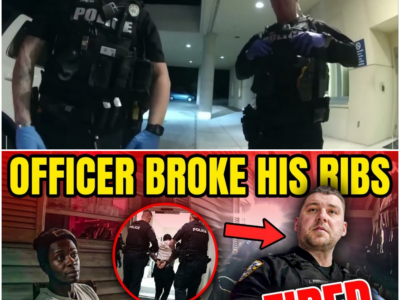
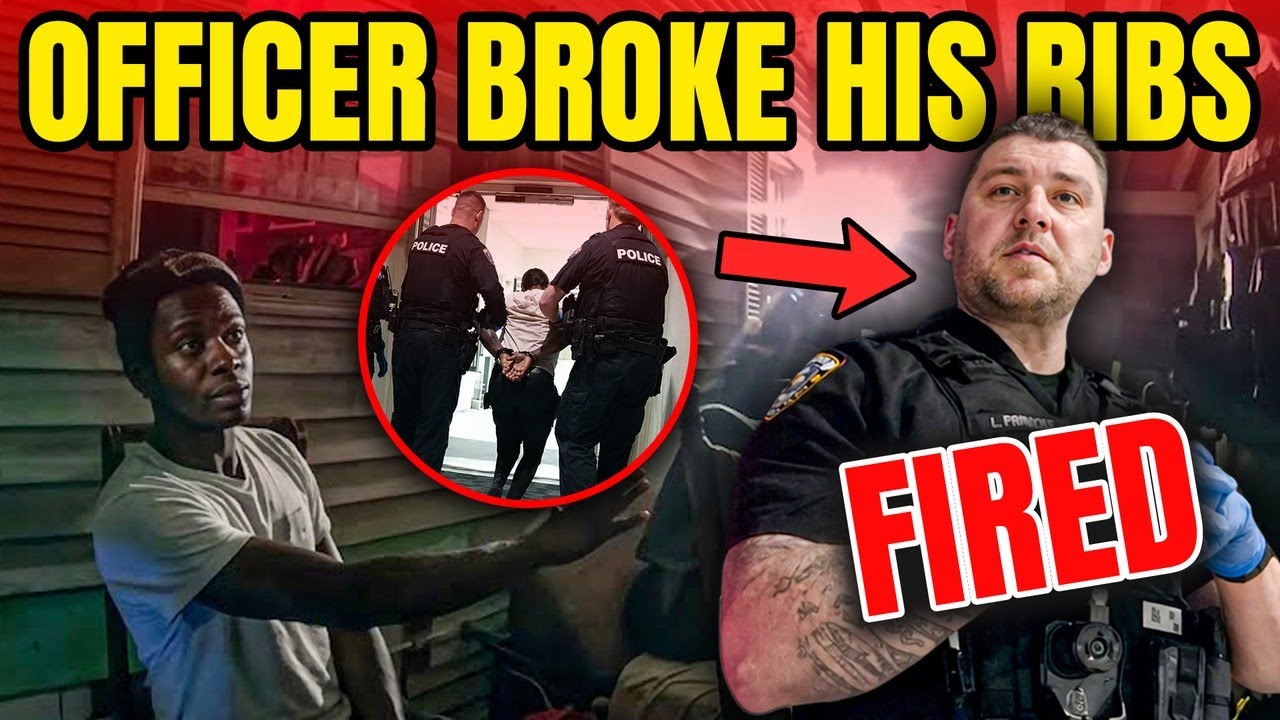
Crazy Cops Get SUED After ATTACKING Innocent Man
Crazy Cops Get SUED After ATTACKING Innocent Man
.
.
The Case of Mr. Dixon: A Study of Police Overreach and Constitutional Rights
In a moment that could easily have slipped by unnoticed, a seemingly routine encounter between a Florida man and the police escalated into a significant lesson about constitutional rights, the abuse of power, and the line between lawful authority and brute force. The incident serves as an example of how quickly a simple traffic stop can transform into a civil rights lawsuit when law enforcement officers misunderstand their own authority. This is the story of Mr. Dixon, his interaction with Melbourne Police officers, and the profound lessons it carries for both citizens and law enforcement.
The Encounter: What Happened on That Quiet Day
The incident began with a call about a disturbance involving a male and female arguing. Officers were dispatched to the scene, and what unfolded should have been a simple check of a domestic disturbance. However, as soon as the officers arrived, the situation took an unexpected turn. Mr. Dixon, a man from Florida, was confronted by police officers, who initially sought to speak to him about the supposed dispute. Upon arriving at the scene, the officers began questioning Mr. Dixon, who had been accused of disturbing the peace by loudly arguing.
As the interaction progressed, it became clear that Mr. Dixon had done nothing wrong. He simply existed in a space where an argument had been overheard, and yet, the officers insisted on escalating the situation. The real turning point came when Officer Soyson, who had approached Mr. Dixon, demanded that he identify himself, despite the fact that no crime had been committed. Mr. Dixon questioned the legality of the request and calmly refused to provide his ID without a lawful reason. This small act of defiance would set the stage for what would become a tense and legally complex encounter.
The Legal Framework: When Is Identification Required?
Understanding the legal background is crucial to fully appreciating the gravity of this situation. Under Florida Statute 901.151, officers have the authority to temporarily detain individuals when there is reasonable suspicion of criminal activity. However, simply hearing an argument or seeing a person standing on the property is not, in itself, grounds for detaining someone, especially when no criminal act is clearly underway.
The seminal case of Hiibel v. Sixth Judicial District Court (2004) is particularly relevant in this context. In that case, the Supreme Court held that police officers in certain states could lawfully request identification during a stop, but only when there is reasonable suspicion of criminal involvement. The ruling emphasized that individuals cannot be forced to provide identification without just cause.
In Mr. Dixon’s case, the officers were responding to a noise complaint, which in itself does not meet the threshold of criminal activity. There were no signs of violence or distress, and the people involved in the incident, including Mr. Dixon’s girlfriend, confirmed that everything was fine. Therefore, the officers’ request for identification lacked reasonable suspicion, and Mr. Dixon was under no obligation to comply.
Escalating Force: Knee Strikes and Unlawful Detention
The escalation of this encounter is perhaps the most concerning aspect of the entire incident. After Mr. Dixon refused to provide his ID, the officer immediately threatened him with arrest, citing disorderly conduct for his refusal to comply. The situation quickly spiraled out of control when the officer placed his hands on Mr. Dixon, attempting to force him to comply with orders that lacked legal justification.
The officer’s actions crossed the line from reasonable policing to excessive force. According to Graham v. Connor (1989), the use of force must be “objectively reasonable” based on the circumstances faced by the officer. In this case, Mr. Dixon was on the ground, unarmed, and compliant, yet he was subjected to knee strikes that fractured his ribs. The officer’s justification for using force was based on Mr. Dixon’s “wiggling” his arm, which is hardly a reasonable or sufficient cause for the use of physical force.
This type of force is classified as excessive when the crime in question does not justify such a response. Mr. Dixon’s alleged crime, at most, was refusing to provide identification, which is a minor offense that certainly does not warrant a violent response. The officer’s actions were in direct violation of the Fourth Amendment, which protects individuals from unreasonable searches and seizures. The unnecessary use of force not only violated Mr. Dixon’s rights but also escalated a simple interaction into an unlawful assault.
Case Law: Excessive Force and Legal Precedent
The legal standards surrounding excessive force are clearly established in case law. Graham v. Connor set forth a three-factor test for determining whether the use of force was excessive: the severity of the crime, whether the suspect posed a threat to officer safety, and whether the suspect was resisting arrest. In Mr. Dixon’s case, the alleged crime was a minor offense—refusing to provide identification during a welfare check. He was not armed, and he posed no threat to the officers. Furthermore, he was not actively resisting arrest, but instead was complying with the officers’ demands. Therefore, the force used by the officer in delivering knee strikes was excessive and violated Mr. Dixon’s constitutional rights.
In Florida v. Royer (1983), the Supreme Court ruled that any action taken during an unlawful detention is constitutionally tainted. Since the officers had no legal basis for stopping Mr. Dixon in the first place, the subsequent actions they took—specifically the use of force—must also be scrutinized under constitutional standards. The application of excessive force in this context further highlights the systemic issues within law enforcement when officers fail to adhere to proper procedure.
Accountability and Officer Training
The events surrounding this traffic stop underscore a deeper issue within law enforcement: the failure of training and the lack of accountability when officers misuse their authority. Officers must be able to distinguish between lawful actions and personal biases, and they must understand the limits of their power. In this case, Officer Soyson’s ignorance of constitutional law was not simply an individual mistake—it reflects a broader problem within the department.
The Melbourne Police Department has an explicit policy against biased policing and emphasizes proper procedure, yet this incident reveals that the officers failed to apply these standards. Officer Soyson’s partner, Officer Beverage, demonstrated a much-needed understanding of constitutional rights and directly overruled Soyson’s actions. It is officers like Beverage who help restore trust in law enforcement by standing up for what is right, even when it means challenging their own colleagues.
Moving Forward: Lessons for Law Enforcement and the Public
What this case teaches us is clear: understanding constitutional rights is not just a matter of personal empowerment but also a matter of police responsibility. Citizens must know their rights and be willing to stand up for them, as Mr. Dixon did during his encounter with the officers. Officers, on the other hand, must be properly trained in constitutional law and be held accountable when they overstep their bounds. This is essential not only to maintain the integrity of law enforcement but also to preserve the trust between police officers and the communities they serve.
For citizens, the lesson is simple: always remember that you have the right to question an officer’s actions and to exercise your constitutional rights. The law protects you, even when an officer may not fully understand or respect those rights. It is crucial that citizens remain calm, respectful, and firm in asserting their rights, as Mr. Dixon did during his encounter.
For law enforcement, the key takeaway is that authority does not equal power. Just because an officer has the badge and the uniform does not mean they can disregard the Constitution. Officers must be trained to recognize the limits of their power and to respect the rights of citizens. This is not just a legal issue; it is an issue of fairness, justice, and accountability.
Conclusion: A Shift in Law Enforcement Culture
In the aftermath of this case, it is clear that there is a need for a cultural shift within law enforcement. The training of officers must evolve to focus not just on tactical skills but also on the nuances of constitutional law and civil rights. Furthermore, there must be a system in place to hold officers accountable for their actions. As this case demonstrates, failure to adhere to constitutional standards not only results in legal repercussions for the officers involved but also erodes public trust in the institutions that are meant to serve and protect.
The Dixon case is a prime example of how a seemingly minor incident can expose deeper systemic problems in law enforcement. It is also a reminder that the pursuit of justice must always be grounded in respect for the law, the Constitution, and the rights of all citizens. Only through continued training, accountability, and vigilance can we ensure that similar incidents are prevented in the future.
News

Brinks Truck Driver Caught Stealing $500,000 in Staged Robbery
Brinks Truck Driver Caught Stealing $500,000 in Staged Robbery . . The Case of Jonah Bassard: A Tale of Deception, Betrayal, and Accountability In the small, quiet town of Uniontown,…
Cop Gets FIRED After His Own Partner Calls Him Out!
Cop Gets FIRED After His Own Partner Calls Him Out! . . Unlawful Arrest and Police Accountability: The Case of Officer Dylan Soison and Judge Marcus Sterling In a tale…
Driver SCHOOLS INSANE Trooper During ILLEGAL Frisk
Driver SCHOOLS INSANE Trooper During ILLEGAL Frisk . . The Constitutional Breakdown: How an Unlawful Traffic Stop Exposed Systemic Failures in Arkansas State Police On a quiet Tuesday morning in…
Police Arrest Black Man Checking Mail — He’s a Federal Judge, $910K Verdict
Police Arrest Black Man Checking Mail — He’s a Federal Judge, $910K Verdict . . The Cost of Misjudgment: How a Federal Judge’s Unlawful Arrest Sparked a Legal Battle and…

Princess Anne Takes Camilla’s Daughter To COURT After SHOCK Illegal Balmoral Use Exposed
Princess Anne Takes Camilla’s Daughter To COURT After SHOCK Illegal Balmoral Use Exposed . . Behind the Palace Walls: The Royal Battle Over Balmoral and Family Power The royal family,…
One Minute Ago: Harry PLEADS William For UK Re-entry After $10M Australia Backlash
One Minute Ago: Harry PLEADS William For UK Re-entry After $10M Australia Backlash . . The Crown’s Turning Point: Prince William’s Bold Decision to Exclude Prince Harry In a dramatic…
End of content
No more pages to load