FBI: BUSTED — USAID Official Sold $550M in Federal Contracts for NBA Tickets & Cash
The Sold Signature: A Decade of Deception at USAID
The Architect of the Invisible Heist
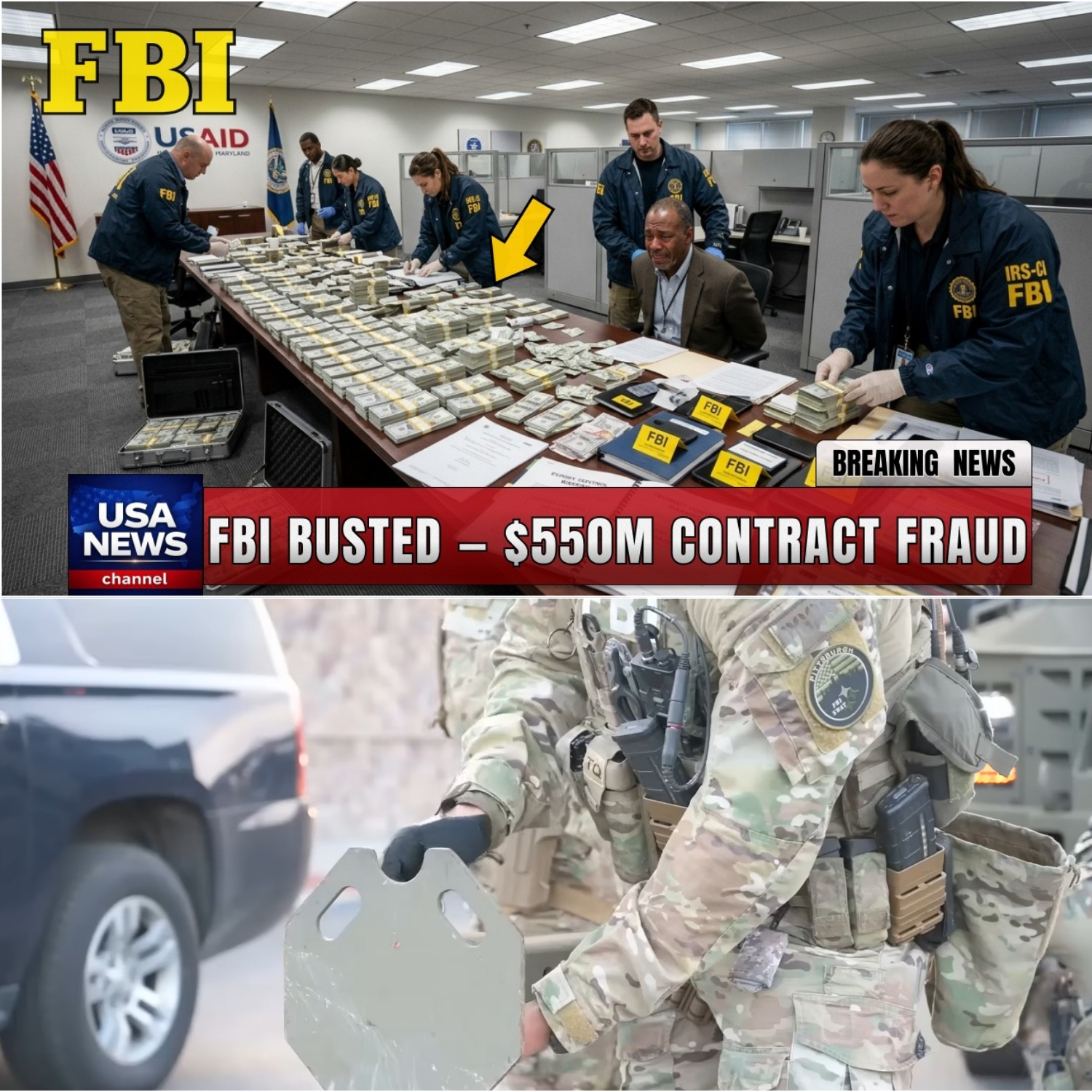
For ten long years, through four presidential administrations and countless budget cycles, Rodrik Watson occupied a quiet cubicle in a Maryland office building. To his colleagues at the United States Agency for International Development (USAID), he was a reliable contracting officer—a man who understood the dense thicket of federal acquisition regulations better than most. He wasn’t a spy or a high-ranking politician, but his signature carried the weight of $550,318,000 in American taxpayer money. Beneath the surface of his mundane government routine, Watson was the mastermind behind one of the most persistent procurement fraud schemes in the agency’s history. He did not steal the money through a single, massive transaction; instead, he sold his authority, one contract at a time, staying carefully below the automated detection thresholds that would have alerted federal watchdogs.
The 8(a) Program: A Shield for Corruption
The foundation of Watson’s scheme was built upon a program intended for noble purposes: the Small Business Administration’s 8(a) Business Development program. This initiative was designed to help small, disadvantaged businesses gain a foothold in the competitive world of government contracting by allowing for “sole source” awards—contracts granted without the usual rigorous competitive bidding process. Watson, an expert in these regulations, knew exactly where the oversight was thin. He utilized the program not to lift up the disadvantaged, but to provide a layer of administrative cover for his hand-picked co-conspirators. By directing contracts through this specific channel, he bypassed the transparent competition that usually safeguards federal spending, creating a private “pay-to-play” ecosystem inside a government agency.
The Three-Layer Bribery Architecture
Watson did not act alone. The scheme involved two main companies: Apprio Inc., owned by Daryl Britt, and PM Consulting Group (operating as Vistant), owned by Walter Barnes. Both companies were enrolled in the 8(a) program. To keep the corruption at arm’s length, the participants utilized a “node”—a third man named Paul Young. Young was the president of a subcontractor that worked with both Apprio and Vistant. This structure was a deliberate choice to create distance. Money moved from the primary companies to the subcontractor, which then funneled personal benefits to Watson. By adding this extra layer, the conspirators hoped to mask the direct link between the lucrative contracts awarded by Watson and the lavish lifestyle he was beginning to lead.
A Million-Dollar Price Tag for a Civil Servant
While Watson drew a modest government salary, his true income was vastly different. Over the decade-long operation, he received over $1 million in personal bribes. These weren’t just envelopes of cash; the corruption manifested in luxury and access. The rewards included electronics, expensive luxury items, and NBA courtside tickets—seats that cost more for a single evening than many federal employees earned in a week. Perhaps most brazenly, the pipeline of corrupted funds even paid for a country club wedding. Furthermore, the bribe extended to “legacy” benefits: jobs were created within the winning companies specifically for Watson’s relatives. These weren’t positions based on need or merit, but rather a form of long-term kickback to ensure Watson’s continued cooperation and the steady flow of $550 million in federal funds.
The Financial Logic of Fraud
The efficiency of the Watson scheme is staggering when broken down into a ratio. For every $1 he received in personal bribes, he corrupted $550 in federal contracts. From the perspective of the business owners, this was the ultimate investment. By spending a relatively small amount on “incentivizing” an official, they secured a massive, stable revenue base of over half a billion dollars. For the American taxpayer, however, the math was a disaster. The mission of USAID—to advance humanitarian aid and international development—was compromised. Contracts were no longer awarded to the most qualified or cost-effective firms; they were awarded to those willing to buy a seat at the table. The merit-based system was replaced by a financial arrangement that prioritized the greed of four individuals over the efficacy of global aid.
Scaling the Deception: Securities and Investment Fraud
As the scheme matured, it evolved into an even more complex criminal enterprise. By 2022, nine years into the corruption, Walter Barnes of Vistant sought to capitalize on the company’s “success.” He approached a small business investment company licensed under the SBA’s SBIC program. The pitch was professional and credible, backed by a portfolio of government contracts that made Vistant look like a high-performing small business. Based on this fabricated success, the investment firm purchased a 20% equity stake for $4 million and extended a $4 million loan. What Barnes deliberately concealed was that Vistant’s entire value was a house of cards built on bribery. Daryl Britt of Apprio followed the same playbook in 2023, misleading a private equity firm. This added a layer of securities fraud to the existing bribery charges, as they were essentially selling shares in a criminal conspiracy.
The Forensic Reconstruction: Three Agencies Unite
The downfall of the Watson network was not the result of a lucky break, but of a massive, multi-agency forensic investigation. The FBI, the IRS Criminal Investigation (IRS-CI), and the USAID Office of Inspector General (OIG) joined forces to pull the thread. The investigative team had to map Watson’s digital footprints—his access logs in federal procurement systems—against the specific dates and award values of 14 prime contracts. They cross-referenced these logs with the financial payment flows moving through Paul Young’s subcontractor entity. Every NBA ticket, every luxury purchase, and every relative’s paycheck was timestamped and documented. It was a technical and financial reconstruction of a decade’s worth of data, designed to meet the strict chain-of-custody requirements of federal court.
The Moment of Reckoning: Guilty Pleas in Maryland
The wall of silence finally broke in late 2024. Daryl Britt was the first to plead guilty in October. By May and June of 2025, the remaining conspirators—Watson, Barnes, and Young—all followed suit in a federal court in the District of Maryland. All four admitted to the full scope of their roles in the bribery and procurement fraud. Watson’s admission was particularly damning: a federal employee who had completely compromised his position of trust for personal gain. While the criminal penalties and prison sentences were the primary focus, the companies faced financial repercussions as well, with Apprio and Vistant agreeing to pay hundreds of thousands of dollars in penalties. The decade of “quiet and methodical” corruption had finally come to a loud and public end.
The Shadow of the 15-Year Audit
Even with the convictions of Watson and his associates, the story is far from over. The Small Business Administration and federal oversight agencies have opened a massive 15-year audit window, reaching back three years before the Watson scheme even began. This investigation is looking for patterns—contracts with similar structures, officials with award records that show similar anomalies, and companies that won through the same “sole source” channels at specific threshold values. The federal government is now asking a haunting question: Was Rodrik Watson a lone anomaly, or was he simply the only one caught? This expanded audit signals that the “Sold Signature” case may just be the first door to open in a much larger building of systemic procurement corruption.
A Comparative Lesson in Betrayal
To put Watson’s corruption in perspective, one only needs to look at other federal crimes of the same era. In a separate case, a Navy sailor sold restricted technical manuals and Pacific Fleet warship data to China for a mere $12,000. In contrast, Rodrik Watson “earned” $1 million by selling his influence over half a billion dollars in taxpayer funding. Both cases represent a profound betrayal of the United States, but Watson’s story highlights a different kind of danger—the internal rot of corruption that can persist for a decade without a single alarm bell ringing. It serves as a grim reminder that when the mechanisms of accountability are treated as obstacles to be bypassed rather than safeguards to be respected, the cost to the nation is measured in more than just dollars; it is measured in the loss of public trust.