DOJ: SHOCKING TWIST — Glencore Called $100M in Bribes “Useful Expenses” Paid $1.5B FBI
The Useful Expense: Anatomy of a Global Bribery Machine
The Ledger of Deception: A Hidden Vocabulary
In the hallowed, quiet halls of a Swiss-headquartered multinational corporation, a simple phrase sat nestled within the accounting books for decades: “Useful Expenses.” To an outside auditor in the 1990s, it might have looked like a mundane line item for office supplies or travel costs. In reality, it was the linguistic foundation for a global criminal enterprise. Glencore, a titan of commodity trading with annual revenues frequently topping $200 billion, didn’t just participate in the global market; it corrupted it. This “useful” category was the financial fuel for a machine that systematically greased the palms of government officials, fixers, and intermediaries across Africa and Latin America.
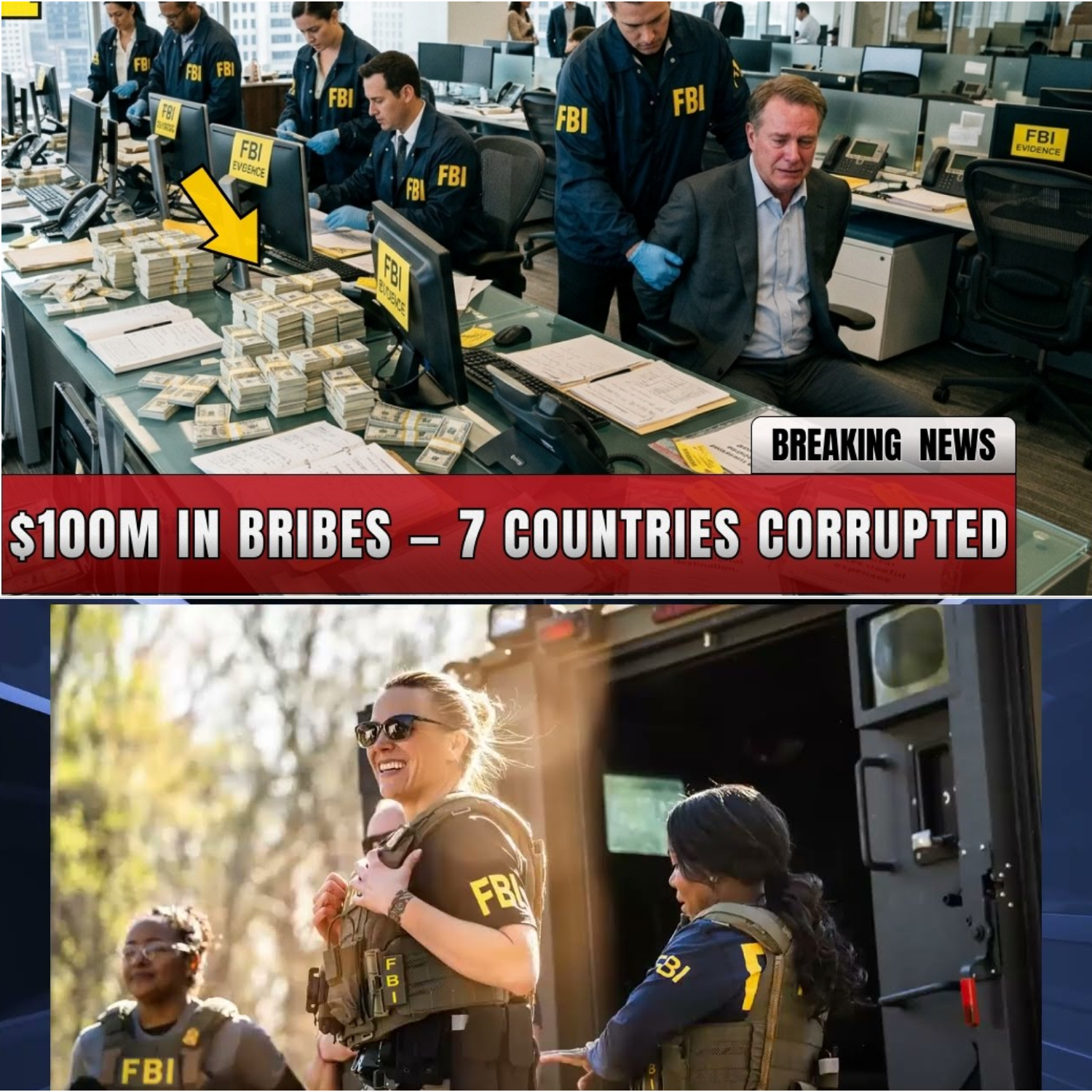
By 2007, as the world moved toward greater transparency, the language evolved, but the intent remained predatory. The company began funneling over $100 million through a complex labyrinth of “consultants” to ensure oil contracts were awarded, lawsuits vanished, and audits were avoided. The corruption spanned seven nations: Nigeria, Cameroon, Ivory Coast, Equatorial Guinea, Brazil, Venezuela, and the Democratic Republic of the Congo. It was a staggering architecture of engineered treason against the public trust, where access to a nation’s natural resources was treated as a commodity that could be bought under the table.
Nigeria: The 138% Return on Corruption
Nigeria stood as the crown jewel and the largest single theater of Glencore’s bribery theater. Between 2007 and 2018, the company paid more than $52 million in bribes through intermediaries to Nigerian officials. The target was the Nigerian National Petroleum Corporation, the state-controlled gatekeeper of one of the world’s most significant oil reserves. The math behind these “useful expenses” was cold and calculated. According to federal prosecutors, that $52 million investment in bribery yielded a staggering $124 million in direct profit for the company.
This 138% return on corruption was not an accident; it was a business model. While Glencore’s executives in Switzerland and London reviewed these profits, the citizens of Nigeria—the rightful owners of that oil revenue—saw their public services starved and infrastructure neglected. The mechanism was elegantly simple: Glencore hired “agents,” the agents paid the officials, and the contracts flowed back to the company. It was a closed loop of criminality that effectively converted public resources into private executive bonuses, all tracked with the clinical precision of a legitimate retail operation.
The Human Toll: The Destruction of Crusader Health
While the Nigerian operation was defined by massive numbers, the corruption in the Democratic Republic of the Congo (DRC) was defined by its cruelty. In 2010, a healthcare company called Crusader Health, which operated clinics across eleven African countries, found itself in a legal dispute with a Glencore subsidiary. It was a legitimate battle over money owed for services rendered. However, Glencore did not rely on the strength of its legal arguments. Instead, it paid a Congolese government official $500,000 to ensure the lawsuit was dismissed.
The bribe worked with terrifying efficiency. The judge threw the case out, and the lawsuit disappeared. Deprived of the settlement funds it was rightfully owed, Crusader Health collapsed and ceased operations. A company that provided vital medical care to thousands of people across a continent was wiped off the map because a multinational giant found it cheaper to bribe a judge than to pay its debts. In 2023, a federal court ordered $29.6 million in restitution to the founders of Crusader Health, identifying them as direct victims of Glencore’s “institutional design” of criminality.
Domestic Manipulation: The Port of Corruption
Even as Glencore was corrupting foreign governments, its American arm was busy sabotaging the integrity of domestic markets. For eight years, between 2011 and 2019, Glencore Limited engaged in a separate scheme to manipulate fuel oil price assessments. This took place at two of the busiest commercial ports in the United States. Traders used the company’s massive physical oil positions to create a false impression of market supply and demand. Their goal was to move the “Platts” price assessment—a benchmark the entire shipping industry relies on—in a direction that favored Glencore’s private derivative trades.
This was a strike at the very heart of capitalism. By “writing” the market price and then trading against it, Glencore effectively stole from every other participant in the market who believed they were dealing with an objective price signal. When the Department of Justice finally brought the hammer down in May 2022, Glencore was forced to plead guilty to two separate criminal conspiracies simultaneously. The combined global resolution exceeded $1.5 billion, a figure that reflected a decade of documented criminal conduct across two continents.
The Fallout: A $1.5 Billion Reckoning
The day of reckoning arrived in a federal courthouse in the Southern District of New York. Glencore International AG pleaded guilty to conspiracy to violate the Foreign Corrupt Practices Act (FCPA) and conspiracy to commit commodity price manipulation. The penalties were historic: $700 million to the United States, $280 million to the United Kingdom, and further resolutions with Brazil. The U.S. Attorney described the scope of the bribery as “staggering,” noting that it was executed with the “approval and encouragement” of top-level executives.
As part of the settlement, an independent compliance monitor was installed within the company to act as a federal watchdog over its internal controls. However, the story took a controversial turn in April 2025. Following a change in administration policy regarding corporate oversight, the monitor was terminated early, having served less than two years of the three-year term. For many observers, this raised a haunting question: Is a $1.5 billion fine truly justice for a company that generated billions more through a decade of systemic corruption? Or is it simply the “cost of doing business” for a corporation of this magnitude?
The Persistence of the System
Perhaps the most chilling detail of the Glencore saga is that “Useful Expenses” was a term used as far back as the 1990s—ten years before the official indictment window even began. The language of the ledger changed as international anti-bribery laws strengthened, but the function of the payments did not. Bribes simply moved from a transparent line item to a sophisticated architecture of “consulting fees” and “business development partners” registered in opaque offshore jurisdictions. It took the combined effort of the FBI, the DOJ, and law enforcement agencies on three continents over eleven years to reconstruct what the company had built.
The Glencore case was the centerpiece of a broader investigation into the international commodities trade that resulted in over twenty convictions and $1.7 billion in total penalties. Competitors like Trafigura, Gunvor, and Freepoint Commodities all faced similar charges, proving that the rot was industry-wide. These companies targeted the same structurally vulnerable, resource-rich nations because the mechanism of bribery worked. While the “Useful Expenses” entry is gone and the fines have been paid, the oil remains in the ground, and the populations of the bribed nations are still waiting for the wealth that was stolen from them. The ledger may be closed in a New York courtroom, but the human cost remains an open wound.