Iran Just Showed The U.S. Military The EXACT Location Of Their Fast Attack Boats
Iran Just Showed The U.S. Military The EXACT Location Of Their Fast Attack Boats
Strait of Fire: Iran’s 130-Boat Showdown in Hormuz and the Massive Naval Storm Brewing in 2026
The Strait of Hormuz has always been one of the most dangerous waterways on Earth. Every day, enormous volumes of the world’s oil pass through this narrow maritime corridor connecting the Persian Gulf to the Arabian Sea. For decades, military strategists have warned that if a major confrontation ever erupted there, the consequences would reverberate across global energy markets, international diplomacy, and military alliances.
Now, in May 2026, the world is witnessing a dramatic escalation unlike anything seen in recent years.
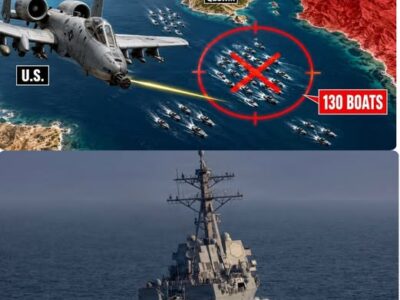
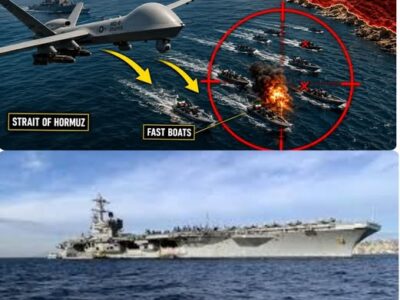
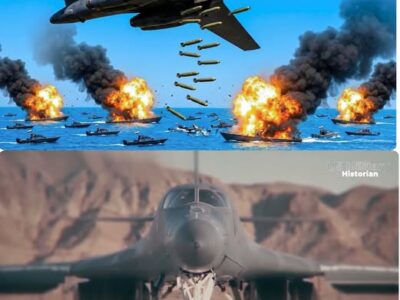
Iran publicly released satellite imagery showing approximately 130 Islamic Revolutionary Guard Corps (IRGC) fast attack boats massed in two large formations inside the Strait of Hormuz. The release was not accidental. It was deliberate, calculated, and strategically symbolic. The imagery immediately triggered intense speculation among military analysts, defense officials, and geopolitical observers.
Was this a show of force?
A warning to Washington?
A message to Gulf nations?
Or was it the opening move in a potentially catastrophic naval confrontation?
The answer may be all of the above.
What makes this moment especially significant is not merely the number of vessels involved, but the broader military and political context surrounding their deployment. The region has already endured weeks of escalating tension, military strikes, drone warfare, shipping disruptions, and mounting fears of direct confrontation between Iran and a coalition of American and allied forces operating in the Gulf.
The release of these images transformed a regional military posture into a global strategic event.
Why Iran Released the Satellite Images
Military organizations rarely expose their operational formations publicly unless they intend to communicate something beyond simple tactical information. Iran’s decision to release overhead imagery of its naval assets was a strategic information operation designed for multiple audiences simultaneously.
1. A Message to the Iranian Public
Inside Iran, information controls and media restrictions have limited public visibility into the broader military situation unfolding in the Gulf. By showcasing 130 fast attack boats assembled in formation, Iranian state media projected an image of strength, readiness, and resilience.
The message was straightforward:
The IRGC remains operational.
Iran still controls strategic maritime space.
The country has not been militarily crippled.
Resistance capability remains intact.
In periods of conflict, governments often rely heavily on symbolic imagery to maintain domestic morale. The satellite image served exactly that purpose.
2. A Message to the United States
The imagery was also directed at Washington and U.S. military planners already operating throughout the Gulf region.
Iran was effectively signaling:
“We still possess the capability to mass naval forces rapidly inside the Strait of Hormuz.”
The implication behind the message was clear. Any renewed military escalation against Iran could trigger direct maritime confrontation involving swarm tactics, missile boats, and potentially large-scale disruption to commercial shipping.
However, military analysts quickly pointed out a paradox in Iran’s strategy. By publicly revealing the formations, Iran also revealed targeting information to every hostile surveillance system already monitoring the region.
In modern warfare, visibility can become vulnerability.
3. A Message to International Markets
The Strait of Hormuz is not merely a military chokepoint—it is an economic artery.
Roughly one-fifth of global petroleum trade passes through the strait. Any threat to shipping immediately impacts energy prices, insurance costs, and financial markets.
By releasing these images, Iran reminded the world of its enduring ability to threaten maritime traffic, even under intense international pressure.
The message to global markets was unmistakable:
Iran can still disrupt the flow of energy if pushed too far.
The Rise of the “Shadow General”
One of the most intriguing developments surrounding the operation is the reported emergence of a new coordinating figure referred to as “General Salami.”
This is not the original IRGC Commander Hossein Salami, who was reportedly killed earlier during the conflict. Instead, analysts describe a shadow commander appearing within the Iranian military hierarchy to coordinate operations between the IRGC and the conventional Iranian military known as the Artesh.
This development matters enormously.
Historically, the IRGC and the Artesh have operated as parallel institutions with separate command structures, competing interests, and very different military cultures.
The IRGC functions as an ideological revolutionary force loyal directly to Iran’s Supreme Leader.
The Artesh functions as a more traditional national military institution.
For decades, coordination between the two has been inconsistent and politically sensitive.
If Iran has successfully integrated these organizations into a unified operational structure, the implications are serious.
Combined-arms coordination dramatically increases military complexity.
Instead of isolated naval harassment operations, the new structure could theoretically combine:
Fast attack boats
Coastal missile batteries
Drone swarms
Air-defense systems
Submarine operations
Electronic warfare assets
Conventional military logistics
This would represent a far more sophisticated battlefield environment than earlier phases of the conflict.
Yet there is another interpretation.
The sudden appearance of an improvised “shadow commander” may also indicate institutional instability rather than strength.
Improvised wartime coordination often produces confusion, communication failures, and fragmented command authority—especially under sustained military pressure.
And confusion in naval combat can become catastrophic within minutes.
The IRGC Swarm Doctrine
Iran’s naval strategy has long relied on asymmetric warfare.
Rather than attempting to match the U.S. Navy ship-for-ship, Iran developed a doctrine centered around swarming tactics using small, fast, heavily armed boats.
The theory is relatively simple.
A large number of small vessels attack simultaneously from multiple directions, overwhelming enemy targeting systems and saturating defensive fire capacity.
Individually, each boat is weak.
Collectively, they become dangerous.
Fast attack craft can carry:
Heavy machine guns
Rocket launchers
Anti-ship missiles
Torpedoes
Explosive payloads
Electronic jamming systems
In confined waterways like the Strait of Hormuz, swarm tactics become especially concerning because maneuvering space is limited.
Commercial tankers are slow and vulnerable.
Even advanced naval destroyers can face difficulty tracking dozens of high-speed targets moving unpredictably at close range.
This is precisely why the image of 130 boats immediately drew global attention.
The American Response Architecture
While the IRGC’s swarm doctrine appears intimidating visually, modern U.S. and allied military systems have spent decades preparing specifically for this scenario.
The American response would not rely on a single weapon system.
Instead, it would involve a layered kill chain integrating air, naval, and surveillance assets simultaneously.
A-10 Warthogs
The A-10 Thunderbolt II remains one of the most devastating close-air support aircraft ever built.
Its GAU-8 Avenger cannon fires massive 30mm rounds at extremely high rates of fire.
Against lightly armored fast attack boats, the effect would likely be devastating.
The key advantage of the A-10 in this scenario is target density.
A concentrated swarm formation actually benefits the aircraft because pilots no longer need to search for dispersed targets individually.
The boats become a compact engagement zone.
Apache Helicopters
AH-64 Apache helicopters add another layer of precision and persistence.
Unlike fast-moving jets, helicopters can remain low over the water, track surviving vessels, and engage scattered boats attempting to flee.
Their advanced targeting systems provide:
Thermal tracking
Night operations capability
Precision missile strikes
Close-range suppression
In swarm engagements, Apaches become deadly hunters once formations begin breaking apart.
Arleigh Burke Destroyers
American destroyers equipped with Aegis combat systems represent the backbone of naval defense in the Gulf.
Their five-inch naval guns are often overlooked in modern warfare discussions dominated by missiles and drones.
But against small boats, large-caliber naval artillery remains terrifyingly effective.
A single direct hit from a destroyer’s naval gun would obliterate most fast attack craft instantly.
Additionally, destroyers bring:
Missile defense systems
Radar tracking
Electronic warfare
Anti-air capability
Anti-submarine warfare assets
F-15E Strike Eagles
F-15E aircraft carrying APKWS laser-guided rockets provide cost-effective precision strike capability.
Rather than using million-dollar missiles against small boats, laser-guided rockets allow aircraft to destroy individual vessels economically and efficiently.
In large-scale swarm engagements, cost efficiency matters enormously.
Military planners must conserve high-end munitions for strategic threats while still eliminating smaller targets rapidly.
Why Concentration Could Become a Fatal Mistake
The biggest analytical debate surrounding Iran’s deployment concerns concentration versus dispersion.
Swarm tactics work best when targets are difficult to identify and engage individually.
But by grouping 130 boats into large formations visible from satellite imagery, Iran may have unintentionally simplified enemy targeting.
Large concentrated formations become easier to:
Detect
Track
Range
Engage simultaneously
Saturate with area fire
Modern ISR (Intelligence, Surveillance, Reconnaissance) systems thrive against concentrated targets.
Once surveillance aircraft, drones, satellites, and radar systems lock onto formations, the engagement process accelerates dramatically.
This is why some analysts describe the released imagery as strategically self-defeating.
Iran demonstrated strength—but also exposed vulnerability.
Could Iran Still Inflict Serious Damage?
Absolutely.
Even if coalition forces possess overwhelming superiority, naval warfare in confined waterways is inherently dangerous.
A single successful missile strike against:
An oil tanker
A destroyer
A logistics vessel
A commercial shipping lane
could trigger enormous global consequences.
Potential impacts include:
Massive spikes in oil prices
Insurance market disruptions
Shipping delays
Escalation into regional war
Global financial instability
Even a militarily losing side can produce strategic shock.
This is especially true in the Strait of Hormuz.
The Submarine Factor
Another critical dimension is Iran’s submarine capability.
Reports indicate deployment of Ghadir-class submarines alongside surface formations.
Though relatively small, these submarines are optimized for shallow-water operations in the Gulf.
Their role could include:
Laying naval mines
Torpedo attacks
Ambush operations
Psychological disruption
Submarines significantly complicate maritime battles because they force naval commanders to divide attention across multiple domains simultaneously.
Surface threats are dangerous.
Hidden underwater threats are even more psychologically destabilizing.
Multi-Domain Warfare in the Gulf
What makes the current crisis especially dangerous is that it extends beyond naval combat.
Modern warfare no longer occurs in isolated domains.
Any major engagement in Hormuz would likely involve:
Naval battles
Drone attacks
Missile strikes
Electronic warfare
Cyber operations
Air-defense engagements
Satellite surveillance
Information warfare
The battlefield is fully integrated.
Iran’s strategy appears aimed at creating simultaneous pressure points across every operational domain.
The goal would not necessarily be outright military victory.
Instead, the objective may be:
Raising the cost of intervention
Prolonging instability
Disrupting energy flows
Generating political pressure internationally
The Economic Battlefield
Military analysts often focus on weapons systems while overlooking economics.
But economics may ultimately determine the outcome of this confrontation.
Iran’s strategy leverages global dependence on Gulf energy routes.
Even temporary disruption can produce:
Inflationary pressure
Market volatility
Strategic panic
This gives relatively small military assets outsized geopolitical leverage.
Meanwhile, the United States and allied forces rely on sustaining operational dominance while avoiding catastrophic escalation.
Destroying boats is one thing.
Preventing regional war is another.
The Information War
The satellite image release also demonstrates how modern conflicts are increasingly shaped by narrative warfare.
Military power today is not only measured in missiles and ships.
It is measured in perception.
Iran sought to project:
Strength
Defiance
Survivability
Operational continuity
Meanwhile, Western analysts interpreted the same image as:
Tactical exposure
Target concentration
Vulnerability to overwhelming force
This is the nature of information warfare.
The same photograph becomes two entirely different strategic narratives depending on the audience.
Could This Become the Largest Naval Clash of the Conflict?
Potentially yes.
If direct confrontation occurs involving:
130 fast attack boats
Coalition destroyers
Airpower
Missile systems
Submarines
Drone swarms
the scale could surpass earlier engagements dramatically.
Even if the battle lasts only hours, its geopolitical consequences could persist for years.
The world economy remains deeply tied to Gulf stability.
And any sustained closure or disruption of Hormuz would affect nearly every major industrial nation on Earth.
Strategic Reality Versus Symbolism
The core question remains unresolved:
Was the deployment a genuine prelude to combat—or primarily a symbolic show of force?
Military signaling often walks a dangerous line between deterrence and provocation.
If Iran intended deterrence, publicizing the formations may have achieved that objective.
If Iran intended operational surprise, the strategy appears far riskier.
Because once formations become publicly visible, adversaries can:
Prepare engagement plans
Position assets
Coordinate targeting
Pre-stage logistics
Establish surveillance coverage
In essence, the battlefield becomes pre-mapped before combat even begins.
Final Thoughts
The image of 130 Iranian fast attack boats massed inside the Strait of Hormuz may become one of the defining geopolitical images of 2026.
It captures the essence of modern asymmetric warfare:
Symbolism mixed with strategy
Visibility mixed with vulnerability
Deterrence mixed with escalation
Iran sought to demonstrate power.
But the same image also revealed how exposed concentrated maritime formations become under modern surveillance and precision warfare systems.
Whether this confrontation escalates into direct combat remains uncertain.
What is certain is that the Strait of Hormuz has once again become the focal point of global military tension.
The next move—whether diplomatic or military—could shape not only the future of the Gulf, but the stability of global energy markets and international security itself.
For now, the boats remain in the water.
The warships remain on alert.
And the world watches the Strait of Hormuz with growing anxiety.