Iran deal is a ‘DISASTER’ that does not achieve the actual goals: Ben Shapiro
Critics Blast Emerging Iran Agreement as Strategic ‘Disaster’ Amid Debate Over Nuclear Limits, Regional Security, and Strait of Hormuz Concessions
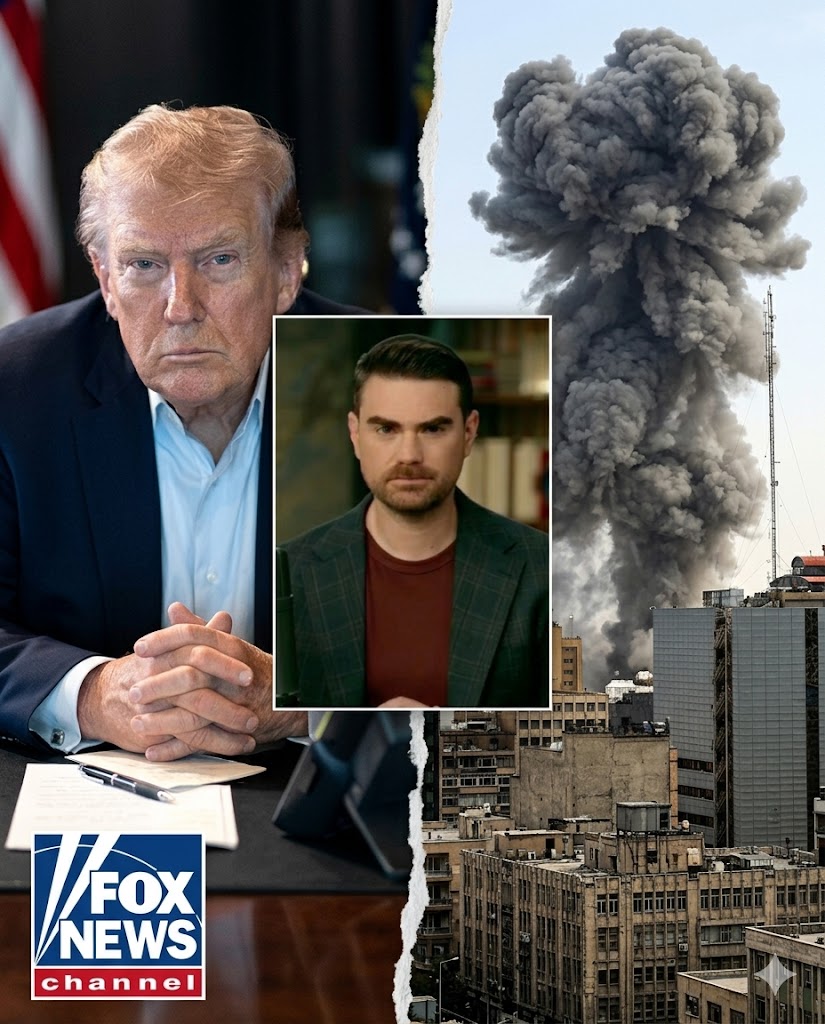
As the United States and Iran move closer to what officials describe as a “memorandum of understanding” aimed at de-escalating tensions in the Middle East, sharp criticism is emerging from conservative commentators and policy analysts who argue the framework fails to address core security concerns and may ultimately weaken long-term U.S. leverage in the region.
Among the most forceful critiques came from conservative commentator Ben Shapiro, who described the developing agreement as a “disaster” that does not meet the administration’s stated strategic objectives, particularly on nuclear restrictions, ballistic missile controls, and Iranian regional influence.
The debate underscores growing political divisions in Washington over how far the United States should go in trading economic incentives and diplomatic normalization for Iranian commitments on nuclear activity and regional behavior.
A controversial framework under scrutiny
The proposed agreement, still in draft form, reportedly includes conditional sanctions relief tied to Iranian compliance with specific benchmarks. These include maintaining open maritime traffic through the Strait of Hormuz, limiting nuclear enrichment activities, and engaging in broader regional de-escalation discussions.
However, critics argue that key security priorities are either absent or insufficiently addressed.
Shapiro, speaking in a televised interview, acknowledged what he described as a significant earlier military operation against Iranian nuclear and missile infrastructure, calling it “an act of political bravery” by the administration. But he sharply criticized the diplomatic framework now under discussion, arguing it fails to secure long-term strategic gains.
“The current memorandum appears, from the text we’ve seen, to be a disaster that does not achieve the actual stated goals of the administration,” Shapiro said.
According to Shapiro, those goals included eliminating Iran’s nuclear enrichment capability, restricting its ballistic missile program, curbing support for proxy militias, and ensuring permanent freedom of navigation through the Strait of Hormuz.
He argued that the emerging agreement falls short on each of those fronts.
Nuclear enrichment and verification concerns
One of the most contentious points in the debate is the question of nuclear enrichment. Critics of the agreement argue that any allowance for continued enrichment activity—however limited—undermines the goal of preventing Iran from developing nuclear weapons capability.
Shapiro and other critics contend that the framework does not establish a “zero enrichment” standard, which they view as essential for preventing future weaponization.
“Zero enrichment was supposed to be the baseline,” Shapiro said. “That does not appear in this deal.”
Supporters of diplomatic engagement counter that verification mechanisms and phased compliance requirements provide sufficient safeguards, and that a complete prohibition on enrichment is unlikely to be enforceable in practice without significant escalation.
U.S. officials involved in negotiations have not publicly confirmed the precise language of the draft agreement, but have emphasized that any nuclear-related provisions would be subject to international monitoring and compliance checks.
Ballistic missile program left unresolved
Another major point of contention involves Iran’s ballistic missile capabilities. Critics argue that the agreement does not meaningfully restrict Iran’s missile development program, which has long been viewed by U.S. defense officials as a central component of its military deterrence strategy.
Shapiro pointed to what he described as inconsistent messaging from the administration regarding missile restrictions, noting that while earlier policy statements emphasized curbing Iranian missile development, the current framework appears to treat the issue as secondary or outside the scope of enforceable terms.
He also referenced comparisons made by administration officials between Iran’s missile capabilities and those of regional allies, suggesting that such comparisons complicate efforts to impose strict limitations.
“This is a fundamental gap,” Shapiro argued. “If ballistic missiles are not included in a meaningful way, then the deterrence structure is incomplete.”
Officials familiar with the negotiations have indicated that missile-related discussions remain politically sensitive, given their connection to regional security dynamics and the capabilities of multiple Middle Eastern states.
Strait of Hormuz provisions spark debate
Perhaps the most strategically significant—and controversial—element of the proposed agreement involves the Strait of Hormuz, a critical maritime chokepoint through which a substantial portion of global oil exports pass.
Under the reported framework, Iran would be expected to maintain open access to the strait as part of its compliance obligations, with sanctions relief contingent on adherence to that condition.
However, critics argue that the agreement may contain loopholes or delayed enforcement mechanisms that could allow Iran to retain leverage over the waterway under certain conditions.
Shapiro raised concerns that provisions could allow for transitional arrangements involving Iran and regional actors such as Oman, potentially creating ambiguity over enforcement timelines.
He argued that any framework allowing even temporary Iranian leverage over the strait undermines the core objective of ensuring uninterrupted global energy flows.
“The Strait of Hormuz cannot be a bargaining chip,” he said. “It is either open or it is not. Anything less introduces unnecessary risk into global energy markets.”
Energy analysts note that even brief disruptions in the strait have historically led to volatility in oil prices, underscoring the strategic importance of maintaining stability in the region.
Iran’s regional role and Hezbollah connection
Beyond nuclear and maritime issues, the agreement has also sparked debate over Iran’s relationship with regional proxy groups, particularly Hezbollah in Lebanon.
The proposed framework reportedly includes language related to broader ceasefire efforts in Lebanon, though details remain unclear. Critics argue that the agreement risks constraining Israel’s ability to respond to Hezbollah attacks if interpreted too broadly.
Shapiro warned that limiting Israeli military operations in Lebanon in exchange for Iranian compliance in other areas could create strategic vulnerabilities.
“Hezbollah is not the government of Lebanon,” he said. “It is a proxy force that has been actively engaged in cross-border attacks against Israel for years.”
He argued that any arrangement that constrains Israel’s defensive operations risks allowing Hezbollah to rebuild its operational capacity.
Israeli officials have consistently maintained that their military actions in Lebanon are defensive in nature, aimed at preventing cross-border attacks and deterring further escalation.
U.S. officials, including Ambassador to Israel Mike Huckabee, have also reiterated Israel’s right to self-defense, while emphasizing the importance of minimizing civilian harm and avoiding broader regional escalation.
Trump’s comments and diplomatic balancing act
Former President Donald Trump, who has been closely involved in discussions surrounding the emerging framework, has sought to strike a balance between support for Israel’s security concerns and broader efforts to de-escalate regional conflicts.
In recent remarks, Trump suggested that Israeli military operations in Lebanon should be conducted with greater restraint, particularly in densely populated areas where Hezbollah operates.
“We don’t need to knock down a building every time someone from Hezbollah walks in,” Trump said, referring to Israeli air operations.
At the same time, he reaffirmed Israel’s right to defend itself and described the U.S.-Israel relationship as a strong partnership, albeit one that requires periodic calibration.
The comments reflect the broader challenge facing U.S. policymakers: maintaining support for a key regional ally while also pursuing a broader diplomatic framework involving Iran.
Internal divisions and strategic uncertainty
The debate over the Iran agreement highlights deeper divisions within U.S. foreign policy circles over how to approach long-term containment of Iranian influence.
Supporters of the deal argue that structured engagement, even if imperfect, provides a pathway to reduce immediate conflict risks and stabilize critical energy routes.
Critics counter that incomplete restrictions—particularly on nuclear enrichment and missile development—risk allowing Iran to retain core elements of its strategic deterrence while gaining economic relief.
“There is a fundamental disagreement here about what success looks like,” one former defense official said. “Is it short-term stability, or long-term strategic rollback?”
Regional implications
Beyond Washington, regional actors are closely monitoring the emerging framework.
Gulf states, including Saudi Arabia and the United Arab Emirates, have a direct stake in the stability of the Strait of Hormuz and the broader security environment. Many have invested heavily in alternative export routes and energy infrastructure designed to reduce vulnerability to maritime disruption.
At the same time, these states continue to balance relations with both the United States and Iran, as well as emerging global powers such as China.
Analysts suggest that the outcome of the current negotiations could influence regional defense spending, alliance structures, and long-term energy strategy across the Middle East.
Conclusion: a deal still in flux
While the proposed memorandum of understanding between the United States and Iran remains under negotiation, the political and strategic debate surrounding it is already intensifying.
Supporters view it as a pragmatic step toward reducing the risk of direct conflict and stabilizing critical global energy routes. Critics see it as an incomplete framework that leaves key security vulnerabilities unaddressed.
As discussions continue at the G7 summit and beyond, the central question remains unresolved: whether the agreement represents a durable step toward regional stability—or a temporary pause in a cycle of recurring geopolitical tension.
What is clear is that the stakes extend far beyond diplomacy. They encompass nuclear security, global energy markets, regional military dynamics, and the balance of power in one of the most strategically sensitive regions in the world.
And for policymakers in Washington, Tehran, and across the Middle East, the decisions made in the coming weeks may define that balance for years to come.