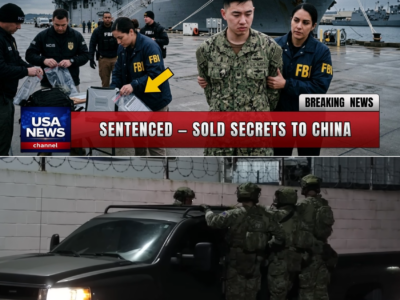
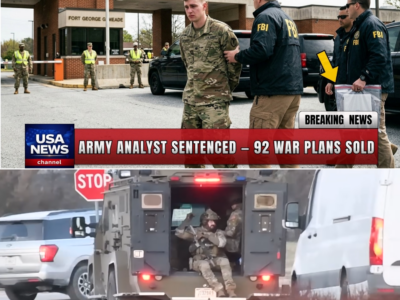
FBI: SENTENCED — Pacific Northwest Soldiers Sold SECRET & TOP SECRET Military Data to China for Cash
The Jacket Pocket Betrayal: HIMARS and the High Price of Treason
The Invisible Breach: A Hard Drive in a Pocket
The physical reality of modern military espionage is terrifyingly small. It no longer requires bulky crates of microfilmed documents or elaborate hand-offs of heavy briefcases. Today, the most sensitive technical specifications in the American arsenal—data that cost billions of dollars to develop and decades to refine—can be compressed onto a device small enough to fit inside a standard jacket pocket. This is the story of how that small device became the vehicle for an “exceptionally grave” compromise of national security.
j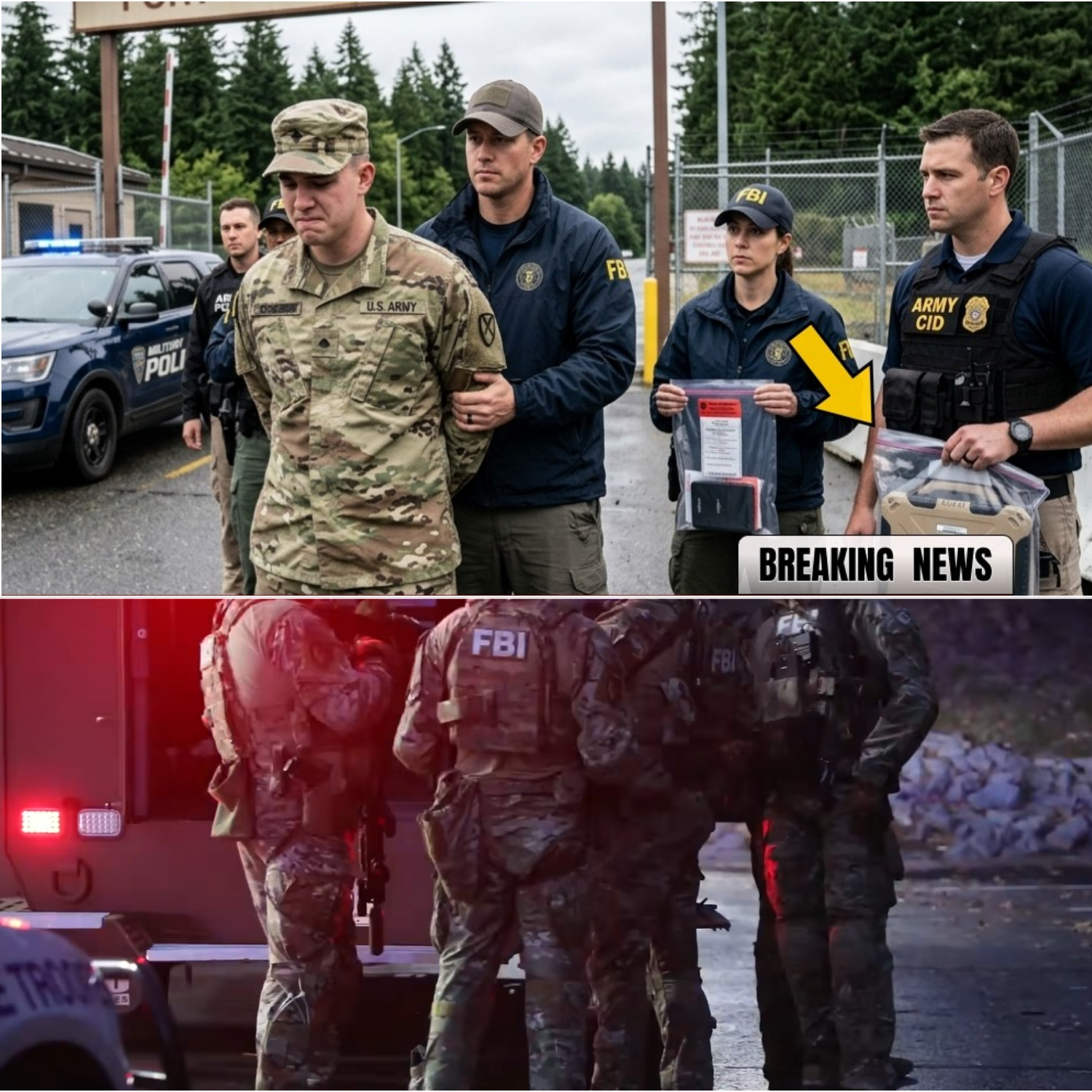
Between 2022 and 2024, three active-duty soldiers exploited the portability of digital storage to walk out of secure military facilities in the Pacific Northwest with hard drives marked “Secret” and “Top Secret.” They weren’t just stealing generic files; they were handing over the operational soul of the M142 High Mobility Artillery Rocket System, better known as HIMARS. At the exact moment this precision rocket platform was becoming the most consequential weapon in Ukraine’s defense against Russian forces, these soldiers were selling its technical parameters to a handler connected to Chinese military intelligence.
The Pacific Northwest Network: Recruitment Through Pressure
The recruitment of Staff Sergeant Kano Matsuguma, 33, and Sergeant Harley Deikman, 23, was not a cinematic tale of complex ideological conversion. It was a cold application of the standard intelligence recruitment playbook: identify a vulnerability and offer immediate relief. Both soldiers were assigned to units in a region with a high concentration of Joint military facilities supporting operations in the Indo-Pacific. Despite their security clearances, they were mid-grade and junior enlisted personnel living on salaries that left little margin for financial emergencies.
The handler, a civilian whose role was to acquire the drives and move them to foreign intelligence assets, presented a straightforward financial arrangement. Cash for hard drives. The more sensitive the classification, the higher the payout. For these soldiers, the moral calculus was briefly silenced by the promise of quick money. Deikman went even further, stealing an Army-issued encrypted laptop. This was not just a theft of data; it was a theft of cryptographic hardware, a compromise that potentially exposed the very infrastructure the U.S. military uses to keep its communications secure.
HIMARS: A Priority Collection Target
To understand why Chinese intelligence was willing to pay for this specific data, one must look at the global stage in 2022. As Russia invaded Ukraine, the HIMARS system performed beyond all expectations. It fundamentally changed the operational dynamics of the war, destroying ammunition depots and command posts with a precision that previous artillery could not match. It became the weapon that every military analyst in the world was watching.
For the People’s Republic of China, HIMARS represents a core element of American military deterrence in the Pacific theater, particularly in any scenario involving Taiwan. Having the active operational data—vulnerabilities, maintenance requirements, and electronic system parameters—of a weapon currently proving its effectiveness in a live conflict is an intelligence gold mine. The data stolen by Matsuguma and Deikman wasn’t legacy documentation; it was current, actionable information on a system the U.S. Army depends on for its warfighting capability in the Pacific.
The FBI Seattle Investigation: Mapping the Trail
The downfall of the network began when the FBI’s Seattle field office received intelligence that classified materials were leaving secure facilities. The bureau opened a counter-intelligence investigation that combined traditional detective work with high-level forensic analysis. Every classified hard drive has a serial number, an access log, and a documented chain of custody. When the FBI compared the physical location of these drives to their documented locations, the discrepancies became undeniable evidence of theft.
Simultaneously, financial analysts mapped the flow of cash from the handler to the soldiers. The payments were traced through bank records and digital transfer histories, creating a pillar of evidence that the soldiers could not escape. Digital forensics on seized devices recovered messages between the soldiers and their handler, documenting the specific requests for data and the compensation structures discussed. This was a coordinated intelligence gathering effort, not an isolated incident of three individuals acting alone.
Exceptional Grave Damage: The Meaning of the Classification
In the American classification framework, the labels “Secret” and “Top Secret” are not used lightly. “Secret” refers to information that, if disclosed, could cause serious damage to national security. “Top Secret” is reserved for information whose disclosure could cause “exceptionally grave” damage. The HIMARS data stolen by these soldiers fell into this highest category of protection.
Three soldiers decided that the cash offered by a foreign intelligence handler was worth the “exceptionally grave” risk to their country and their fellow service members. The FBI investigation dismantled the network before more data could be transferred, but the damage was already done. The technical parameters of a cornerstone weapon system were now sitting in a database in Beijing. While the legal system can hold individuals accountable through prison sentences, it cannot undo the reduction in the operational advantage that this data once provided to the United States military.
March 2025: The Verdict and the Unresolved Questions
In March 2025, the Department of Justice announced the convictions and sentencing of Matsuguma and Deikman. Matsuguma, the senior in rank and age, received a significant sentence reflecting his central role in the scheme and his broader access to classified systems. Deikman’s sentence reflected both the data theft and the separate, additive crime of stealing an encryption-capable military laptop. The civilian handler also faced federal charges for his role as the conduit between the soldiers and Chinese intelligence.
However, the case leaves behind a series of unsettling questions. The third active-duty soldier involved remains in the military justice system, his case still pending. More importantly, the investigation highlighted a structural vulnerability that continues to haunt the counter-intelligence community: the human factor. No matter how advanced the encryption or how secure the facility, the system still relies on individuals with jacket pockets and financial pressures. The conviction of three soldiers in the Pacific Northwest was a success for the FBI, but it serves as a stark reminder of the “exceptionally grave” price of institutional betrayal in the digital age.