Iran issues NEW threat to US as Trump touts peace deal
Iran Issues New Warning as Trump Promotes Emerging Regional Agreement Amid Fragile Middle East Diplomacy
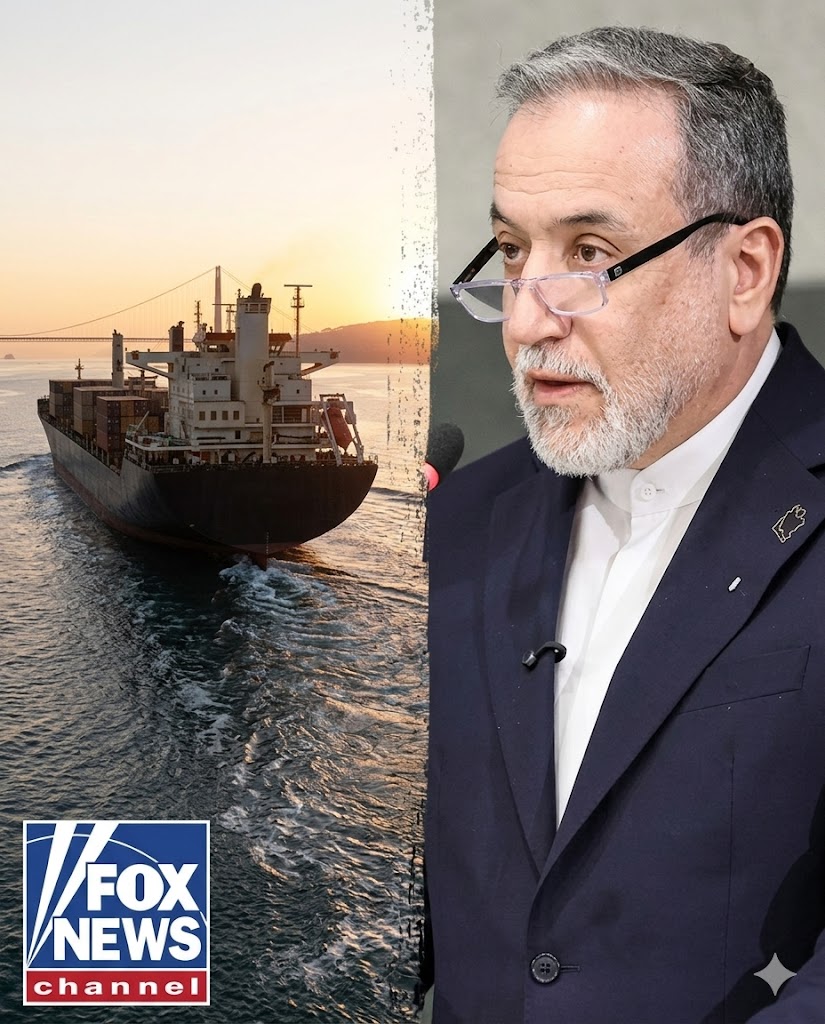
As global leaders gathered at the G7 summit this week, a new wave of tension emerged from the Middle East, where Iran issued fresh warnings to the United States even as diplomatic officials on multiple sides signaled cautious optimism about a potential framework agreement involving Tehran, Washington, and key Gulf partners.
The developments unfolded against the backdrop of renewed efforts to stabilize one of the world’s most strategically sensitive waterways—the Strait of Hormuz—through which nearly one-fifth of global oil supply flows. While former President Donald Trump, now again a central figure in high-level diplomatic discussions, described the emerging arrangement as a pathway to peace and economic stability, Iranian officials pushed back strongly, particularly on issues tied to regional military activity and Israeli operations in Lebanon.
The result is a complex and fragile diplomatic moment: one that blends ceasefire negotiations, energy security concerns, and long-standing regional rivalries into a single, tightly interwoven set of talks that may shape Middle East security for years to come.
A high-stakes diplomatic push at the G7
According to officials briefed on the discussions, Trump is expected to meet with leaders from Qatar and the United Arab Emirates as part of a broader diplomatic effort aimed at formalizing what has been described as a “performance-based memorandum of understanding” with Iran.
Under the terms being discussed, Iran would be expected to comply with a series of conditions—most notably commitments related to keeping the Strait of Hormuz open to global shipping and engaging in structured negotiations over its nuclear program. In return, sanctions relief and reintegration into segments of the global economy could be considered, depending on compliance.
A senior official familiar with the talks described the arrangement as conditional rather than immediate.
“There is no upfront transfer of funds,” the official said. “Any economic benefits would depend entirely on verified Iranian compliance.”
Vice President J.D. Vance, speaking on Fox News’ “Hannity,” emphasized that the agreement is designed around accountability rather than financial incentives.
“They are not getting a single dime of American money,” Vance said. “Any relief is conditional on behavior, and only behavior that can be verified.”
The administration’s messaging reflects a broader effort to frame the emerging deal as a security-first arrangement, rather than a traditional diplomatic concession package.
Iran pushes back, linking deal to Lebanon conflict
While negotiations advanced in parallel with the G7 discussions, Iranian officials signaled significant reservations, particularly regarding the scope of military activity in Lebanon.
In remarks delivered from Tehran, Iran’s foreign minister warned that any continued Israeli military operations in Lebanon could be interpreted as a violation of the emerging understanding between Tehran and Washington.
“Any military attack against Lebanon going forward, or continued occupation of Lebanese territory, would be considered a violation of the memorandum of understanding,” the minister said.
The statement underscores Iran’s attempt to link broader regional conflicts—particularly Israel’s confrontation with Hezbollah—to the terms of any potential agreement with the United States.
Israel, for its part, has maintained that its operations in Lebanon are defensive, targeting Hezbollah, the Iran-backed militant group that has exchanged fire with Israeli forces across the border in recent months. Prime Minister Benjamin Netanyahu reiterated that Israel would continue military operations if necessary.
“We will continue to defend ourselves as necessary,” Netanyahu said in a televised address. “The fight is not over.”
U.S. officials have acknowledged that Israel will retain the ability to respond to threats from Hezbollah if Israeli civilians come under attack, further complicating efforts to align all parties under a unified framework.
Qatar’s behind-the-scenes role
A notable feature of the emerging diplomatic effort is the central role being played by Qatar, which has acted as an intermediary between Washington and Tehran in recent negotiations.
According to officials familiar with the talks, Qatari representatives were present in Tehran during critical stages of the agreement’s development and have worked closely with U.S. counterparts to refine its language and structure.
“Qatar has played a critical role in bringing this across the finish line,” one official said. “They have maintained communication channels that others simply do not have.”
Qatar’s involvement reflects its broader foreign policy approach, which has long balanced relations with Western governments while maintaining dialogue with regional actors including Iran and Hamas.
However, this balancing act has also drawn scrutiny, particularly given Qatar’s historical hosting of political leadership figures from groups designated as terrorist organizations by the United States and other Western nations.
Still, U.S. officials involved in the negotiations credited Doha’s diplomatic flexibility as essential to maintaining momentum in the talks.
Hormuz at the center of the agreement
At the core of the proposed framework is the Strait of Hormuz itself—a maritime chokepoint that remains one of the most strategically significant passages in global trade.
For decades, Iran has leveraged its geographic position along the strait as a form of strategic deterrence, periodically threatening to disrupt shipping in response to sanctions or military pressure.
Those threats have historically had a measurable impact on global energy markets, often causing immediate spikes in oil prices and increased shipping insurance costs.
Under the emerging agreement, however, Iranian officials would reportedly be required to commit to keeping the strait open as a condition for economic engagement and sanctions relief.
According to officials briefed on the matter, compliance would be “performance-based,” meaning that any economic benefits would be withheld unless Iran adhered to specific operational commitments.
A former U.S. national security official familiar with Gulf policy said the structure reflects a shift in how Washington is approaching Iranian deterrence.
“The strategy here is not just about diplomacy,” the official said. “It’s about removing leverage points one by one and replacing them with enforceable economic and military realities.”
Israel-Hezbollah tensions complicate the framework
One of the most significant sticking points in the emerging agreement is the ongoing conflict involving Hezbollah in Lebanon.
Iranian officials have argued that Israeli military operations in Lebanon should be included within the scope of any ceasefire arrangement tied to the broader memorandum of understanding.
Israeli officials, however, have rejected that framing, insisting that Hezbollah’s continued rocket and drone attacks necessitate ongoing defensive action.
U.S. officials have attempted to bridge the gap by emphasizing a more flexible interpretation of the agreement, but analysts say the disconnect highlights the structural difficulty of linking multiple regional conflicts to a single diplomatic framework.
“This is not one war,” said Victoria Coates, former deputy national security advisor, in an interview on Fox News. “It’s multiple overlapping conflicts with different actors, different motivations, and different red lines.”
Coates added that the burden of de-escalation ultimately lies with Iran.
“If Iran wants stability, it has to restrain Hezbollah,” she said. “Otherwise, Israel will respond. That’s the reality on the ground.”
Strategic isolation of Hezbollah
Military analysts note that Hezbollah’s operational environment has changed significantly in recent years. Supply routes that once ran through Syria have been disrupted, limiting the group’s ability to move weapons and resources across the region.
Syria’s shifting alignment and internal instability have further complicated Iran’s logistical support network, reducing what was once a relatively stable corridor of influence stretching from Tehran to Beirut.
“The land bridge is no longer what it used to be,” one regional analyst said. “That has real consequences for Hezbollah’s capacity and for Iran’s ability to project influence.”
This evolving landscape, analysts argue, may be contributing to Iran’s more cautious posture in recent maritime and regional confrontations.
Trump’s messaging and international reception
Former President Trump has publicly framed the emerging agreement as a breakthrough that could stabilize both energy markets and regional security.
“The main thing is Iran will not have a nuclear weapon,” Trump said during remarks at the G7. “They agreed to that, and it is strongly enforced.”
He also reiterated that the goal of the agreement is to prevent Iran from acquiring nuclear weapons capability, which he described as an existential threat to regional stability.
Supporters of the framework argue that linking economic incentives to verifiable security commitments could create a more durable structure than previous agreements, including the 2015 nuclear deal, which collapsed amid mutual accusations of noncompliance.
Critics, however, warn that the inclusion of multiple regional conflicts—ranging from Lebanon to maritime security in the Gulf—could make enforcement difficult and politically unstable.
A fragile path forward
Despite cautious optimism among some officials, the situation remains fluid. The memorandum of understanding has not yet been formally released, and key details—including verification mechanisms, enforcement procedures, and timelines—remain under negotiation.
European and Japanese officials are expected to play a supporting role in encouraging Iranian compliance, particularly given their reliance on stable energy flows through the Strait of Hormuz.
At the same time, internal Iranian political dynamics may complicate implementation. Hardline factions are likely to resist perceived concessions, while more pragmatic elements may push for economic relief in exchange for de-escalation.
This internal tension, analysts say, could prove as decisive as any external negotiation.
Conclusion: a moment of cautious recalibration
What is unfolding across Washington, Tehran, Jerusalem, and the Gulf is not a conventional peace process, nor is it a finalized agreement.
It is a recalibration—one that reflects shifting power dynamics, evolving military capabilities, and the enduring centrality of energy security in global geopolitics.
Iran’s latest warnings underscore that tensions remain high and unresolved. Yet the simultaneous pursuit of structured dialogue suggests that all parties recognize the costs of continued escalation.
Whether this moment leads to a durable framework or simply another cycle of temporary stabilization remains uncertain.
But what is clear is that the Strait of Hormuz, once again, sits at the center of global attention—not as a battlefield, but as a pressure point where diplomacy, deterrence, and economic necessity continue to collide.