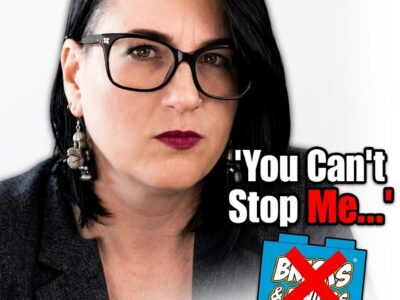
Bricks & MiniFigs Josh Johnson BREAKS SILENCE & Messes Up Big
Bricks & Minifigs Executive Responds to Viral Allegations as LEGO Dispute Spirals Into Legal and Online Firestorm

A growing dispute involving the resale of rare LEGO sets has escalated into a highly public and increasingly contentious debate, as Bricks & Minifigs franchise executive Josh Johnson responds to allegations tied to a $200,000 consignment collection, a police report, and an ongoing investigation amplified by online creator Coffeezilla.
What began as a disagreement over inventory records and consignment agreements has evolved into a broader conflict involving competing narratives, corporate accountability, and the role of online commentary in shaping public perception of legal disputes.
At the center of the controversy is Johnson’s response to inconsistencies between statements made to investigators and information contained in a police report related to the handling of consignment items at a Bricks & Minifigs location in Oregon.
A Dispute Over LEGO, Layaways, and Missing Inventory
The case stems from allegations that a large LEGO collection—estimated by its owner to be worth more than $200,000—was mishandled during a transition in store management. According to the collector and associated parties, the inventory was placed on consignment at a Bricks & Minifigs franchise location, meaning ownership of the LEGO sets remained with the original owner until they were sold.
However, the situation became complicated when control of the store changed hands following franchise-level corporate intervention.
As ownership and operational control shifted, questions arose about what happened to items stored inside the location, including whether consignment goods were properly tracked, sold, or returned.
A police report later introduced a key point of contention: statements attributed to Josh Johnson suggesting that a significant portion of items in the store were classified as layaway purchases.
Layaway systems typically allow customers to reserve items by paying in installments before receiving them. In this case, Johnson reportedly described many of the backroom items as layaway inventory tied to customer payments.
That account has since become central to the dispute.
Contradictions Between Statements and Police Documentation
Online investigator Coffeezilla highlighted apparent inconsistencies between Johnson’s public explanations and the contents of the police report. The report suggests that “the vast majority” of items in the back of the store were layaway-related, a characterization that has been disputed by multiple parties involved in the case.
In response, Johnson addressed the discrepancy directly, suggesting that either the police report exaggerated his statement or that he may have misspoken during the interview.
“That is either an exaggeration by the police or a mistake by me,” Johnson reportedly said when questioned about the inconsistency.
The ambiguity of that statement quickly became a focal point online, with critics arguing that it fails to clearly resolve whether the original information provided to law enforcement was accurate.
Legal analysts note that such inconsistencies can become significant in civil disputes, particularly when determining chain of custody and inventory ownership.
Corporate Responsibility and Franchise Liability
Johnson has also maintained that he was not directly responsible for day-to-day operations at the store and that broader corporate structures limit individual accountability for inventory decisions made at the franchise level.
Bricks & Minifigs, through its corporate leadership, has similarly argued that certain agreements were not formally authorized at the corporate level and therefore fall outside its direct responsibility.
The company has also suggested that any consignment arrangements made by individual franchise operators may not have complied with internal guidelines.
However, the opposing side argues that franchise policy does not necessarily override property law. If consignment agreements existed and were known to store operators or corporate representatives, legal responsibility may still extend beyond individual store managers.
This tension between corporate policy and legal ownership rights remains one of the most disputed elements of the case.
The Question of “What Was Actually Sold”
One of the most important unresolved issues in the dispute is the actual movement of inventory during the transition period.
According to store operator Crystal Law Gorman, consignment items—including portions of the LEGO collection—were present in the store when corporate changes occurred. She has claimed that some items were later sold without proper accounting or compensation to the original owner.
She has also alleged that tracking markers placed on items—such as yellow dot stickers used to identify consigned goods—were removed or altered, making it more difficult to trace ownership.
If verified, such actions could significantly impact the legal interpretation of the case, particularly regarding intent and inventory control.
Johnson and Bricks & Minifigs representatives have disputed these claims, stating that only a small fraction of identifiable items were found after corporate review and that many items may have been sold prior to the transition.
Internal estimates cited by the company suggest that between $2,000 and $5,000 worth of items could be directly linked to the collection, although third-party valuations place the total inventory significantly higher.
Layaway Records and Accounting Disputes
Another point of contention centers on store records and how layaway items were documented.
Johnson has argued that any confusion stems from incomplete or unclear records, suggesting that interpreting historical sales data requires caution. He has pointed to store-level sales records as a potential source of clarification, arguing that they may show which items were sold, at what price, and under what circumstances.
Critics, however, argue that incomplete or inconsistent recordkeeping itself is part of the problem. If consignment or layaway systems were not properly documented, determining ownership becomes significantly more difficult.
Legal experts note that in disputes involving high-value collectibles, accurate inventory tracking is often the deciding factor in court.
The Role of Online Investigations and Coffeezilla’s Coverage
The case gained national attention after being covered and investigated online by Coffeezilla, a creator known for high-profile financial and fraud investigations.
That coverage was further amplified when another YouTuber, known as “Reckless Ben,” began conducting his own on-the-ground investigation into the dispute.
Ben’s involvement included visiting store locations, recording interactions, and attempting to gather firsthand information about the missing LEGO sets. His approach, however, quickly became controversial.
Hidden Cameras, Legal Risks, and Escalation
Ben’s investigative methods included hidden camera footage and direct engagement with store employees. These actions raised legal concerns, particularly around audio recording laws, which vary by state.
In Oregon, for example, recording private conversations without the consent of all parties can create legal exposure depending on context. This issue became central to later criticism of Ben’s methods.
The situation escalated further when Ben allegedly engaged in additional tactics that store representatives later described as deceptive, including staged interactions and attempts to obtain statements under misleading pretenses.
Those actions are now part of a broader legal dispute, with both civil and criminal implications emerging in Utah and Oregon.
Arrests, Lawsuits, and Counterclaims
Ben was later arrested in Utah on misdemeanor charges, including allegations related to stalking, trespass, and disorderly conduct. He has denied wrongdoing and claimed that law enforcement actions against him were unjustified.
Separately, Bricks & Minifigs filed a lawsuit against Ben, alleging harassment and misconduct, and seeking a restraining order that would also limit his ability to publish content related to the case.
That request has sparked debate over the boundary between legal protection and attempts to suppress criticism, particularly when public-facing investigations are involved.
Ben, in turn, has argued that he was attempting to expose wrongdoing and support the original collector’s claims.
Multiple Legal Fronts Still Active
The dispute now spans multiple active legal tracks:
A potential criminal investigation in Oregon regarding the missing LEGO inventory
A civil lawsuit in Utah involving Bricks & Minifigs and online investigators
Criminal charges in Utah related to investigative conduct
A separate civil case brought by the store operator against corporate leadership
Each case addresses different aspects of the broader dispute, but all are tied to the same unresolved question: what happened to the LEGO collection?
Competing Narratives, Unanswered Questions
At present, no court has definitively determined what happened to the full inventory. Estimates vary widely, and documentation remains disputed.
Bricks & Minifigs maintains that only a small portion of the collection can be identified. The store operator alleges improper corporate takeover and missing assets. The collector insists the majority of the collection was never properly returned or accounted for.
Meanwhile, online investigations have added pressure, but also complexity, introducing questions about evidence reliability, investigative ethics, and legal overreach.
Conclusion: A Case Beyond LEGO
What began as a dispute over collectible toys has now expanded into a multi-state legal conflict involving corporate franchising, consignment law, criminal investigation, and the disruptive influence of internet-driven investigations.
The unanswered question remains simple, even as the legal framework grows more complex:
Where is the LEGO collection—and who is legally responsible for what happened to it?
Until courts or investigators provide a definitive answer, the case is likely to remain a defining example of how small commercial disputes can escalate into national controversies when amplified through digital media, public scrutiny, and competing narratives.