Iran Just Did Something So STUPID It DESTROYED Middle East for the Next 100 Years
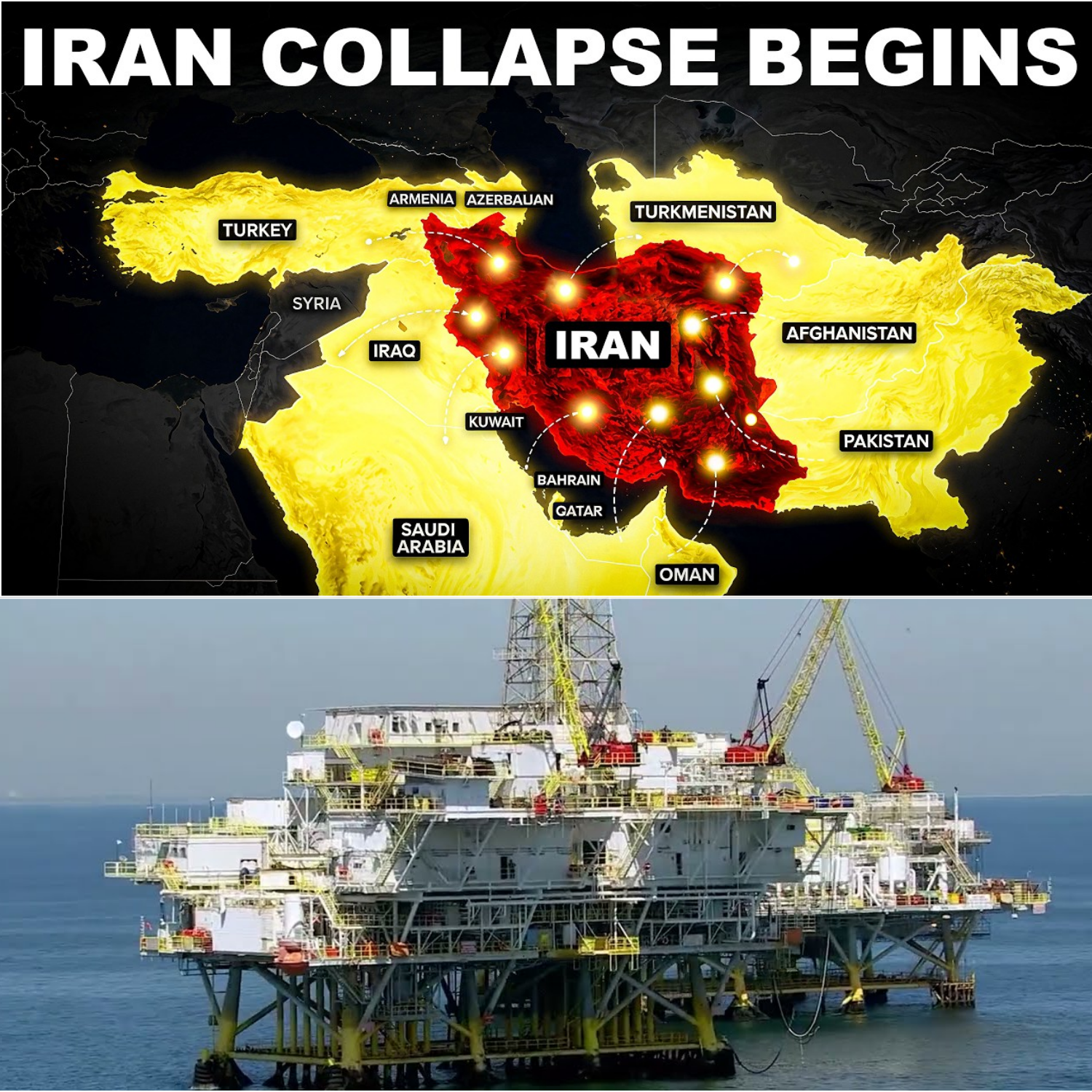
The Architecture of Enmity: Why the Middle East Stands Against Iran
The Genesis of the Great Divide
The foundation of the modern Middle East conflict was laid in the year 632 AD, immediately following the death of the Prophet Muhammad. The question was simple yet catastrophic: who should lead the Muslim community? One faction, the Shia, believed leadership was a divine right reserved for the Prophet’s bloodline, specifically his cousin and son-in-law, Ali ibn Abi Talib. The other faction, the Sunni, argued for a system of consultation and consensus, leading to the selection of Abu Bakr. This was not merely a debate over a title; it was the birth of two distinct identities that would eventually define the borders and battlefields of the 21st century.
For nearly a thousand years, this remained largely a theological disagreement. However, the 16th century marked a turning point when the Safavid dynasty declared Iran an officially Shia state. This was a masterstroke of political branding. By adopting Shiasm, the Persian Safavids created a hard cultural and religious border between themselves and the Sunni Ottoman Empire to their west. Faith became a tool of statecraft, a way to ensure that an Iranian citizen felt fundamentally different—and superior—to their neighbors.
The UAE and the Wound of 1971
While ancient history provides the background, specific territorial disputes provide the spark for modern hatred. On November 30, 1971, the world witnessed an act of aggression that would turn the United Arab Emirates into a sworn enemy of Iran before the UAE was even formally a country. Just two days before the UAE’s official establishment, Iranian naval forces seized the islands of Abu Musa, Greater Tunb, and Lesser Tunb. These were not just rocks in the sea; they were strategic gateways to the Persian Gulf.
The Iranian forces did not just occupy the land; they systematically dismantled the local Arab identity. They demolished schools and police stations, expelled the local population, and raised the Iranian flag. For the UAE, this was an existential insult. Even as Dubai grew into a global trade hub where Iranian merchants moved money freely, the political leadership in Abu Dhabi never forgot the occupation. By 2026, this tension escalated into a “silent war” of economics and air defenses, culminating in the UAE’s historic decision to exit OPEC on May 1, 2026—a move designed to bankrupt the Iranian oil-reliant economy by flooding the global market.
The Saudi-Iranian Cold War
If the UAE represents a territorial wound, Saudi Arabia represents a clash of civilizations. As the “Custodian of the Two Holy Mosques,” Saudi Arabia views itself as the natural leader of the Islamic world. When the 1979 Revolution transformed Iran into a Shia theocracy, the new leadership in Tehran began claiming to represent all “oppressed Muslims,” directly challenging Saudi legitimacy.
The rivalry is both ideological and deeply practical. Saudi Arabia sits on a massive Shia minority in its Eastern Province—the very same region where the kingdom’s oil wealth is located. Riyadh has long suspected that Tehran uses this religious connection to ferment unrest and destabilize the Saudi state from within. This fear turned into a diplomatic nightmare in 2016 following the execution of Shia cleric Nimr al-Nimr, leading to the storming of the Saudi embassy in Tehran and a seven-year freeze in relations.
Though China brokered a fragile peace in 2023, the underlying mistrust remained. By early 2026, the “Beijing Agreement” collapsed under the weight of drone strikes and missile launches. The Saudis realized that regardless of diplomatic handshakes, Iran’s ultimate goal was regional hegemony, backed by a uranium enrichment program that pushed the kingdom toward its own nuclear ambitions.
The Tragedy of Iraq: A Nation Penetrated
Iraq occupies a unique and painful position in this narrative. Unlike the Gulf states, Iraq was the “buffer” that kept Iran in check for decades, most notably during the brutal eight-year Iran-Iraq war in the 1980s which claimed over a million lives. However, the 2003 US invasion of Iraq inadvertently handed Iran its greatest victory. By dismantling the Sunni-led Ba’athist regime, the US opened the gates for Iranian influence to flood the country.
Today, Iraq suffers from what many call a “creeping invasion.” Iran exerts control through the Popular Mobilization Forces (PMF)—powerful Shia militias that, while instrumental in defeating ISIS, now often take orders from Tehran rather than Baghdad. This has turned Iraq into a marketplace for Iranian goods and a launchpad for Iranian proxies. Even the Iraqi Shia population has begun to rebel, with leaders like Muqtada al-Sadr arguing that Iran is bleeding Iraq dry of its resources—water, gas, and sovereignty—leaving the Iraqi people with power shortages and a fractured national identity.
The Neutrality Trap: Qatar and Kuwait
The most telling evidence of Iran’s regional isolation is its treatment of nations that tried to stay neutral. Qatar, which shares the world’s largest gas field with Iran, spent decades acting as a mediator. During the 2017 blockade of Qatar by its Arab neighbors, Iran was the one that opened its airspace and provided food. Qatar believed it had bought safety through diplomacy and shared economic interest.
That illusion was shattered in March 2026. Despite Qatar’s history of cooperation, Iranian long-range missiles struck the Ras Laffan industrial city, knocking out nearly 20% of the global LNG supply. The message was clear: in Iran’s eyes, there is no such thing as a neutral neighbor. Kuwait faced similar realizations. Despite its careful diplomatic balancing act, Kuwaiti security forces repeatedly uncovered IRGC-linked “sleeper cells,” such as the Abdali cell, which stored tons of explosives intended for domestic sabotage. For these smaller nations, Iran is not just a neighbor; it is a predator waiting for the right moment of vulnerability.
The Economic Asymmetry and the Future
As of 2026, the conflict has moved into a phase of “asymmetric exhaustion.” Iran utilizes low-cost drones—roughly $20,000 each—to force its neighbors to fire $4 million Patriot interceptor missiles. It is a war of attrition designed to bankrupt the Gulf monarchies. However, the Arab states have begun to fight back with their most potent weapon: global markets.
The UAE’s exit from OPEC and Saudi Arabia’s “Vision 2030” represent a collective effort to decouple from the old order and create a region where Iranian interference is too expensive to maintain. The animosity that defines the Middle East today is not just about a 7th-century argument or a 20th-century island seizure; it is a modern struggle for survival against a revolutionary power that views its neighbors not as partners, but as provinces to be influenced or obstacles to be removed. As the smoke clears over the refineries of 2026, the map of the Middle East remains a testament to a thousand years of unresolved history and the high price of proximity to a revolution that never ended.