China’s Military Just Got a BRUTAL Wake-Up Call From Iran… Xi Didn’t Expect This
The Paper Dragon’s Collapse: How Three Wars in Nine Months Shattered the Myth of Chinese Weaponry
TEHRAN — For twenty years, Beijing’s sales pitch to the world was as polished as the chrome on its parade missiles: Western-grade lethality for half the price. It was a promise that fueled a multi-billion dollar arms industry, turning China into the “arsenal of the autocrats.”
But between May 2025 and February 2026, that glossy image didn’t just crack—nations watched it dissolve in real-time. From the mountains of Pakistan to the jungles of Venezuela and finally to the high-tech killing fields of Iran, Chinese military hardware has faced its first true “stress test” against modern Western and Indian tactics.
The verdict? The “world-class” technology was little more than expensive, high-tech junk.
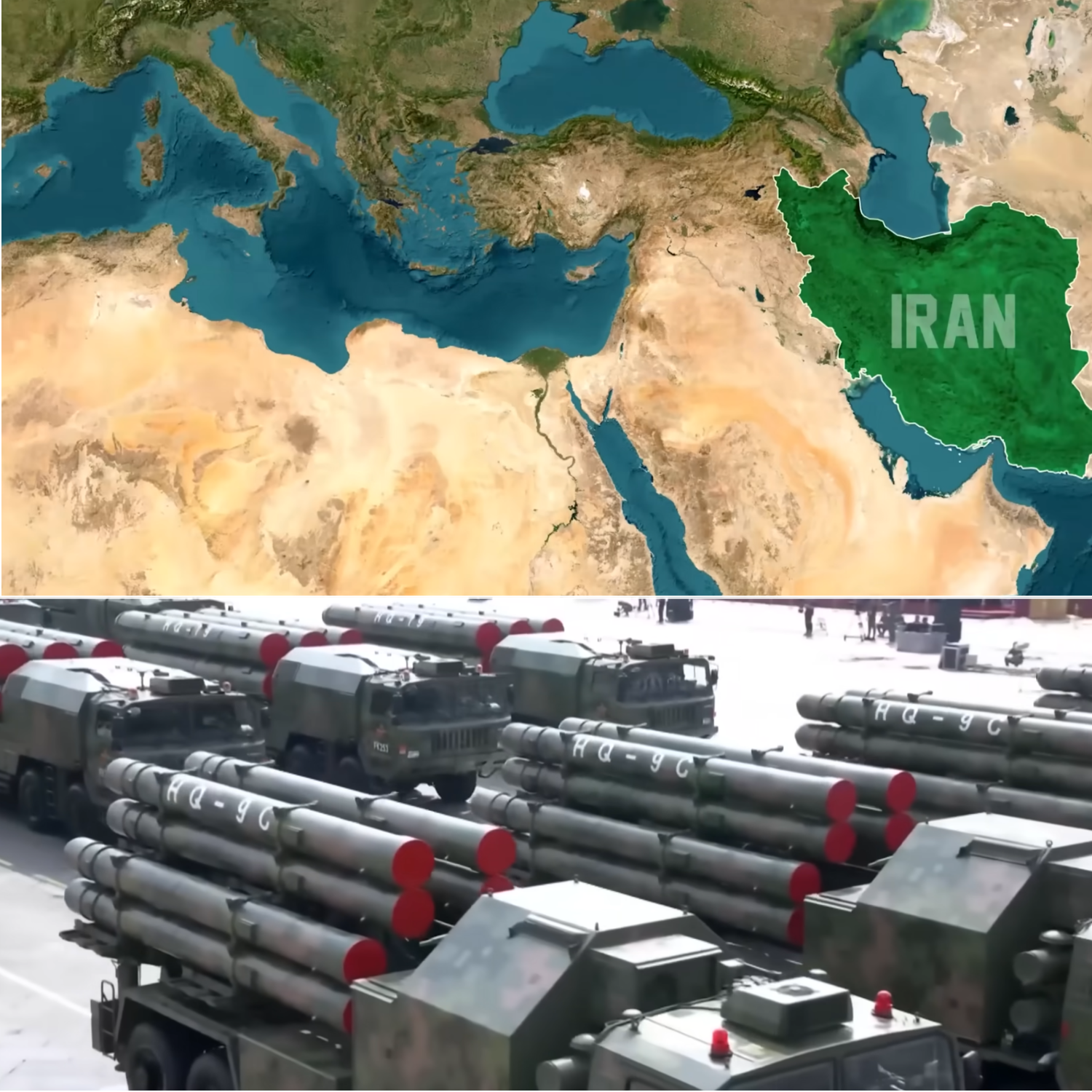
The Tehran Decapitation: When “Invisible” Radars Went Blind
At 9:00 a.m. on February 28, 2026, the Islamic Republic of Iran suffered its most catastrophic intelligence and military failure since 1979. Supreme Leader Ali Khamenei had convened a “war room” meeting with his most senior IRGC commanders. They believed they were safe, protected by a fresh delivery of Chinese HQ-9B long-range surface-to-air missiles and JY-27A anti-stealth radars.
They were wrong.
Within sixty minutes, a coordinated strike by U.S. and Israeli forces obliterated military infrastructure across 20 provinces. The building housing Khamenei was reduced to rubble. The HQ-9B, marketed by Beijing as a “Patriot-killer,” never saw the strike coming.
By sunset, the Supreme Leader and 40 senior commanders were dead. Iran’s air defense network—a multi-billion dollar investment in Chinese “security”—had been systematically dismantled without firing a single successful interceptor.
The Venezuela Extraction: A 3-Hour Humiliation for Beijing
The Iranian disaster wasn’t an isolated incident. Just six weeks earlier, in January 2026, U.S. Special Forces conducted one of the most daring extractions in history. Over 150 aircraft and helicopters descended on Caracas to apprehend President Nicolás Maduro.
Venezuela had pinned its hopes on the JY-27A radar, a system Beijing claimed could spot F-22 and F-35 stealth fighters from 500 kilometers away.
The Reality: U.S. EA-18G Growler electronic warfare jets jammed the entire Chinese-built network into submission.
The Result: American helicopters flew straight to Maduro’s compound, extracted him, and transferred him to a warship bound for New York.
“The Chinese system looks modern on paper,” noted Yung-chi, a retired Major General from Taiwan’s National Defense University. “But it falls apart under the demands of real combat. It’s built for parades, not for electronic warfare.”
Operation Zindur: India vs. the “Thunder” of Pakistan
The collapse of the Chinese myth began in earnest in May 2025, during a four-day engagement between India and Pakistan known as Operation Zindur.
Pakistan’s frontline defense rested on the JF-17 Thunder, a jet co-developed with China, and the HQ-9B missile shield. In a stunning display of precision, Indian forces utilized the BrahMos supersonic cruise missile to decapitate Pakistani radar sites.
The BrahMos, flying at Mach 3 and hugging the terrain at altitudes as low as five meters, proved invisible to Chinese sensors.
“It’s a kilometer every second,” explained one defense analyst. “By the time the Chinese fire-control radar achieves a lock, the missile has already impacted.”
The Propaganda Cover-Up
Terrified of the damage to its export business, Beijing reportedly pressured Islamabad to destroy evidence of the HQ-9B’s failures. Chinese state media even fabricated a narrative that Pakistani J-10C jets had shot down three French-built Indian Rafales. The claim was debunked within days when OSINT analysts identified the “downed Rafale” debris as a 40-year-old fuel tank.
Thailand and Myanmar: When the Hardware Turns Deadly for the User
The failures extend beyond high-tech electronics into the very steel of the weapons.
Thailand’s Exploding Tanks: In December 2025, during a border skirmish with Cambodia, a Chinese-made VT-4 main battle tank suffered a catastrophic barrel rupture. Investigations revealed the barrel failed at just 40% of its rated lifespan.
Myanmar’s Grounded Fleet: Myanmar, the first customer for the JF-17, was forced to ground its entire fleet. Structural cracks in the wings and persistent radar “blackouts” turned the jets into flying death traps.
The military junta in Myanmar was so incensed that their leader, General Min Aung Hlaing, took the extraordinary step of personally complaining to Pakistan’s Prime Minister. Eventually, Myanmar gave up on Chinese tech entirely, reverting to aging Russian MiGs to fight its civil war.
The “Corrupt Dragon”: Water in the Missiles?
Why are these systems failing so consistently? The answer may lie within the opaque walls of the People’s Liberation Army (PLA) itself.
In late 2023, a staggering U.S. intelligence assessment revealed that corruption within China’s Rocket Force was so pervasive that some liquid-fueled missiles had been filled with water instead of fuel. Furthermore, missile silo lids in western China were found to be mechanically flawed, potentially trapping the missiles inside during a launch.
Since then, President Xi Jinping has launched a “Red Terror” purge of his own military:
August 2023: Defense Minister Li Shangfu vanishes (later dismissed).
April 2025: General He Weidong, the second-highest military officer, is removed.
October 2025: Admiral Miao Hua is suspended for disciplinary violations.
Xi is cleaning house because he no longer knows if the weapons he spent trillions on will actually fire if he gives the order to invade Taiwan.
The Global Exodus: Who is Still Buying?
The market is already reacting. According to the SIPRI 2026 report, China has plummeted in the global arms export rankings, overtaken by Germany.
Nigeria: Grounded its JF-17 fleet and signed a deal with Italy’s Leonardo for replacements.
Pakistan: Now exploring Turkey’s SIPER air defense system to replace the failed Chinese HQ-9B.
Indonesia: Ignored the Chinese propaganda and signed a letter of intent for French Rafales just weeks after the Pakistan conflict.
The Five Steps of Chinese Arms Propaganda
To keep the industry alive, Beijing follows a predictable cycle:
Claim Victory: State media reports a “miracle” win.
Suppress Evidence: Firewall blocks any images of failed hardware.
Market Manipulation: Defense stocks are pumped based on false reports.
Documentary Blitz: TV programs like The Legend of the J-10 air to reinforce domestic pride.
Blame the Customer: If the weapon fails, Beijing claims the operators were “unprofessional.”
Conclusion: The Report Card is In
Western systems—the F-35, the BrahMos, and the Growler—are stress-tested daily in Ukraine, the Gulf, and now Iran. They have verified kills and proven results. Chinese systems, meanwhile, have spent decades in parades and state-sponsored documentaries.
In 2025 and 2026, the paper dragon finally met the fire of real combat. The report card is a string of “F” grades. For nations like Iran and Pakistan, the lesson has been a bitter and bloody one: When you pay half the price, you don’t just get half the quality—you get a weapon that fails exactly when you need it most.
News

Iran CAUGHT hiding NEW Supreme Leader DEATH
The Cardboard Caliphate: Inside the Phantom Leadership and the Great Escape of the Persian Lionesses TEHRAN — In the labyrinthine halls of the Islamic Republic’s power centers, the silence is…

Something Big Just EXPLODED in Middle East… And It Will FINISH Iran
The Saltwater Kingdoms: Inside the Terrifying Prospect of the World’s First Total Water War MANAMA, Bahrain — For five decades, the world has looked at the Persian Gulf and seen…

Tehran IN FLAMES as Iran Pushes to “Surrender”—US HITS Iran’s Capital with Surprising Drone STRIKE
The Hunter Becomes the Hunted: Inside the Drone War Transforming the Streets of Tehran TEHRAN — For decades, the Islamic Republic of Iran banked its regional survival on the “swarm.”…
Iran Hit Aramco — Then US Marines Crossed the Line Nobody Expected
Target: Kharg Island—Inside the Plan to Seize the Islamic Republic’s Financial Heart PERSIAN GULF — The silence of the dawn over the northern Persian Gulf was not broken by waves,…
US B-2 Bomber Drops 30,000lb Bunker Buster on Iran Missiles Factory
The Gavel of God: Inside the B-2 Stealth Missions Dismantling the Iranian Regime TEHRAN — The sky over the Alborz Mountains did not scream; it simply vanished. In the early…

Iran’s NEW Supreme Leader Is Hiding Something MASSIVE
The Prince of Shadows: Inside the $3 Billion Global Real Estate Empire of Iran’s New Supreme Leader LONDON — On Bishop’s Avenue, a stretch of North London known as “Billionaires’…
End of content
No more pages to load