Iran Hit Aramco — Then US Marines Crossed the Line Nobody Expected
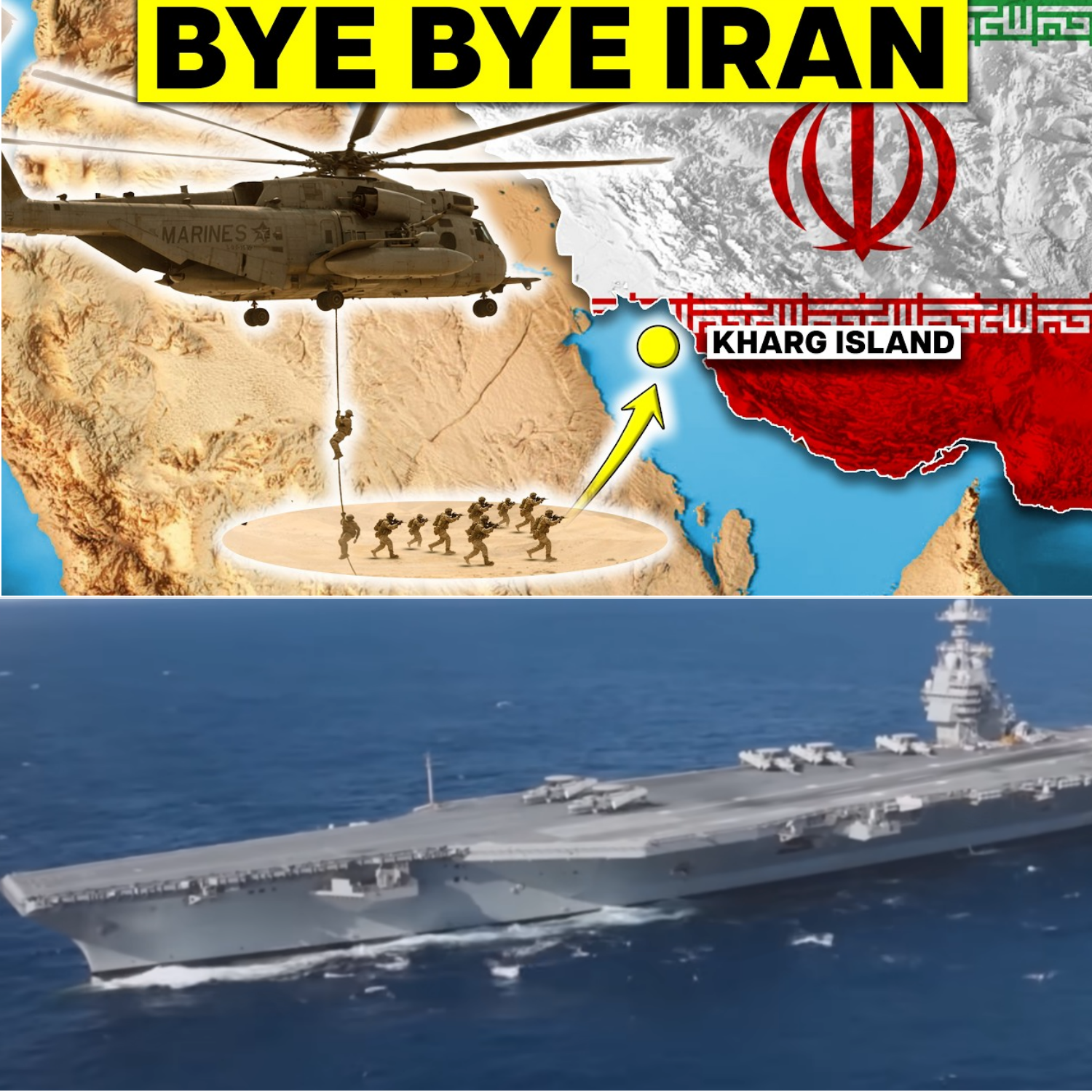
Target: Kharg Island—Inside the Plan to Seize the Islamic Republic’s Financial Heart
PERSIAN GULF — The silence of the dawn over the northern Persian Gulf was not broken by waves, but by the low, rhythmic hum of the USS Tripoli. Aboard the amphibious assault ship, the air is thick with the scent of jet fuel and the silent intensity of 5,000 combat-ready sailors and Marines.
For forty-seven years, American presidents have stared at a tiny speck of land in the Gulf and blinked. Kharg Island. To the uninitiated, it is a four-mile strip of coral and rock. To the Iranian regime, it is the jugular vein.
Ninety percent of Iran’s crude oil exports—the lifeblood of the Islamic Revolutionary Guard Corps (IRGC)—pass through this single terminal. Yesterday, the decades-long hesitation ended. In a move that signaled the transition from an air campaign to a potential ground war, President Donald Trump authorized a massive deployment of the Marine Expeditionary Unit (MEU) to the Iranian coastline.
The goal? To move beyond “containing” the regime and toward “decapitating” its bank account.
The Crown Jewel: Why Kharg Island is the Ultimate Prize
To understand the strategic gravity of Kharg Island is to understand how the Islamic Republic survives. While oil is pumped from the mainland, it is gravity-fed through massive pipelines to the island’s depots. There, the world’s largest tankers—vessels capable of carrying 85 million gallons of crude—dock to load their cargo, primarily destined for China.
“If you hold Kharg, you hold the regime’s wallet,” explains one Pentagon analyst. “Without that oil revenue, the IRGC cannot pay its soldiers, cannot fund its proxies, and cannot sustain its war machine.”
A Policy Forty Years in the Making
In 1979, Jimmy Carter weighed an assault on Kharg during the hostage crisis and demurred. In 1988, Ronald Reagan’s advisors drew up plans to seize the island during the “Tanker War,” but ultimately settled for a naval skirmish.
Yesterday, President Trump took the step his predecessors avoided. He confirmed that U.S. Central Command had executed a “shattering” bombing raid, erasing every missile site, radar installation, and military barracks on the island.
Boots on the Ground: The 14-Day Countdown
The deployment of the Amphibious Ready Group (ARG) from Japan represents a terrifying escalation for Tehran. The USS Tripoli is currently making the 10-to-14-day transit from the Pacific to the Gulf.
While 5,000 personnel are insufficient for a “Full Land Invasion” of the Iranian mainland—a country of 88 million people—they are perfectly calibrated for a Seizure and Hold operation on an island.
The Trump Doctrine: “Who Would Answer a Question Like That?”
In a heated exchange with reporters, President Trump was asked if he intended to fulfill a promise he made in a 1988 interview—to “do a number on Kharg Island” and take it.
The President’s response was vintage Trump:
“What fool would answer a question like that? Oh, yes, Brian, I’m thinking about doing it. Let me let you know what time and when it’ll take place.”
While he stopped short of a formal declaration, the movement of the Marines suggests the “Art of the Deal” has moved from the boardroom to the beachhead.
The Wounded Rat: Where is Mojtaba Khamenei?
As the U.S. prepares its maritime assault, the internal state of the Iranian leadership is reportedly one of “confused cowering.”
Defense Secretary Pete Hegseth provided a blistering assessment of the new Supreme Leader, Mojtaba Khamenei. Following the strike that killed his father, Mojtaba has not appeared on camera or radio. His only communication has been a single, typed statement calling for “unity.”
“We know the so-called Supreme Leader is wounded and likely disfigured,” Hegseth stated. “He’s scared, he’s on the run, and he lacks legitimacy. He’s behaving like a rat in a basement.”
The lack of video evidence has fueled rumors that the strike on the Khamenei compound was more effective than state media admits. If Mojtaba is incapacitated, the IRGC is essentially a headless beast, fighting a high-tech war without a commander-in-chief.
Military Firsts: Sinking Submarines with Artillery
While the world watches for the Marines, the U.S. Army has been making history on the front lines. General Dan Kaine confirmed that for the first time in the history of warfare, a submarine was “sunk by artillery.”
U.S. forces utilized the ATACMS (Army Tactical Missile System) to strike an Iranian submarine as it attempted to leave its pen. This precision—using land-based missiles to take out underwater assets—has effectively neutralized the Iranian navy’s ability to threaten the Strait of Hormuz.
“They fired the first precision strike missiles ever used in this type of combat,” Kaine noted. “They are reaching deep into enemy territory with a determination that comes from trust in their systems.”
The Nuclear Brink: The 440kg Question
Perhaps the most dangerous variable in the Kharg Island operation is Iran’s nuclear stockpile. Intelligence reports suggest Iran possesses roughly 440kg of highly enriched uranium—enough for multiple warheads if processed further.
In a tense press conference, Secretary Hegseth was asked if the U.S. could conclude its mission without physically seizing this material.
Hegseth’s response was a “spectrum of options.” He pointed to the success of Operation Midnight Hammer, where B-2 stealth bombers obliterated the facilities required to turn that uranium into a weapon. However, he did not rule out a Special Forces raid to extract the material itself.
“We will deny Iran nuclear weapons. That is the core mission,” Hegseth said. “I would never tell the world how far we are willing to go, but we have options.”
Conclusion: The Final Two Weeks?
As the USS Tripoli cuts through the Indian Ocean, the clock is ticking for the Islamic Republic. Iran has threatened to retaliate by attacking energy infrastructure in the Gulf, but as the U.S. points out, they are already doing that—striking refineries in Oman and Saudi Arabia.
The difference now is that the Iranian “threat” is being systematically dismantled. Every day, fewer drones are launched; every hour, more missile factories are turned to rubble.
If the Marines land on Kharg Island, it won’t just be an occupation of territory. It will be the final closing of the book on the regime’s financial survival. The “Shadow Leader” is in hiding, the “Butcher” is dead, and the world is about to find out exactly what happens when the 1988 Trump Doctrine meets 2026 military technology.
News
Iran CAUGHT hiding NEW Supreme Leader DEATH
The Cardboard Caliphate: Inside the Phantom Leadership and the Great Escape of the Persian Lionesses TEHRAN — In the labyrinthine halls of the Islamic Republic’s power centers, the silence is…
Something Big Just EXPLODED in Middle East… And It Will FINISH Iran
The Saltwater Kingdoms: Inside the Terrifying Prospect of the World’s First Total Water War MANAMA, Bahrain — For five decades, the world has looked at the Persian Gulf and seen…
Tehran IN FLAMES as Iran Pushes to “Surrender”—US HITS Iran’s Capital with Surprising Drone STRIKE
The Hunter Becomes the Hunted: Inside the Drone War Transforming the Streets of Tehran TEHRAN — For decades, the Islamic Republic of Iran banked its regional survival on the “swarm.”…
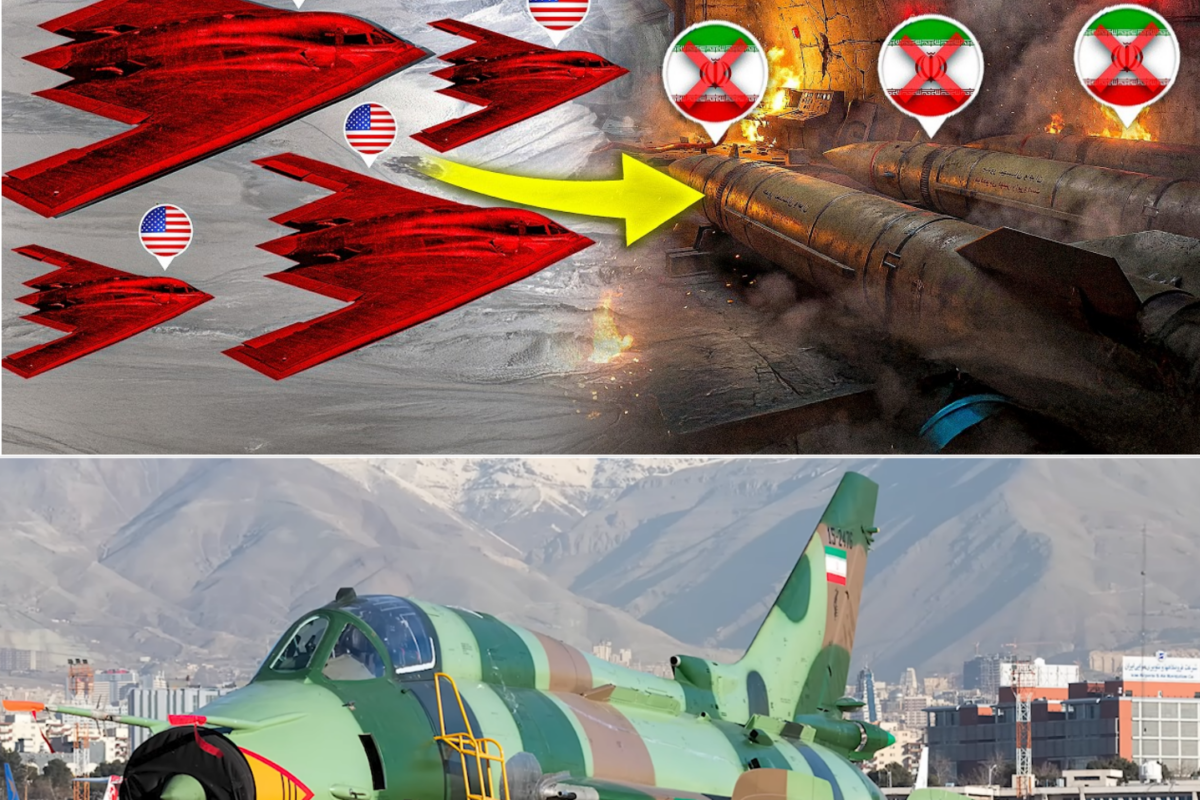
US B-2 Bomber Drops 30,000lb Bunker Buster on Iran Missiles Factory
The Gavel of God: Inside the B-2 Stealth Missions Dismantling the Iranian Regime TEHRAN — The sky over the Alborz Mountains did not scream; it simply vanished. In the early…
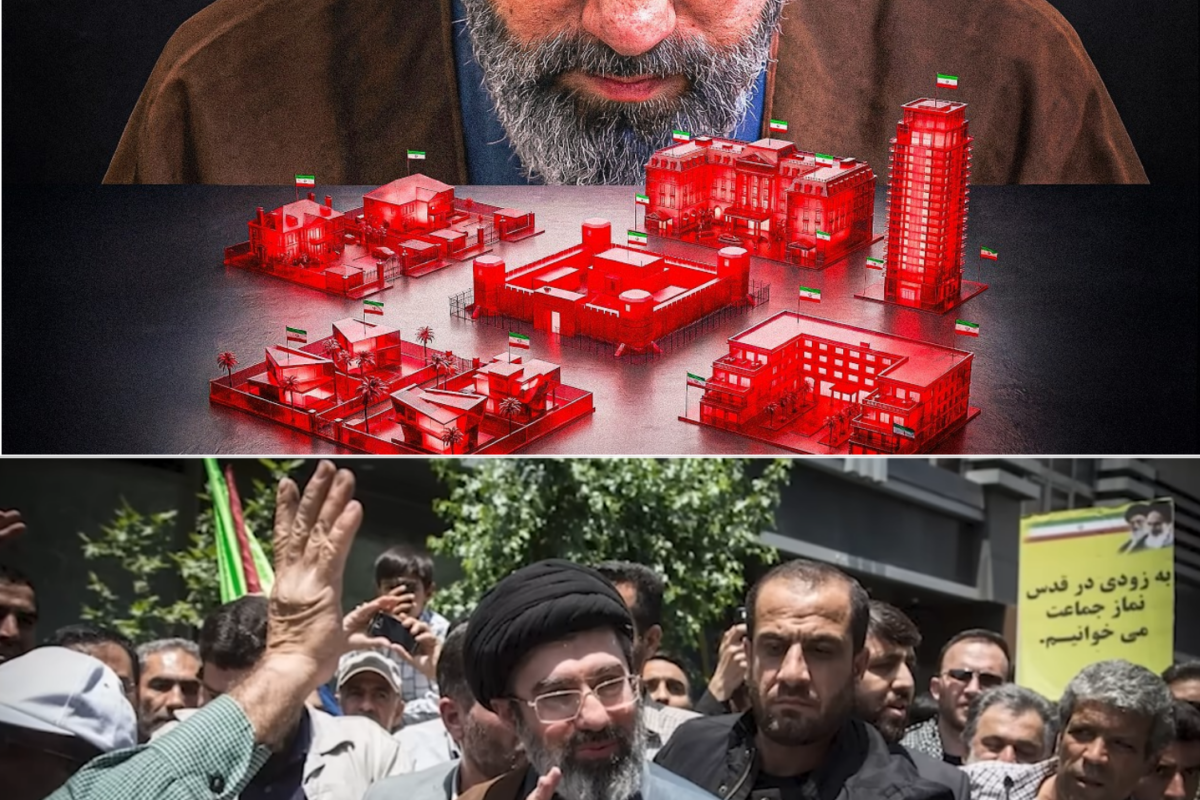
Iran’s NEW Supreme Leader Is Hiding Something MASSIVE
The Prince of Shadows: Inside the $3 Billion Global Real Estate Empire of Iran’s New Supreme Leader LONDON — On Bishop’s Avenue, a stretch of North London known as “Billionaires’…
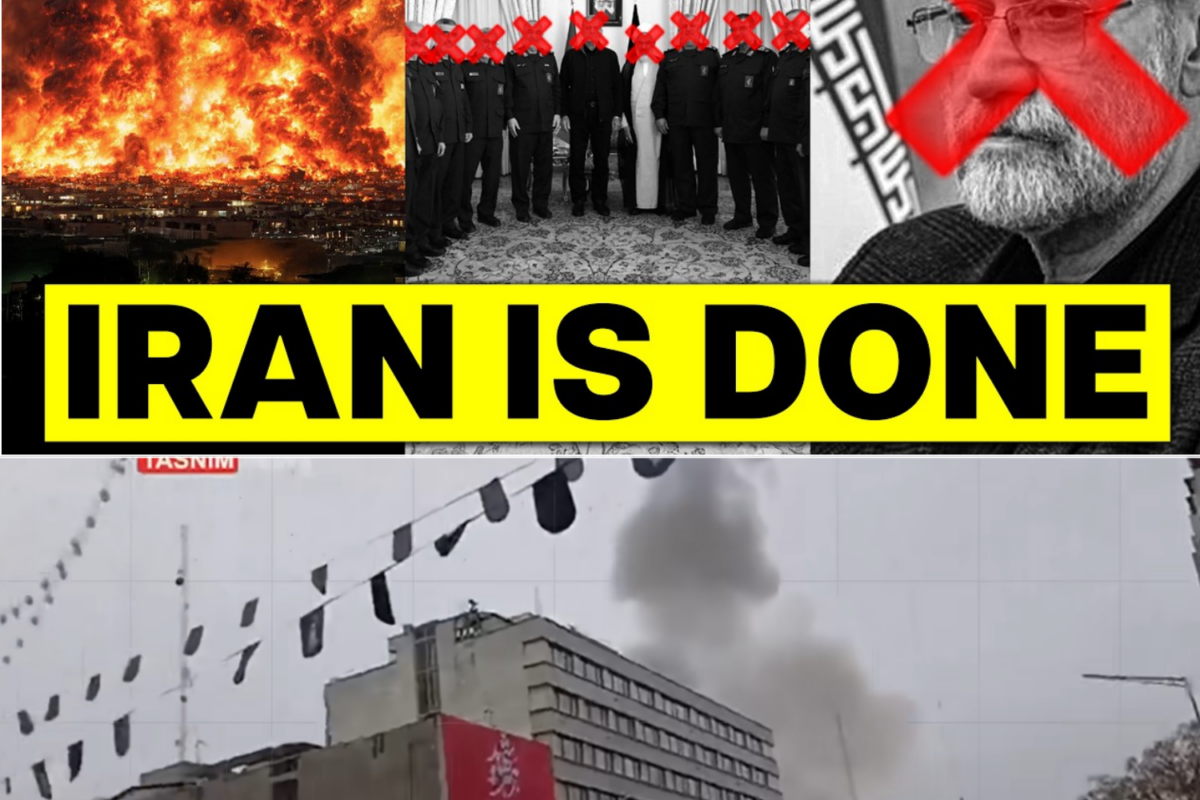
Israel Just Did Something so OUT OF THIS WORLD… Iran’s Entire Leadership EVAPORATED
The Shadow Leader’s Final Rally: Inside the High-Stakes Assassination of Ali Larijani TEHRAN — For a man who lived in the shadows of the Islamic Republic, Ali Larijani’s end was…
End of content
No more pages to load