IRAN BLOCKADE? US Intercepts Tanker, Shoots Down Drones & Missing Uranium Questions Grow
U.S. Intercepts Iranian Drones and Expands Maritime Pressure as Tensions Escalate Across the Middle East
June 2026 | International Security Analysis
The confrontation between the United States and Iran continues to intensify as military operations, economic pressure, and diplomatic maneuvering converge across one of the world’s most strategically important regions. In the latest development, U.S. military forces reportedly intercepted multiple Iranian attack drones near the Strait of Hormuz before conducting retaliatory strikes against Iranian surveillance infrastructure along the country’s southern coastline.
The incidents mark another chapter in a rapidly evolving standoff that now stretches from the Persian Gulf to the Indian Ocean, raising concerns about regional stability, global energy security, and the future of negotiations over Iran’s nuclear ambitions.
While neither side appears eager for a full-scale conventional war, recent actions suggest that both Washington and Tehran are increasingly willing to test each other’s limits.
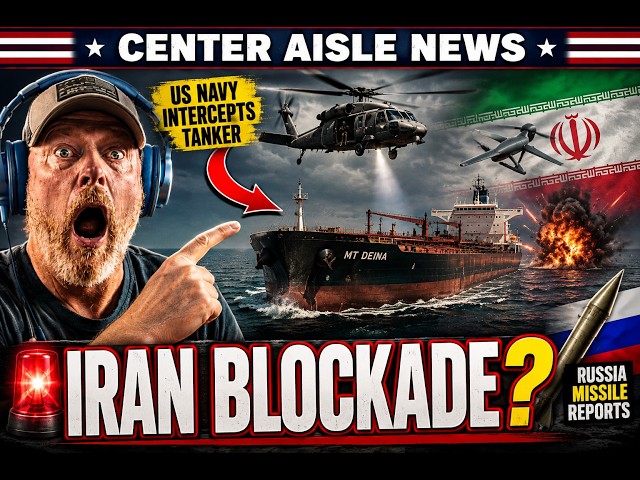
Maritime Interdiction in the Indian Ocean
The latest sequence of events began when U.S. Indo-Pacific Command announced a maritime interdiction operation targeting a sanctioned stateless vessel identified as MT Deina in the Indian Ocean.
According to military officials, U.S. forces conducted a right-of-visit boarding operation designed to enforce international sanctions and disrupt illicit maritime networks. The vessel was allegedly involved in activities connected to sanctions evasion and the transportation of oil linked to Iran.
The operation demonstrated Washington’s growing emphasis on maritime enforcement as part of a broader strategy to pressure Tehran economically while limiting its ability to generate revenue from international energy markets.
Such interdictions have become increasingly common as Western governments seek to prevent sanctioned oil shipments from reaching international buyers through complex shipping networks involving shell companies, altered vessel registrations, and ship-to-ship transfers.
Although the operation occurred far from Iranian territorial waters, it highlighted the expanding geographic scope of efforts aimed at restricting Tehran’s access to global markets.
Four Iranian Drones Shot Down
The situation escalated further when U.S. Central Command announced that American forces had intercepted four Iranian one-way attack drones launched toward the Strait of Hormuz.
Military officials stated that the drones posed an immediate threat to maritime traffic operating in one of the world’s most heavily traveled shipping corridors.
The Strait of Hormuz remains a critical artery for global commerce, particularly for oil and natural gas exports originating from the Persian Gulf. Any threat to shipping in the area has the potential to affect energy prices and international trade far beyond the Middle East.
Following the drone interceptions, U.S. forces reportedly launched strikes against Iranian coastal surveillance radar facilities located near Gabrik and Qeshm Island.
According to official statements, the operation was conducted as a defensive measure intended to prevent additional attacks and safeguard commercial and military vessels operating in regional waters.
American officials repeatedly emphasized that the strikes were carried out under the principle of self-defense rather than as part of a broader offensive campaign.
This distinction has become politically important as policymakers in Washington debate the legal framework governing military operations against Iran.
The Strategic Importance of Radar Sites
The decision to target surveillance infrastructure rather than conventional military formations reflects the changing nature of modern warfare.
Radar systems serve as the foundation of Iran’s coastal defense network. They provide early warning of approaching aircraft, monitor shipping traffic, and help coordinate missile batteries, naval units, and drone operations.
Without reliable surveillance capabilities, military commanders face significant challenges in tracking enemy movements and responding effectively to threats.
Military analysts often describe radar networks as the “eyes and ears” of a defense system. By degrading these capabilities, an adversary can significantly reduce operational effectiveness without necessarily destroying large numbers of weapons or personnel.
The strikes therefore represent more than a tactical response to drone launches. They are part of a broader effort to weaken Iran’s ability to monitor and influence activity throughout the Strait of Hormuz.
Iran’s Warning to Washington
Iranian officials responded quickly to the latest developments.
Several senior figures linked to the Iranian leadership issued statements demanding an end to what they described as economic warfare and maritime pressure.
One adviser to Iran’s leadership warned that if military tensions continue and restrictions on Iranian shipping remain in place, Tehran could expand the conflict far beyond the Persian Gulf.
The warning specifically referenced several strategically significant waterways, including the Indian Ocean, the Bab el-Mandeb Strait, the Red Sea, and even the broader Mediterranean region.
Such statements are consistent with Iran’s longstanding strategy of emphasizing its ability to threaten key maritime routes should a major conflict occur.
The Bab el-Mandeb Strait, located between Yemen and the Horn of Africa, is particularly important because it connects the Red Sea to the Gulf of Aden and serves as a critical passage for international shipping.
Any disruption in that area could have significant economic consequences, especially when combined with instability in the Strait of Hormuz.
Iranian officials also reiterated threats against American military facilities throughout the Middle East, claiming that any future confrontation would impose substantial costs on U.S. forces and their regional partners.
Assessing Iran’s Military Capabilities
Despite years of sanctions and international pressure, Iran retains a diverse military arsenal that includes ballistic missiles, cruise missiles, drones, naval forces, and proxy networks operating throughout the region.
Recent events have demonstrated that Iranian drone technology remains a particular concern.
One-way attack drones have become a central component of Tehran’s military strategy because they offer a relatively inexpensive means of threatening targets at significant distances.
At the same time, questions remain regarding the current condition of Iran’s conventional air force.
Reports have suggested that portions of Iran’s aviation infrastructure suffered damage during previous military operations. Nevertheless, observers continue to note periodic fighter aircraft activity within Iranian airspace.
Some analysts argue that Tehran may be attempting to preserve remaining air assets while focusing on asymmetric capabilities such as drones, missiles, and naval operations.
Others believe Iran is actively rebuilding portions of its air-defense and aviation networks despite ongoing military pressure.
Reports of Russian Military Assistance
Another development attracting attention involves reports that Russia may be supplying additional military equipment to Iran.
Leaked documents cited by various media sources allegedly indicate deliveries of air-to-air missiles, air-to-ground weapons, and anti-radiation systems capable of targeting radar installations.
If accurate, such transfers would represent a significant enhancement of Iran’s military inventory.
Anti-radiation missiles are particularly noteworthy because they are designed to seek out and destroy radar emitters, making them valuable tools in modern electronic warfare.
Neither Moscow nor Tehran has publicly confirmed the reported transfers.
Russian officials have denied supplying weapons for offensive purposes and maintain that they have no evidence suggesting Iran is pursuing a nuclear weapon.
Nevertheless, speculation regarding military cooperation between the two countries continues to generate concern among Western policymakers.
Renewed Focus on Iran’s Nuclear Program
Perhaps the most significant long-term issue remains Iran’s nuclear program.
Recent reports indicate that senior American officials and technical experts have been engaged in consultations involving nuclear specialists at facilities within the United States.
The meetings come amid renewed debate regarding the status of Iran’s enriched uranium stockpiles.
International inspectors have acknowledged uncertainty regarding portions of Iran’s uranium inventory, particularly material enriched to levels approaching weapons-grade thresholds.
Although enrichment alone does not constitute a nuclear weapon, it significantly shortens the technical pathway required to produce one.
American officials have repeatedly stated that Iran will not be permitted to acquire a nuclear weapon capability.
At the same time, negotiations continue regarding potential diplomatic solutions, sanctions relief, and mechanisms for monitoring Iranian nuclear activities.
The challenge facing policymakers is balancing military deterrence with diplomatic engagement.
Too much pressure risks encouraging escalation. Too little may allow further advancement of sensitive nuclear activities.
Economic Consequences and Global Markets
The ongoing standoff also carries important economic implications.
The Strait of Hormuz remains one of the most critical energy transit routes in the world. Roughly one-fifth of global petroleum consumption passes through the waterway.
Any prolonged disruption could trigger significant increases in energy prices, affecting economies worldwide.
Energy traders closely monitor military developments in the Gulf because even limited incidents can influence market expectations and investor confidence.
A sustained blockade, expanded military operations, or attacks on shipping infrastructure could create substantial volatility in global energy markets.
For governments already facing inflationary pressures, such outcomes would present additional economic challenges.
Looking Ahead
The coming weeks may prove decisive in determining whether the current confrontation stabilizes or escalates further.
The United States continues to pursue a strategy combining military deterrence, maritime enforcement, economic pressure, and diplomatic engagement.
Iran, meanwhile, seeks to demonstrate resilience while maintaining leverage through its missile forces, drone capabilities, and influence over key regional waterways.
Neither side appears willing to make major concessions at present.
Yet both understand the potentially devastating consequences of a wider conflict.
The latest drone interceptions and radar strikes illustrate how modern confrontations increasingly revolve around information dominance, surveillance systems, and precision operations rather than traditional large-scale battles.
As negotiations continue and military forces remain on high alert, the Persian Gulf stands at another strategic crossroads.
Whether the next chapter brings diplomacy or further escalation will depend largely on decisions made in Washington, Tehran, and several regional capitals whose interests are deeply tied to the security of one of the world’s most important maritime corridors.
For now, the message from both sides is unmistakable: the contest for influence in the Middle East is far from over, and the stakes remain extraordinarily high.