Trump finally faces reality of a failed war on Iran
Trump Faces Growing Scrutiny Over Iran Strategy as Fragile Ceasefire Raises Questions About Long-Term Stability
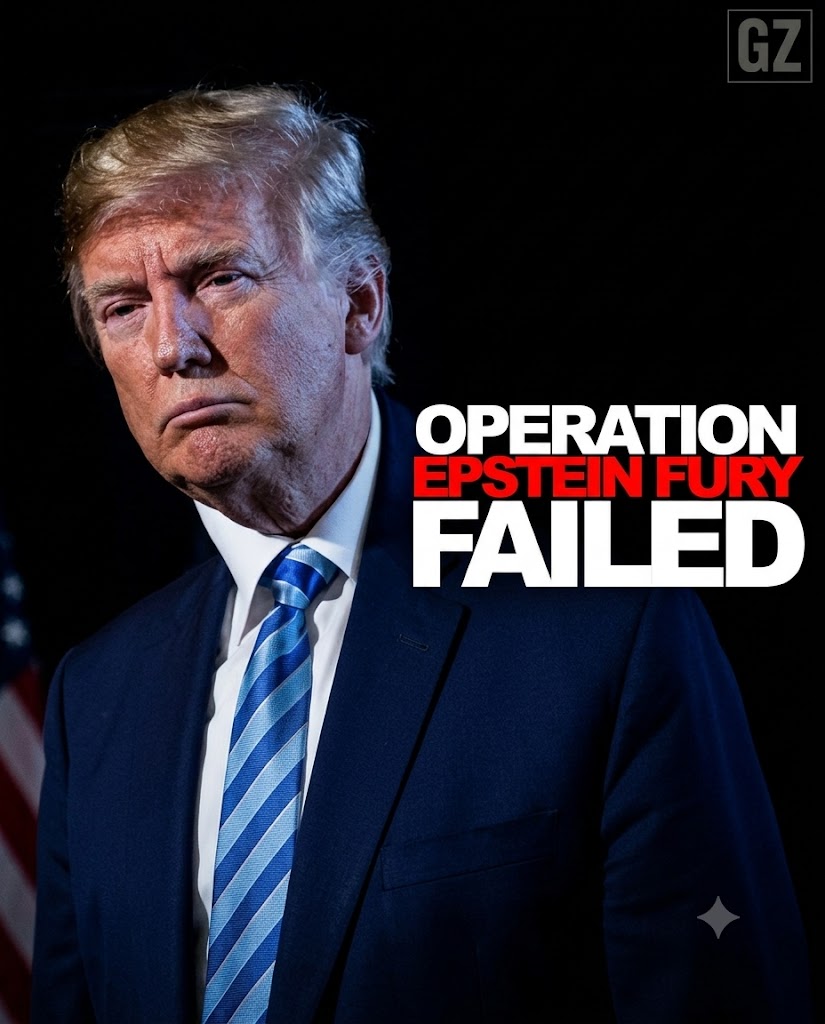
As diplomatic efforts continue between the United States and Iran, a growing chorus of critics in Washington and beyond is questioning whether the emerging framework represents a genuine step toward peace—or merely a temporary pause in a broader, unresolved conflict that could reignite at any moment.
The agreement, described by officials as a “memorandum of understanding,” has been framed by the Trump administration as a breakthrough in de-escalating tensions in the Middle East, particularly around the Strait of Hormuz, a critical maritime chokepoint through which roughly one-fifth of global oil flows.
But critics argue the arrangement falls far short of a comprehensive peace settlement and may, in practice, amount to little more than a strategic reset following a failed attempt at regime pressure in Iran.
Among the most vocal skeptics is conservative commentator Ben Shapiro, who characterized the evolving situation as evidence that the administration’s broader Iran strategy has not achieved its stated objectives.
A disputed narrative of victory and failure
Shapiro and other critics argue that the current diplomatic framework effectively signals the end of a failed effort to force regime change in Tehran through combined military, economic, and strategic pressure.
According to this interpretation, the conflict—initiated in its most recent phase earlier this year—was built on the assumption that sustained strikes, sanctions, and naval pressure could destabilize Iran’s government and potentially trigger internal political change.
However, critics contend that Iran not only survived this pressure but also retained sufficient leverage—particularly through its ability to threaten disruption in the Strait of Hormuz—to force the United States into negotiations.
“This is not a peace deal in the traditional sense,” Shapiro argued. “It is a pause after a failed attempt at regime change.”
He further suggested that Iran’s strategic position, particularly its influence over global energy routes, proved resilient enough to withstand sustained military and economic pressure.
The Strait of Hormuz remains central
At the core of the confrontation is the Strait of Hormuz, one of the most strategically sensitive waterways in the world. The narrow passage connects the Persian Gulf to global shipping lanes and serves as the primary export route for oil from several Gulf states.
For decades, Iran has treated the strait as a strategic pressure point, periodically signaling that it could disrupt or restrict maritime traffic in response to sanctions or military action.
While Iran has rarely acted to fully close the waterway, the threat alone has historically been enough to influence global oil prices and international diplomatic calculations.
Critics of the Trump administration’s approach argue that the latest agreement does not eliminate this leverage, but instead leaves it unresolved under a temporary framework.
Shapiro contends that Iran’s ability to threaten the strait remains intact, making the agreement inherently unstable.
“If Iran retains leverage over Hormuz, then the fundamental strategic equation has not changed,” he said.
From escalation to “frozen conflict”
Supporters of the administration describe the current situation as a successful de-escalation that has prevented further military conflict while preserving U.S. deterrence.
But critics characterize it differently: not as peace, but as a “frozen conflict.”
In this view, active hostilities have paused, but underlying tensions remain unresolved. The agreement, they argue, simply resets conditions to a pre-escalation baseline without addressing core issues such as Iran’s nuclear ambitions, its regional proxy networks, or long-term sanctions policy.
Shapiro argued that this outcome reflects a broader failure to achieve decisive resolution.
“Wars don’t end because someone declares a pause,” he said. “They end when one side capitulates or when the underlying conflict is resolved. That has not happened here.”
Competing interpretations of U.S. strategy
A key point of contention in the debate is the interpretation of U.S. objectives in the conflict.
Shapiro and like-minded analysts argue that the original strategy included not only limiting Iran’s nuclear capabilities but also applying pressure aimed at broader regime change.
According to this view, the administration initially pursued a maximalist strategy involving military strikes, economic blockade measures, and sanctions designed to degrade Iran’s capacity to project power.
However, critics argue that the results fell short of expectations.
Iran’s economy, while strained, did not collapse. Its military capabilities were degraded but not eliminated. And its influence over regional proxy groups—including Hezbollah in Lebanon and other allied organizations—remains significant.
As a result, critics argue, the United States has shifted toward a more limited set of goals focused on containment rather than transformation.
Internal divisions in Washington
The debate over Iran policy also reflects deeper divisions within Washington’s foreign policy establishment.
Shapiro and other commentators have pointed to disagreements between interventionist and anti-interventionist factions within the Trump administration and its broader political coalition.
Vice President J.D. Vance, often described as part of the administration’s more restrained foreign policy wing, has emphasized diplomatic resolution and conditional sanctions relief tied to nuclear constraints.
However, critics argue that even within this framework, key policy conditions remain unclear or inconsistent.
According to Shapiro, shifting definitions of what constitutes acceptable Iranian compliance risk undermining the credibility of the agreement.
“If the conditions keep moving, then the agreement itself becomes meaningless,” he argued.
Nuclear negotiations and unresolved conditions
At the center of the diplomatic framework is Iran’s nuclear program, which remains one of the most sensitive and contested elements of the agreement.
U.S. officials have indicated that sanctions relief would be contingent on Iranian commitments to limit nuclear activity and allow international inspections.
However, critics argue that Iran has previously accepted similar constraints under earlier agreements, including the 2015 JCPOA, only for those arrangements to break down over time amid mutual accusations of noncompliance.
Shapiro and others argue that the current framework does not meaningfully resolve this historical pattern.
“They are revisiting the same structure that failed before,” he said. “There is no reason to believe the outcome will be different.”
Supporters of the agreement counter that enhanced enforcement mechanisms and updated geopolitical conditions make the current framework more robust.
Regional implications and Israel’s role
Another major point of contention is Israel’s ongoing military posture in the region, particularly in Lebanon, where tensions with Hezbollah remain high.
Israeli officials have repeatedly stated that they reserve the right to continue military operations in response to cross-border attacks.
Critics argue that this ongoing conflict undermines broader efforts to stabilize the region, particularly if Iran remains linked to Hezbollah’s operational capabilities.
Shapiro suggested that the overlap between U.S. diplomacy and Israeli security operations complicates the possibility of a comprehensive settlement.
“Any agreement that doesn’t address proxy networks is incomplete by definition,” he said.
The role of political pressure and lobbying influence
A recurring theme in the debate is the influence of domestic political actors, including think tanks and advocacy groups that shape U.S. foreign policy toward the Middle East.
Shapiro and others have pointed to longstanding divisions within Washington over how aggressively to confront Iran, with some advocating for sustained military and economic pressure and others favoring negotiated restraint.
Critics argue that these competing pressures have contributed to inconsistent policy signals, particularly regarding nuclear enrichment thresholds and sanctions relief conditions.
Economic leverage and sanctions debate
Central to the disagreement is the role of sanctions in shaping Iranian behavior.
The Trump administration has relied heavily on economic pressure as a primary tool of leverage, arguing that sanctions can compel compliance without requiring large-scale military intervention.
However, critics argue that sanctions alone have not achieved decisive strategic outcomes and may instead reinforce hardline positions within Iran’s political structure.
Shapiro contends that sanctions relief must be tied to broader structural changes in Iranian behavior, not limited technical concessions.
Conclusion: uncertainty remains the defining feature
Despite official statements describing the memorandum of understanding as a step toward stability, the broader geopolitical situation remains deeply uncertain.
The Strait of Hormuz remains open, military tensions have eased, and diplomatic channels are active. But the underlying disputes that drove the conflict—nuclear development, regional influence, and sanctions policy—remain unresolved.
For critics like Ben Shapiro, this means the current moment represents not a resolution, but a temporary pause in a longer and unresolved confrontation.
For the Trump administration, however, the agreement represents a pragmatic step toward de-escalation in a region long defined by volatility.
What both sides appear to agree on is that the situation is not final.
And in that uncertainty lies the central challenge of U.S.-Iran relations: the absence of a clear, enforceable end state in one of the world’s most strategically sensitive regions.
Whether this pause evolves into lasting stability—or collapses into renewed confrontation—will depend on how both sides interpret the limits of deterrence, diplomacy, and political will in the weeks and months ahead.