My Brother Kicked Me Out After Our Parents Died
My Brother Kicked Me Out After Our Parents Died
.
.
Part I: The Lock and the Ledger
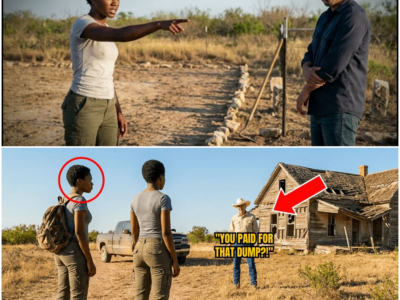
The rain in Peoria County, Illinois, didn’t fall; it dissolved into the air, creating a heavy, gray mist that smelled of damp soybean fields and river silt. Madison Cole stood on the porch of the house where she had learned to walk, her right hand frozen around a brass house key that refused to turn.
Six days prior, they had buried her mother, Elaine. The mud from the cemetery was still caked on the tires of Madison’s nine-year-old Subaru. Six years prior, her father, Harold, had passed away on a concrete warehouse floor. Now, Madison stood in the damp October chill, returning from a pharmacy run for her coughing eight-year-old daughter, Sophie, only to find the deadbolt entirely replaced.
The key slid in halfway and stopped.
On the warped wooden porch sat two black contractor trash bags, a single taped cardboard box, Sophie’s school backpack, and the small pink winter coat Elaine had bought her granddaughter the previous Christmas. The rain was heavy enough to soak through the fabric of the bags. Through the glass panel of the front door, Madison saw her older brother, Travis. He didn’t open the door. He didn’t ask where his niece would sleep. Instead, he lifted his phone, tapped the glass once, and spoke loud enough for his voice to vibrate through the wood.
“Enjoy being homeless, Madison,” Travis sneered, his face twisting into a triumphant grin. “I made sure you got absolutely nothing. The house is mine. The company is mine. Dad told everyone what he wanted for forty years: Land stays with the son who stays. You left. Now get off my property.”
Beside Madison, Sophie began to cry softly, her small sneakers filling with muddy water pooling on the steps. Madison felt something inside her chest go completely still—the cold, absolute focus of an auditor tracking a hidden deficit. She didn’t scream, smash the glass, or beg. She quietly picked up her daughter’s wet coat, draped it over Sophie’s shaking shoulders, and walked back to the car.
For decades, Travis had been treated like the crown prince of Cole Egg and Storage. He accompanied Harold to Rotary Club breakfasts, negotiated equipment loans, and wore his inheritance like a tailor-made suit. Madison had been the quiet daughter left in the back office to file invoices, clean the breakroom, and stay silent when suppliers bypassed her to ask Travis questions she had already answered.
When Madison was sixteen, she had found duplicate billing errors in the company warehouse system and asked her father to let her learn operations. Harold had merely looked over his coffee cup and said, “You’re good with paperwork, Maddie, but Travis handles operations. You’ll go build your own life someday.”
That night, Elaine had slipped into Madison’s bedroom and handed her an old, leather-bound farm ledger. “If they won’t teach you the front door, Maddie,” her mother had whispered, “learn the back office. Numbers are doors, too.”
Madison took that ledger and left Peoria County at eighteen with two suitcases and sixty dollars hidden inside a Bible. In Chicago, she built a career in healthcare data compliance and fraud detection. By thirty, she and a brilliant systems engineer named Priya Nair founded a compliance technology firm for rural clinics. They started above a bakery with broken chairs; by 2024, they sold a majority stake to a massive healthcare analytics firm.
Madison’s share from that sale, combined with her remaining equity and cash reserves, put her personal net worth at slightly over $7.4 million.
She didn’t inherit it. She didn’t marry it. She built it one risk model and one late-night audit at a time. Yet, when she returned home for the holidays, driving her paid-off Subaru and dressing Sophie in secondhand clothes, her family never cared enough to ask about her life. Travis dismissed her tech business as her “insurance paperwork thing,” while Harold merely smiled and asked Travis about his latest commercial loan. Madison allowed them to underestimate her. There was a profound, strategic peace in being undervalued by the wrong people.
After loading the damp bags into the Subaru, Madison checked into the Prairie View Motor Lodge, a tired roadside motel near the interstate where the heater rattled like old tin. Once Sophie fell asleep, Madison opened her laptop. Her fingers flew across public county indices, corporate registries, and UCC financing statements.
For a man who boasted about his business acumen, Travis left a massive digital paper trail. The records revealed a disaster hidden beneath a family name: short-term high-interest notes tied to a failed solar roofing franchise, multiple lines of credit secured against grain inventory, and a spectacular collapse of a cryptocurrency mining investment registered under the business address. Travis hadn’t stayed to preserve the legacy; he had stayed close enough to bleed it dry.
Part II: The Box on the Bed
The next morning, Madison drove to the Cole Egg and Storage corporate office to collect the only items the estate lawyer, Celia Hartwell, confirmed were legally hers prior to the formal reading: a vintage tin seed box and her mother’s personal hand-written diaries.
The warehouse office smelled of old diesel, grain dust, and stale coffee. Travis was already there, directing two laborers to move her father’s old oak filing cabinets. He barked a laugh when Madison walked through the door.
“Come back for your inheritance, Maddie?” he mocked, gesturing toward a dusty, cobwebbed bottom shelf. “Take your junk and get out. Maybe you can pawn that old tin box for a few nights of motel money.”
Madison ignored him. She lifted the heavy, rusted green tin box and the stack of faded ledgers, walking out without saying a word.
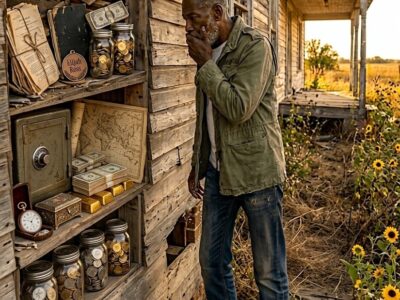
Back in the drab motel room, Madison cleared the bed and opened the tin seed box. Beneath a layer of expired seed tags, hand-drawn field maps from the 1990s, and old receipts, she found an envelope wrapped tightly in a faded kitchen dish towel. Inside was a magnetic keycard to a private cold-storage locker near the river access road and an unencrypted USB drive.
Written on the tape stuck to the drive in Harold’s rigid, old-fashioned cursive were four words: Madison will understand this.
When she plugged the drive into her laptop, a meticulously organized archive appeared. The folders were categorized by fiscal year, containing scanned bank letters, default notices, and personal notes from both of her parents. The documentation proved that before Harold’s sudden cardiac arrest, the bank had threatened to foreclose on the main grain elevator due to a massive personal guarantee Travis had signed for his failed solar business. Her parents had spent their final year quietly restructuring the family assets just to keep the business afloat.
Tucked inside the back cover of the physical ledger, Elaine had left a handwritten letter addressed to Celia Hartwell, dated only months before her death:
“Celia, Harold finally understands. He sees that Travis will mortgage the river access acreage within a year if he receives it completely unencumbered. Family land must belong to the person who can actually protect it, not the person who shouts about tradition the loudest. Madison knows how to read the doors.”
On Wednesday morning, Celia Hartwell called Madison to her brick office near the county courthouse. Celia was a formidable, silver-haired woman whose sharp suits matched her reputation for absolute precision.
“Your parents utilized a revocable family trust alongside a standard will, Madison,” Celia explained, sliding a heavy manila folder across the desk. “The primary residential property and the core operating structures of Cole Egg and Storage are handled by the will. However, a separate, highly specific trust amendment governs the thirty-one acres of prime river access land, the cold-storage easement, and a thirty-eight percent voting interest in the LLC.”
Madison raised an eyebrow. “Thirty-eight percent?”
“Yes,” Celia said, her eyes narrowing slightly. “Your mother spent her final months ensuring that share remained completely separate from your brother’s operating lines of credit. Furthermore, the trust contains a strict performance clause. Before either asset passes, both beneficiaries must submit fully verified, independent financial statements audited by a certified professional. Assets, liabilities, personal guarantees—everything must be laid bare.”
Celia leaned forward, resting her hands on the desk. “The trust dictates that the property will solely pass to the child who proves the financial capacity to hold the assets without leveraging, mortgaging, or selling them for a minimum of ten years. If neither sibling meets this threshold of stability, the land transfers automatically to an agricultural education foundation.”
A cold smile touched Madison’s lips. “Does Travis know what the financial statements require?”
“He knows a statement is required by Wednesday at five o’clock,” Celia replied dryly. “He submitted his by noon yesterday. He always mistakes speed for strength.”
That evening, Travis’s wife, Belle, knocked on Madison’s motel room door. She wore designer loungewear and oversized sunglasses, carrying a distinct cloud of expensive perfume into the cramped room. She smiled warmly, stepping inside without an invitation.
“Maddie, honey, let’s talk woman to woman,” Belle said, sliding a legal release form onto the motel table. “Travis wants peace. Your parents wouldn’t want a long, ugly legal battle. If you sign this waiver releasing any claim to the trust, Travis is willing to give you twenty-five thousand dollars cash right now, plus whatever family photo albums you want.”
Madison looked down at the paper, then back up at Belle. “Twenty-five thousand dollars?”
“It’s very generous, considering you’re living out of a motor lodge,” Belle said, her tone dripping with manufactured pity. “What are you even going to do with farm acreage anyway? Let Travis handle the operations he actually understands.”
“He certainly understands debt,” Madison said softly. She slid the document back across the table. “I don’t sign high-pressure contracts in motels, Belle. If Travis wants to make an offer, he can have his representation present it to Celia.”
Belle’s fake warmth evaporated instantly. She snatched the papers back, her face hardening. “You think you’re better than everyone else just because you ran away to Chicago? You’re going to end up with nothing.”
“No,” Madison replied calmly, opening the door for her. “I just learned the difference between owning something and owing on it.”