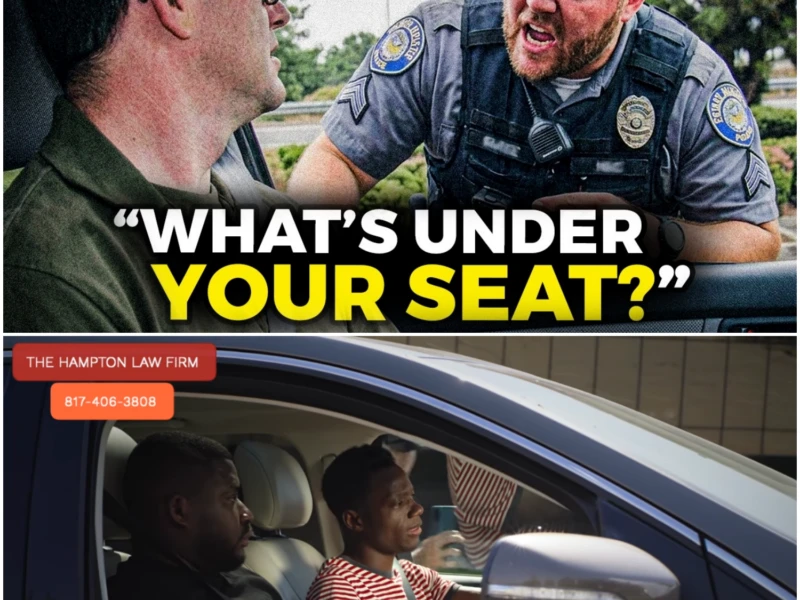
LAWYER: If Cops Ask “Are You Hiding Something?” – Say THESE WORDS
LAWYER: If Cops Ask “Are You Hiding Something?” – Say THESE WORDS
.
.
When Silence Is Power: Understanding Your Rights During Traffic Stops
On a quiet night, you are driving home when flashing lights appear in your rearview mirror. You pull over, calm and cooperative, ready to handle what seems like a routine stop. Perhaps it’s a minor issue—a broken tail light or an expired tag. As the officer approaches, you hand over your license and insurance without hesitation. Everything feels straightforward—until the tone shifts.
The officer begins asking questions: “Where are you coming from?” “Where are you headed?” You answer politely. Then comes a statement that changes everything: “I think you’re hiding something.”
In that moment, many people feel a surge of anxiety. The instinct is immediate and deeply human—to defend oneself, to prove innocence, to explain. But according to legal experts and decades of court precedent, that instinct may be the very thing that turns a simple traffic stop into a far more serious situation.
The Psychology Behind the Statement
The phrase “I think you’re hiding something” is not random. It is a deliberate interrogation technique designed to provoke a reaction. In legal and psychological terms, this is often called a provocation statement. Its purpose is not to state a fact, but to trigger emotional and behavioral responses.
When confronted with an accusation—especially from an authority figure—most people instinctively react. Heart rate increases, palms sweat, and the urge to speak becomes almost irresistible. The brain shifts into a fight-or-flight mode, and in that state, people tend to talk more than they should.
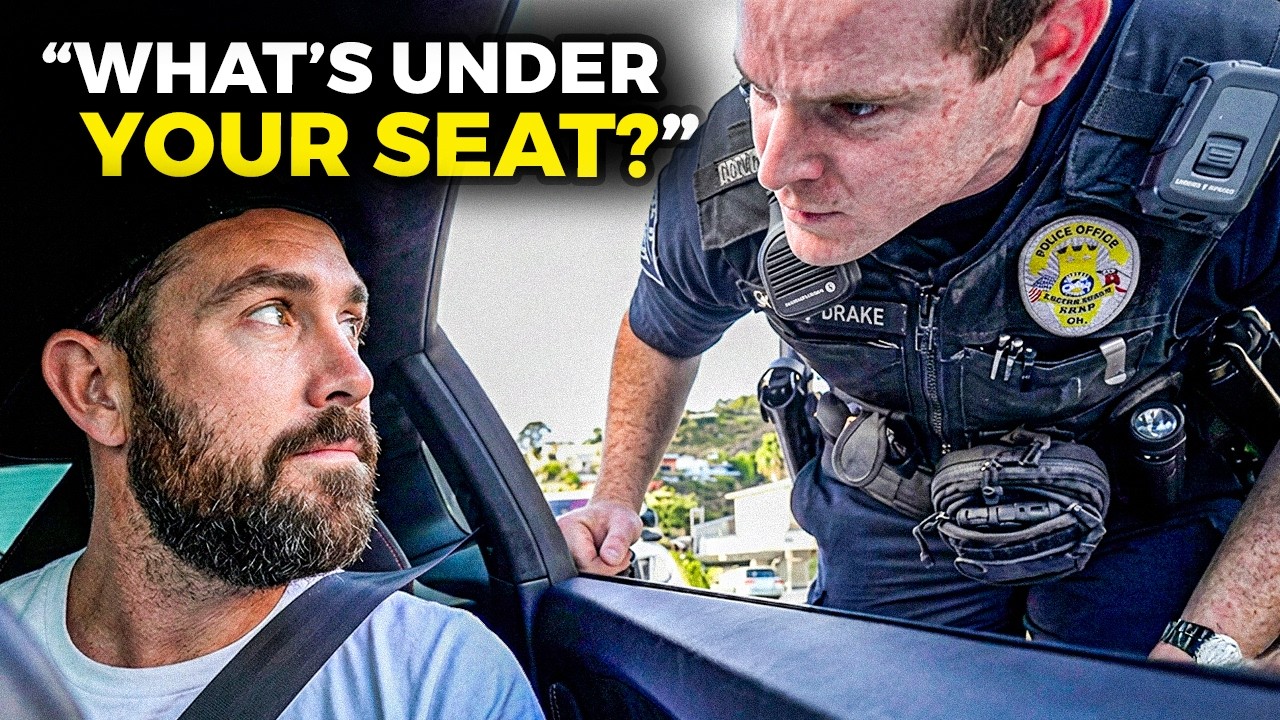
Law enforcement officers are trained to recognize and interpret these reactions. They observe not only what is said, but how it is said, and even where a person looks. A quick glance toward the glove compartment or the back seat, for example, may later be described in a report as “suspicious behavior,” potentially contributing to further action.
Why Words Matter More Than You Think
Many individuals believe that cooperating fully—answering every question and offering explanations—will help resolve the situation quickly. However, in practice, excessive talking can create complications.
Consider common responses:
“I swear I’m not hiding anything.”
“You can search my car if you want.”
“That bag isn’t mine—I think my friend left it.”
Each of these statements, while intended to reassure, can provide officers with information they did not previously have. Even seemingly harmless details can be used to justify further investigation or prolong the stop.
In legal terms, this is significant because officers often rely on a combination of observations and statements to establish what is known as reasonable suspicion or probable cause. Without those elements, their authority to search or detain is limited.
The Legal Foundation: Your Rights Under the Constitution
The rights of individuals during police encounters are grounded in the United States Constitution, particularly the Fourth and Fifth Amendments.
The Fourth Amendment protects against unreasonable searches and seizures. This means that, in most cases, an officer must have a valid legal reason—such as probable cause or consent—to search your vehicle.
The Fifth Amendment provides the right to remain silent, ensuring that individuals are not compelled to incriminate themselves.
Over the years, the Supreme Court of the United States has clarified these rights through landmark decisions:
United States v. Sokolow established that reasonable suspicion must be based on “specific and articulable facts,” not vague hunches.
Florida v. Bostick confirmed that individuals have the right to refuse consent to a search, even in confined or pressured situations.
Schneckloth v. Bustamonte emphasized that consent must be voluntary, not the result of coercion or intimidation.
Rodriguez v. United States ruled that a traffic stop cannot be prolonged beyond its original purpose without additional legal justification.
These rulings collectively reinforce a crucial point: an officer’s suspicion or opinion alone does not justify a search or extended detention.
The Trap of Consent
One of the most common ways traffic stops escalate is through consent. When a driver says, “You can search my car,” they are effectively waiving their Fourth Amendment protections.
From a legal perspective, this is powerful. Consent eliminates the need for probable cause. Once given, it allows officers to proceed with a search that might otherwise be unconstitutional.
Importantly, consent does not need to be explicit. It can be implied through words or actions. Nervous statements, hesitant agreements, or even silence in certain contexts may be interpreted as compliance.
This is why legal professionals consistently emphasize clarity. If you do not wish to consent, it must be stated clearly and unambiguously.
The Power of Saying Less
Contrary to popular belief, remaining calm and saying less is often the most effective strategy during a traffic stop. This does not mean being uncooperative or disrespectful. It simply means understanding the boundaries of your rights.
Legal experts often recommend a simple framework of responses:
Politely decline to answer investigative questions.
Clearly state that you do not consent to any searches.
Ask whether you are free to leave.
These statements are not confrontational. They are direct, lawful, and grounded in constitutional protections. They shift the responsibility back to the officer to justify any further action.
Why Officers Use These Techniques
It is important to recognize that not all officers use these methods with malicious intent. Policing is a complex and high-pressure profession, and officers are trained to detect criminal activity, often with limited information.
Techniques like provocation statements are part of that training. They are tools designed to gather information quickly and efficiently. In many cases, they are effective because they rely on predictable human behavior.
However, effectiveness does not equal legality. The law sets clear boundaries on what officers can and cannot do, and those boundaries exist to protect both public safety and individual rights.
The Balance Between Cooperation and Protection
Navigating a traffic stop requires a balance between cooperation and self-protection. Providing basic documents—such as a driver’s license and proof of insurance—is typically required by law. Beyond that, however, individuals have more discretion.
Being polite and respectful can help de-escalate tension. At the same time, understanding your rights ensures that you do not unintentionally waive them.
This balance is especially important in situations where the officer’s tone or approach becomes more assertive. Emotional reactions—whether defensive or confrontational—can escalate the encounter.
A Shift in Public Awareness
In recent years, public awareness of legal rights during police encounters has grown significantly. Social media, legal education campaigns, and widely shared videos have contributed to a broader understanding of constitutional protections.
This shift has also led to increased scrutiny of law enforcement practices. Courts continue to refine the legal standards governing searches, detentions, and the use of consent.
At the same time, law enforcement agencies are adapting their training to emphasize de-escalation and community trust. The interaction between citizens and police remains a dynamic and evolving space.
Conclusion: Knowledge as a Form of Protection
A traffic stop may last only a few minutes, but the decisions made during that time can have lasting consequences. Words spoken in haste, gestures made under pressure, and permissions granted without thought can all shape the outcome.
Understanding the legal framework—and the psychological tactics that may be used—empowers individuals to respond thoughtfully rather than reactively.
When an officer says, “I think you’re hiding something,” it is not a conclusion. It is an invitation—one that you are not obligated to accept.
In that moment, silence, clarity, and composure are not signs of guilt. They are expressions of your rights.