U.S. Military Just Did Something INSANE To Iran’s Coastal Hideouts
The Chessboard of Hormuz: Deception and Disintegration
The Masterful Gambit at Sea
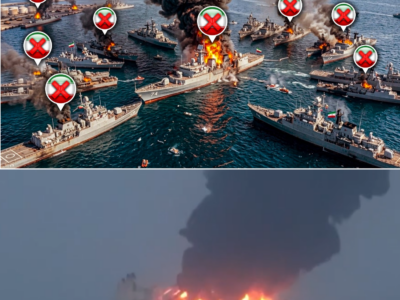
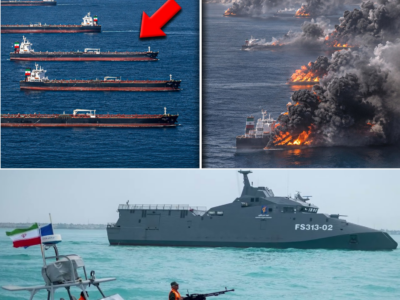
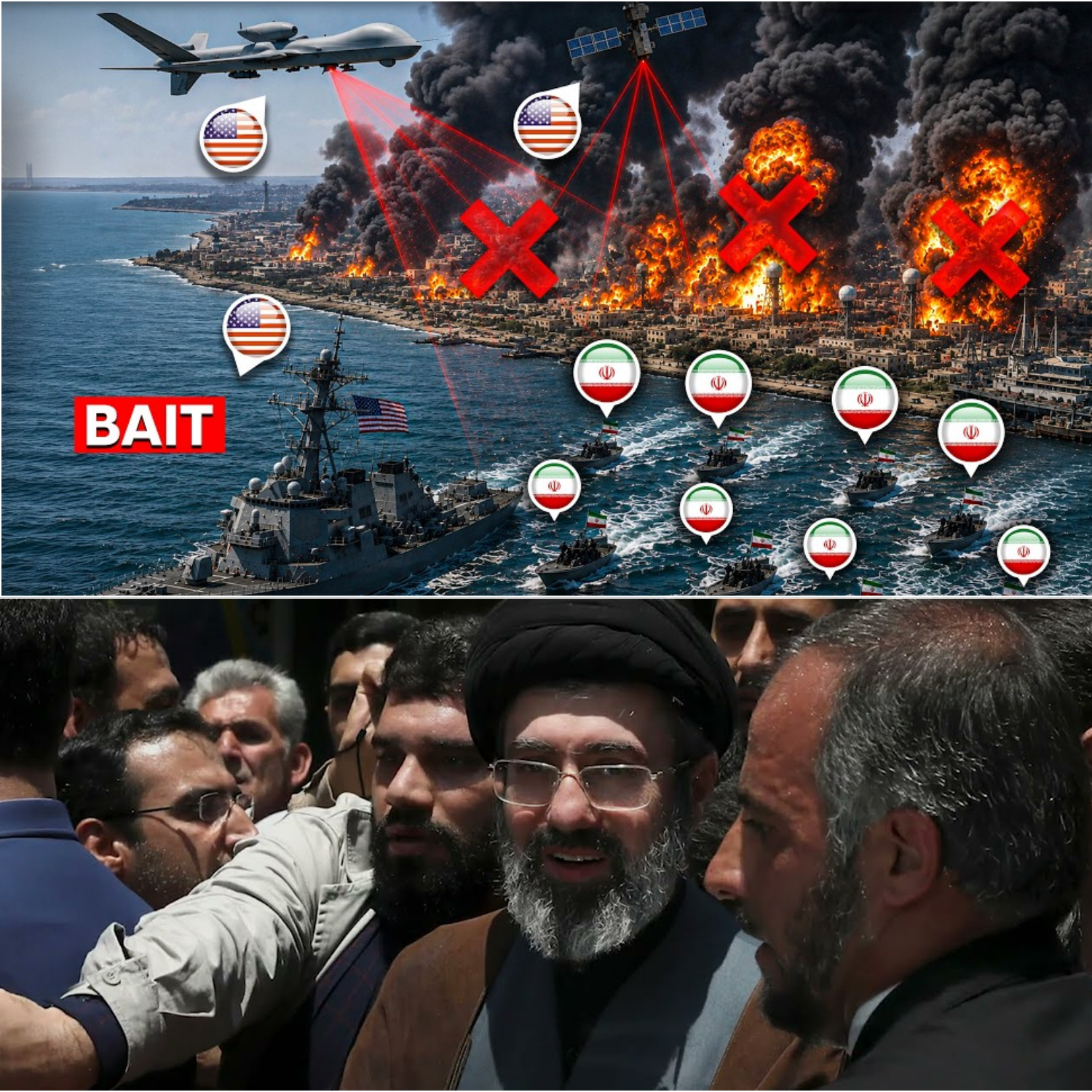
On May 7th, 2026, the world watched as three American Arleigh Burke-class destroyers—the USS Truxtun, USS Raphael Peralta, and USS Mason—slipped into the narrow, predatory waters of the Strait of Hormuz. To the observers of the Islamic Revolutionary Guard Corps (IRGC), these vessels appeared as symbols of American overconfidence, sailing slowly and exposed through Iran’s maritime backyard. The IRGC, operating under its “Mosquito Fleet” doctrine, saw an opportunity to humiliate the superpower through a swarm of fast-attack boats, drones, and coastal missile strikes.
However, the “vulnerability” of these destroyers was a carefully crafted illusion. This was a classic military bait-and-switch. The moment the IRGC launched its assault, a massive network of U.S. intelligence, surveillance, and reconnaissance (ISR) assets—satellites, high-altitude drones, and radar aircraft—sprang into action. Rather than just defending the ships, the U.S. Navy used the attack to trace the exact signatures of Iran’s hidden infrastructure. In minutes, the very network Iran had spent decades concealing—underground missile silos, drone staging sites, and mine-laying facilities in Qeshm Island and Bandar Abbas—was mapped in real-time and systematically neutralized. The “Mosquito Fleet” didn’t just fail; it accidentally revealed the location of its nest, allowing the U.S. to dismantle critical nodes of Iranian leverage without a prolonged escalation.
The Ghost in the Palace: Mojtaba Khamenei’s Silence
While the fires burned along the Omani side of the Strait, a different kind of fire was consuming the political stability of Tehran. For months, rumors had swirled regarding the health of the Supreme Leader, Mojtaba Khamenei, following the devastating initial strikes of February 28th. For the first time since the war began, an Iranian official finally acknowledged the reality of the situation in May 2026. According to internal reports, the leader was caught in the blast wave of a missile strike while ascending a staircase.
The official narrative remains one of “minor injuries”—a scratched kneecap and a slight back injury. Yet, the absence of a single video or voice recording in over two months tells a far more grim story. In the age of digital warfare, silence is a confession. While other high-ranking officials like the Foreign Minister and Parliament Speaker move freely under the protection of ceasefire guarantees, the Supreme Leader remains hidden. This “Ghost Leadership” has created a dangerous vacuum. If the injuries were truly superficial, a leader whose legitimacy depends on being the “guiding light” of the people would have appeared to rally the troops. Instead, the world is left to wonder if the regime is being held together by nothing more than a turban and a secret.
A Nation in Economic Freefall
Beyond the missiles and the political intrigue, the average Iranian citizen is fighting a war of survival against an economy that is doubling its prices every twelve months. By mid-2026, annual inflation has soared to 50%, with food inflation crossing the 100% threshold. The Iranian Rial is no longer just a currency in decline; it is a symbol of a collapsing social contract.
In a desperate bid to fund its war machine, the Iranian judiciary has resorted to the state-sanctioned theft of private property. More than 200 properties were confiscated in a single day under the vague accusation of “acting against the state.” There are no trials, no appeals, and no mercy. The regime is cannibalizing its own middle class to keep the IRGC funded, leading to a mass exodus of anyone with the means to flee. This internal bleeding is perhaps more dangerous to the regime than any American destroyer, as the “hardliners” continue to demand more blood while the civilian government watches the country’s wealth evaporate into the heat of the Persian Gulf.
The Failure of Diplomacy and the Rise of Project Freedom
The diplomatic efforts of May 2026 have proven to be as fragile as the Iranian economy. The United States, attempting to offer a “Memorandum of Understanding,” provided Iran with a 30-day window to negotiate a lasting peace while lifting the maritime blockade. The deadline for this response passed in mid-May with nothing but silence from Tehran. This “no-reply” is the ultimate reply. It signals that the internal power struggle between the IRGC and the civilian moderates has reached a stalemate where no one has the authority to say “yes” to peace.
This silence has triggered the restart of “Project Freedom Plus.” The U.S. strategy has shifted from offering concessions to enforcing freedom of navigation with a heavy hand. Initially, this plan faced friction from Gulf allies like Saudi Arabia and Bahrain, who were wary of American unilateralism. However, a strategic “U-turn” by Riyadh has now granted the U.S. full access to Saudi airbases and airspace. The Gulf monarchies have realized that an open Strait of Hormuz is their only path to economic salvation, especially as the UAE prepares to flood the market with oil post-OPEC.
The Long Shadow of the Qajar Dynasty
To understand why the Iranian leadership is so resistant to compromise, one must look back beyond the 1979 Revolution to the 19th-century Qajar Dynasty. The modern IRGC sees itself as the antithesis of the “weak” Qajar kings who signed away Persian sovereignty to the British and Russians. This historical trauma drives the current “war-hungry” faction to reject any deal that looks like a concession, even as their people starve and their naval networks are turned into scrap metal.
The tragedy of May 2026 is that the Iranian people are caught between a brilliant military trap set by the West and a psychological trap set by their own history. As the U.S. warships resume their patrols and the smoke from the Hormuz battle finally dissipates, the Islamic Republic stands at a crossroads. It can choose to negotiate from a position of profound weakness, or it can continue to ghost the international community until the internal pressure of a hungry, property-less population finally causes the entire structure to implode. The “Project Freedom” era has begun, and the clock is ticking on the most isolated regime in the modern world.