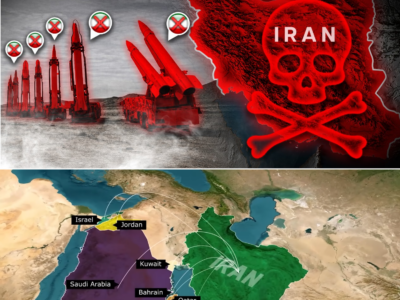
Iran HIT US Warship… US Navy Revenge Was INSTANT and BRUTAL!
Proportional Response: How the US Navy Dismantled Iran’s Fleet in a Single Afternoon
THE PERSIAN GULF — It is a lesson in military history that remains etched in the salt-crusted bulkheads of every vessel in the Fifth Fleet: do not touch the boats.
In the late 1980s, the world watched as a localized border dispute spiraled into a global energy crisis. It was a saga of “rage-baiting” superpowers, reflagged tankers, and a silent, deadly game of chess played with vintage sea mines. By the time the smoke cleared on April 18, 1988, the United States Navy had executed Operation Praying Mantis, sinking half of Iran’s combat fleet in what remains the largest surface engagement for the U.S. since World War II.
This is the story of Operation Earnest Will, a 14-month odyssey where diplomacy failed, and the “Great Satan” proved why it was the undisputed master of the sea.
The Tanker War: A Grind of Attrition — Part 1
The year was 1980. Saddam Hussein, looking across the border at a post-revolutionary Iran in chaos, saw an opportunity for a quick land grab. He was wrong. Eight years later, with over a million dead and the front lines barely moved, the Iran-Iraq War had evolved into a “Water War.”
Iraq, effectively landlocked after losing the Al-Faw Peninsula, began bombing Iranian oil terminals at Kharg Island. Iran, in a desperate bid for leverage, retaliated by attacking any tanker—neutral or otherwise—heading toward Iraqi-allied ports. Specifically, they targeted Kuwait, the “blank check” financier of Saddam’s war machine.
By 1986, the Persian Gulf was a graveyard of merchant shipping. Over 200 neutral tankers had been hit by anti-ship missiles, RPGs from speedboats, and sea mines. With 60% of the world’s oil at risk, Kuwait pulled a brilliant geopolitical lever: they asked the Soviet Union for protection.
Washington, terrified of the Kremlin parking warships in the world’s most vital oil artery, took the bait. In March 1987, the Reagan administration agreed to “reflag” 11 Kuwaiti tankers as American vessels. Under international law, an attack on these ships was now an attack on the United States.
The Bridgeton Blunder: A 500-Ton Hammer
On July 22, 1987, the first convoy formed under Operation Earnest Will. The star of the show was the SS Bridgeton, a supertanker over 1,000 feet long—the size of three football fields. She was escorted by three state-of-the-art U.S. warships: the USS Kid, the USS Fox, and the USS Crommelin.
But the Pentagon had a blind spot. While they looked for missiles and jets, the Iranian Revolutionary Guard (IRGC) had slipped out the night before in an old landing craft, dropping nine vintage Russian M08 contact mines directly in the convoy’s path.
At dawn on July 24, a “500-ton hammer” dropped on the Bridgeton. The explosion ripped an 11-by-5-foot hole in her hull. The U.S. warships, bristling with high-tech sensors but lacking mine-sweeping gear, stopped dead in the water.
In a moment of supreme irony that graced every front page on Earth, the U.S. Navy warships fell into a single-file line behind the crippled, massive tanker, using the merchant ship as a human shield/mine-sweeper to finish the voyage.
From Polite to “Past Polite”: The Silkworm Sting
While the U.S. scrambled to deploy mine-sweepers, Iran escalated. They began firing “Silkworm” missiles—Chinese-made flying dumpsters filled with explosives—at tankers anchored off Kuwait.
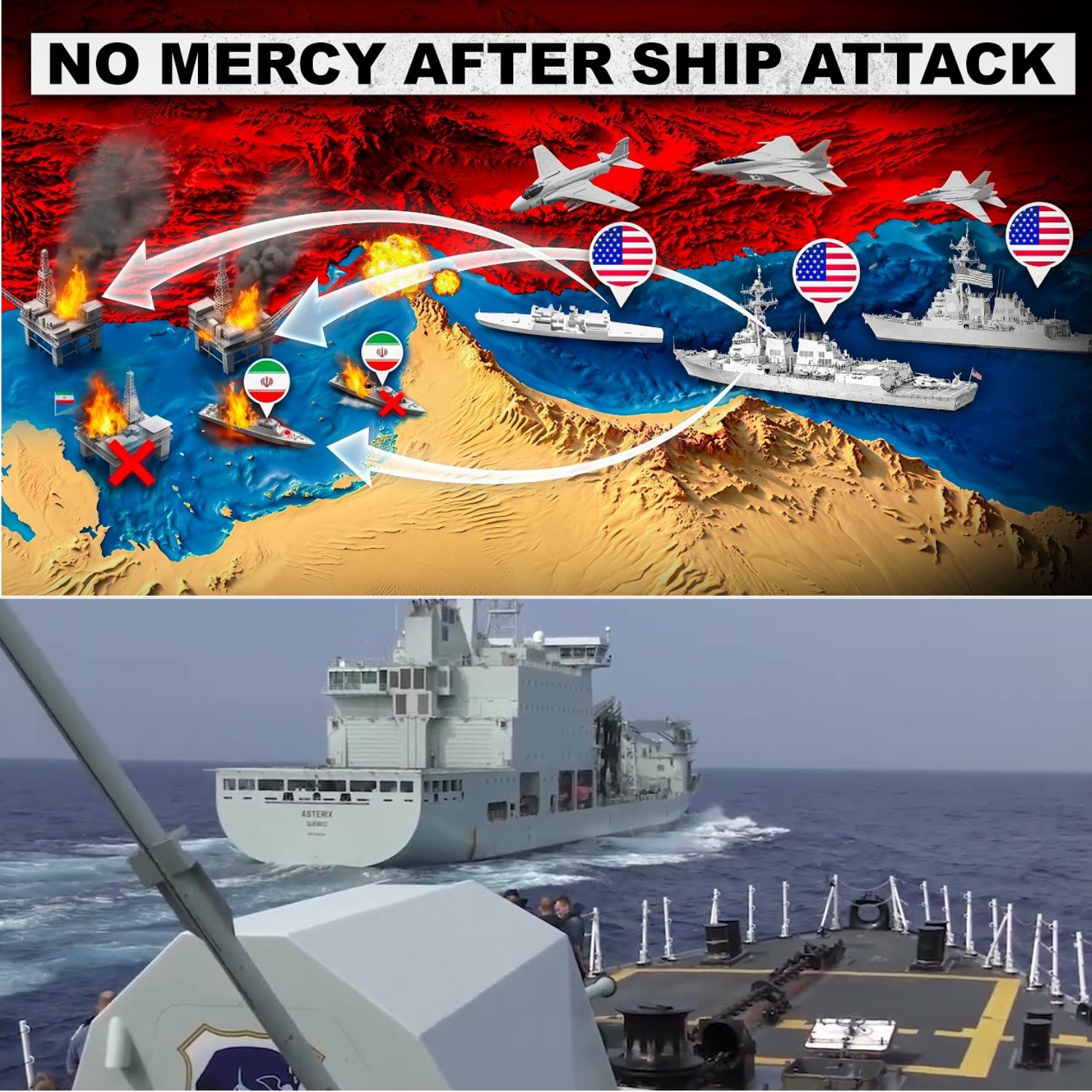
In October 1987, a Silkworm struck the Sea Isle City, a reflagged American tanker. Eighteen crew members were wounded; the American captain was permanently blinded. The U.S. response, Operation Nimble Archer, was surgical. Four destroyers pounded two Iranian oil platforms being used as IRGC scout bases, reducing them to glowing slag.
For six months, there was a tentative silence. But Iran wasn’t stopping; they were just getting sneakier.
The “Sammy B” and the Miracle of Damage Control
On April 14, 1988, the USS Samuel B. Roberts (the “Sammy B”) was cruising north to refuel. Captain Paul Rinn, a fanatic for damage control drills, spotted dark shapes in the water. Mines.
As they attempted to back out of the field, a mine detonated directly under the keel. The explosion lifted the 4,000-ton frigate out of the water, snapping her spine and blowing a 21-foot hole in her belly. By every law of physics, the ship should have sunk in 90 seconds.
Instead, the crew performed the impossible. They shored up bulkheads with timber and literally used steel cables to “stitch” the two halves of the ship together. Not a single American was killed. When the serial numbers on the mine fragments matched those captured from an Iranian ship the year prior, President Reagan issued a “proportional response.”
The U.S. Navy, however, had a very broad definition of “proportional.”
Operation Praying Mantis: 8 Hours of Devastation — Part 2
April 18, 1988. The U.S. Navy launched Operation Praying Mantis. Three surface action groups were dispatched with one goal: dismantle the Iranian Navy’s ability to wage war.
Group 1: The Sassan Platform
U.S. Marines radioed the Iranians on the Sassan oil rig: “You have 20 minutes to evacuate.” Most fled, but one defender opened fire with a 23mm anti-aircraft gun. The U.S. destroyers responded with 5-inch shells, turning the rig into a bonfire before Marines boarded it to gather intelligence and blow it sky-high.
Group 2: The Sahand and the Sabalan
Things turned “spicy” when the Iranian fast-attack craft Joshan challenged the U.S. fleet. The Joshan fired a Harpoon missile; the U.S. jammed it with countermeasures and replied with five missiles of its own. The Joshan vanished.
Then, the big guns came out. The Iranian frigate Sahand opened fire on U.S. A-6 Intruders. It was the last mistake she ever made. The A-6s hit her with a Harpoon, a laser-guided bomb, and a 1,000-pound “iron” bomb. She burned and sank. Her sister ship, the Sabalan, tried her luck shortly after. A single 2,000-pound bomb from an A-6 Intruders went straight through her deck and detonated in the engine room, disabling her instantly.
At this point, Washington actually had to tell the Navy to stop—otherwise, there wouldn’t be an Iranian Navy left by sunset.
The Bitter Poison of Peace
The sheer scale of the defeat on April 18 was the final straw for Tehran. They had fought Iraq for eight years, claiming they would never surrender. But after losing half their combat fleet in eight hours to a superpower they couldn’t even touch, the calculus changed.
On July 18, 1988, Iran accepted the UN ceasefire. The Ayatollah Khomeini gave a famous, somber speech, stating that accepting peace was “more bitter than drinking poison.”
The U.S. Navy had effectively ended a decade-long war by proving that the cost of maritime interference was total annihilation.
Epilogue: The Frigate That Refused to Die
What of the Samuel B. Roberts? The ship that should have been at the bottom of the Gulf was towed all the way back to Maine. Engineers cut out the shattered middle section and welded in a brand-new module.
One year to the day after she was nearly blown in half, the “Sammy B” was back at sea. She served the United States for another 27 years, a floating testament to the fact that while you can hit an American ship, you likely won’t like what happens next.
News
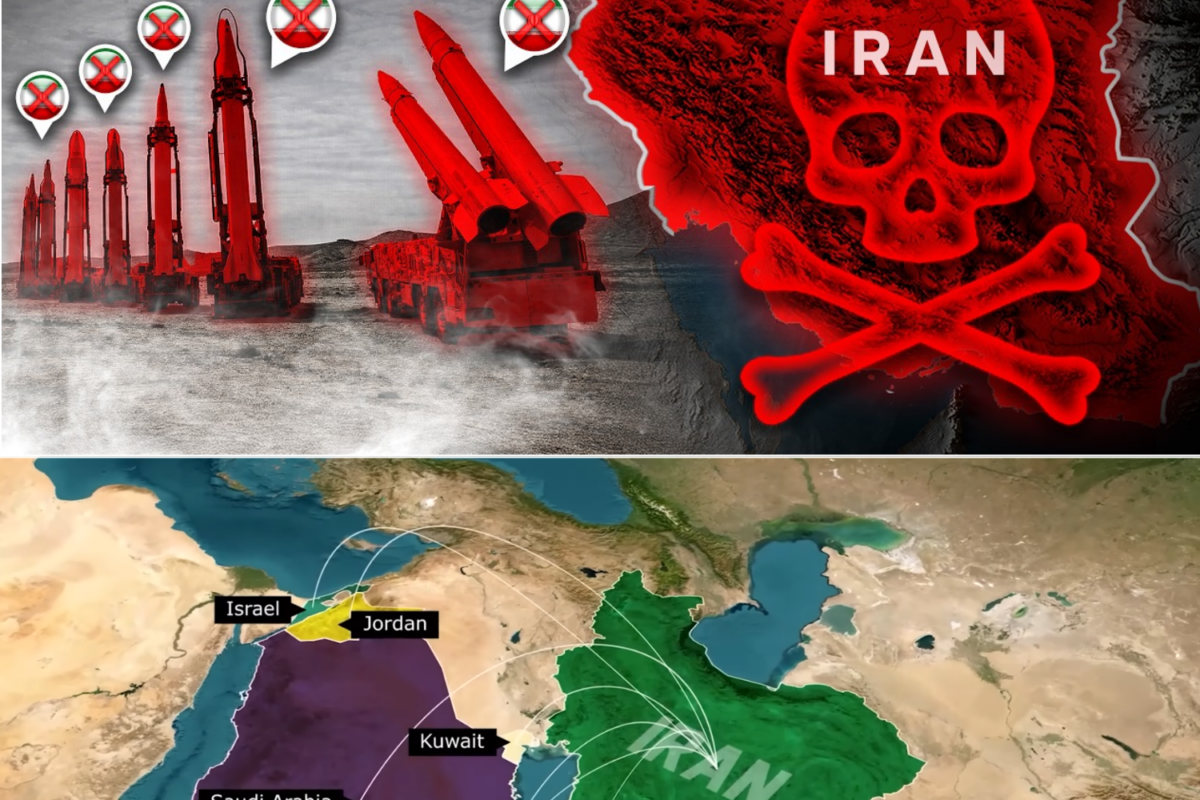
US Just Did Something so OUT OF THIS WORLD… Iran’s Entire Missiles Stockpile EVAPORATED
The Islamabad Gambit: Inside the High-Stakes Secret Peace Talks to End the Gulf War ISLAMABAD — In the shadowed corridors of a neutral villas in Pakistan’s capital, the future of…
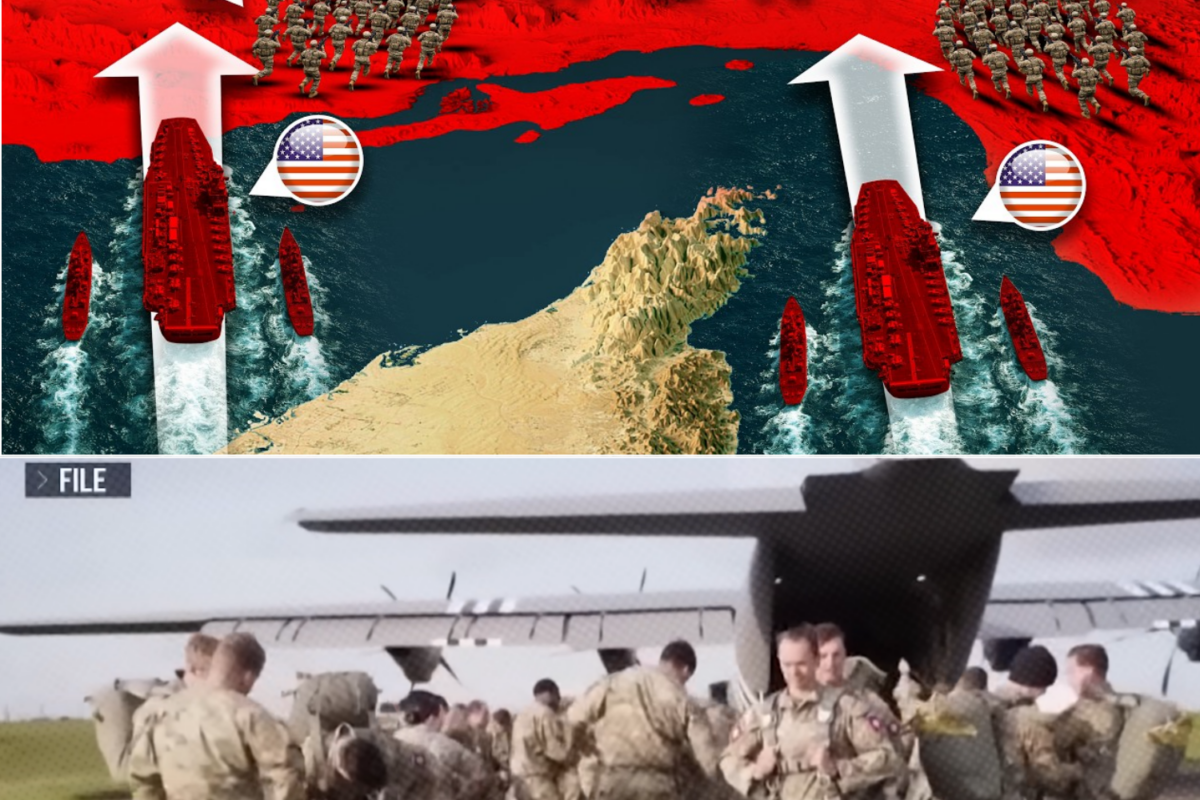
Iran HIT Strait of Hormuz… U.S. Marines About to Do Something WAR-ENDING!
The “Immediate Response”: Paratroopers and the Tip of the Spear The speed of the buildup is a testament to the “Immediate Response Force” (IRF). Within a mere 18 hours, 2,000…

Undercover Owner Saw Waitress With Broken Hand Still Working — Her Answer Kept Him Awake All Night
The Owner’s Revenge: Confronting the Thief of Casco Bay — Part 2 PORTLAND, ME — The tension inside the Harborview Grill reached its boiling point at 8:15 p.m. on the…

Black Waitress Gave Last $20 to “Homeless Man” in Rain — That Night, Helicopter Landed on Her Street
The Milbrook Conspiracy: Tamara Henderson and the Price of the Golden Key — Part 2 MILBROOK, NY — The applause had barely faded when the reality of Tamara Henderson’s “honor”…
Billionaire Tasted One Bite and Demanded to See Chef — They Pointed at the Black Woman Mopping Floor
The Billionaire’s Bite: How a $10,000 Mistake Unmasked a Culinary Thief — Part 2 NEW YORK, NY — The back prep kitchen of the Lexington Hotel was a dark, cramped…

Billionaire’s Mistress Kicked His Pregnant Wife — Until Her Three Brothers Stepped Out of a $50M Jet
The Underwood Reckoning: Three Brothers, One Private Jet, and a Billion-Dollar Collapse — Part 2 THE HAMPTONS, NY — While the lights were still twinkling at the Monarch Grand Ballroom,…
End of content
No more pages to load