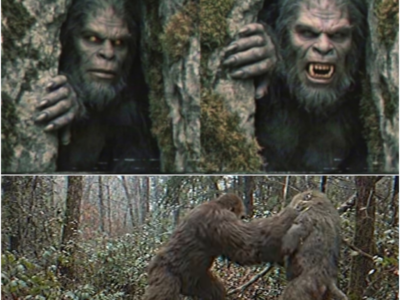
DON’T GO THERE — Bigfoot Himself Begged Him Not to Hunt the Monster Devouring His Kind in Missouri
The mist in the Mark Twain National Forest doesn’t just sit; it breathes. It clings to the limestone ridges and the dense canopy of oak and hickory like a living shroud, muffling the world until the only thing you can hear is the frantic thrum of your own pulse.
Dexter Boon, a man who had spent fifteen years as a Park Ranger navigating the most treacherous backcountry in North America, thought he knew silence. He was wrong. The silence he was currently experiencing was heavy, artificial, and charged with the kind of ozone-thick dread that precedes a massive electrical storm. But there was no storm coming. Only the thing beneath the ground.
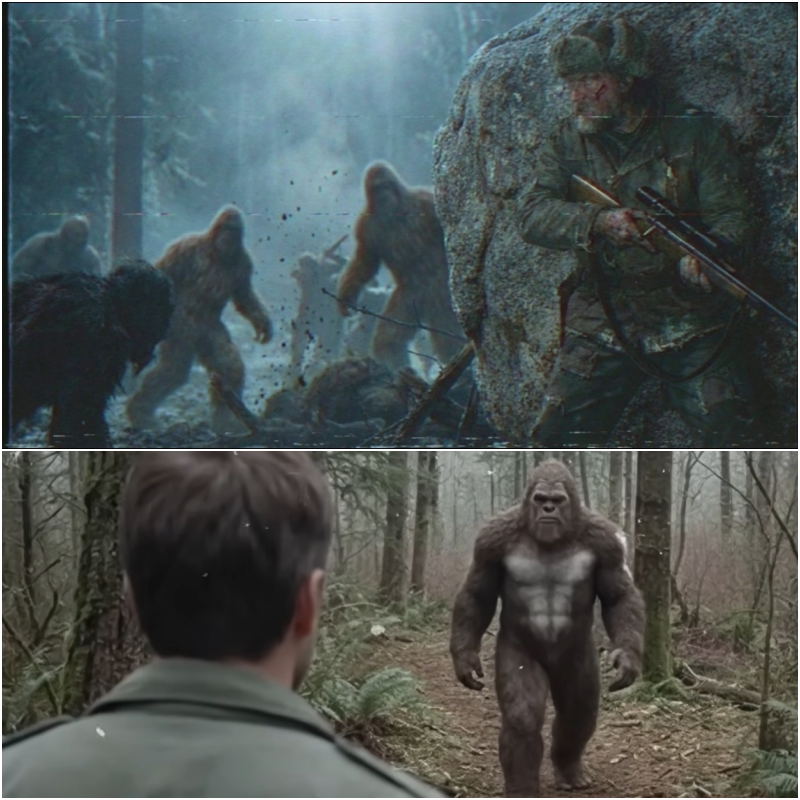
Dexter gripped the bars of the titanium hunting cage. His knuckles were white, his palms slick with sweat despite the biting Missouri chill. The cage, a brutalist masterpiece of engineering bankrolled by the enigmatic Gavin Pierce, was being dragged. Not by a winch, not by a truck, but by something subterranean that moved with a terrifying, rhythmic velocity. The metal groaned, the welds screaming as they scraped against buried boulders.
And then there was the Bigfoot.
It was eight feet of matted, charcoal fur and raw, primal power, sprinting alongside the cage with an agility that defied its massive bulk. A white stripe, jagged as a lightning bolt, ran across its broad chest. It wasn’t attacking Dexter. It was reaching for him. Its massive arms, thick as tree trunks, jammed through the titanium bars, clawing at the reinforced door. It wasn’t trying to eat him; it was trying to wrench him out. It was trying to save him.
“Let go!” Dexter screamed, though his voice was swallowed by the grinding of metal on stone.
The creature didn’t let go. It let out a sound—not a roar, but a deep, vibrating huff of desperation. It looked Dexter square in the eye, and for a fleeting, soul-shattering second, Dexter didn’t see an animal. He saw a soldier trying to pull a comrade from a sinking ship. Then, the cable snapped.
The recoil was like a gunshot. The cage slammed into a massive root system, the sudden deceleration tossing Dexter against the bars with enough force to see stars. He tumbled out of the now-buckled door, landing flat on his back. Through the gaps in the autumn leaves, he saw the Bigfoot standing over him. It was breathing hard, blood dripping from a gash on its forearm where the cage had bitten into its flesh.
It didn’t linger. It didn’t offer a hand. It looked at Dexter with a cold, analytical detachment—the way a mechanic might look at a tool that was still functional but badly dented. Then, with a silent, fluid grace, it vanished into the shadows of the forest.
Dexter lay there, staring at the sky, his mind racing back to where this madness had begun three weeks ago in a sterile hotel lobby in Springfield.
Gavin Pierce was the kind of man who existed in the peripheral vision of the world. He was “eccentric” to the public, but to those who worked for him, he was a ghost with a checkbook. He had met Dexter in a mid-tier highway hotel that smelled of stale coffee and industrial cleaner. Pierce hadn’t offered a handshake. He had simply slid a manila folder across the table.
Inside were ten sets of coordinates. Ten sites where Bigfoots had been found dead in the last two months.
“Something is clearing the territory,” Pierce had said, his voice as dry as parchment.
Dexter wasn’t a believer in the paranormal. He was a man of maps, topographical lines, and predator-prey ratios. But the photos in that folder had defied every law of biology he knew. The bodies weren’t eaten. They hadn’t been scavenged by coyotes or bears. Each one had been meticulously opened along the spine. The spinal columns were gone, harvested with a precision that suggested a scalpel, not a claw.
“I need a tracker,” Pierce told him. “And I need someone who doesn’t ask questions that involve the police.”
Dexter had taken the job because the National Park Service doesn’t provide a pension for those who quit in protest of “bureaucratic negligence.” He needed the money. He didn’t know he was signing up for a war.
The team was a skeletal crew of specialists. There was Riley Prescott, a field biologist who had spent a decade studying large predators and possessed a cynical edge that made Dexter look like an optimist. Then there was Cameron Wolf, a local guide who knew the Mark Twain National Forest better than his own reflection.
They had set up base camp on a western slope, deep in the “Green Hell” where the trails ended and the map became a series of suggestive curves. On day four, the reality of their situation had begun to tilt.
“The tracks don’t match,” Riley had said, tossing her notebook onto the folding table. “We’re looking for one monster, right? But the geometry of the kills… it’s wrong. There are two. One flushes the prey out, and the other waits in the shadows. They’re coordinating.”
“Like wolves?” Dexter asked.
“No,” Riley replied, her eyes dark. “Wolves hunt in a pack to overwhelm. These things hunt in a pair to trap. They’re using the terrain like it’s a chessboard. They aren’t just faster than the Bigfoots; they’re smarter.”
Cameron had added the final, chilling piece of the puzzle. He had been monitoring the perimeter of their camp. “They’ve been here every night,” he whispered. “The Bigfoots. They aren’t watching us because they want to hurt us. They’re counting us. They’re counting our gear.”
It was a realization that made the hair on Dexter’s neck stand up. These legendary, elusive creatures weren’t the predators in this forest anymore. They were the refugees. And they were looking at the humans not as enemies, but as a potential cache of weapons.
By day seven, the “joint operation” had begun, though no words were ever exchanged. The Bigfoot with the white stripe—whom Dexter had started calling “The Captain”—began appearing at the edge of their camp. It would stand in the dappled sunlight, a silent sentinel, before leading them deeper into the forest.
It showed them the tunnels.
They weren’t caves. They were vertical shafts, smooth as polished obsidian, dropping hundreds of feet into the limestone bedrock. There was no rubble around the openings, as if the earth had simply been vaporized or pushed aside by an impossible force.
“The things beneath,” Cameron had muttered, clutching his rifle. “They’re not from the surface.”
The Bigfoots began marking the trails for the humans. A cross scratched into the bark of an oak meant danger. A straight line meant clear. It was “battlefield shorthand,” as Riley called it. The two species, separated by millions of years of evolution, were communicating through the universal language of survival.
But the most shocking moment came on day eight. Dexter had been hunched over a topographical map, trying to find a choke point for an ambush. The Captain had stepped out from behind a cedar tree, walked right up to the table, and placed a massive, calloused finger on a specific rock outcropping near the Black River.
The creature didn’t grunt or growl. It just looked at Dexter, its amber eyes filled with a terrifyingly human intelligence, and then looked at the map. It had spotted a tactical advantage that three trained humans had missed.
“It knows the terrain better than the satellite,” Dexter had whispered, his hands trembling. “It’s not an animal. It’s a general.”
The plan was set. They would use the titanium cage as bait, rigged with every electronic sensor they had. Riley had discovered that the subterranean predators—whatever they were—were attracted to electronic signals. The radios, the generator, the thermal scopes—to the things in the tunnels, these were beacon flares in the dark.
The Bigfoots would act as the beaters, driving the western creature into the rock corridor. Dexter would be inside the cage, acting as the ultimate lure, protected by two-inch thick titanium bars and backed by the team’s high-caliber rifles.
But as the sun dipped below the ridge on the eve of the ambush, the forest went deathly silent. Not even the crickets dared to speak.
“Dexter,” Riley’s voice came over the radio, cracking with a sudden, sharp fear. “The seismic sensors… they’re going off. But not from the west.”
“Where?” Dexter asked, checking his sidearm.
“Everywhere,” she replied. “The ground is vibrating in a perfect circle around the camp. They’re not being driven into our trap, Dexter. They’re closing one of their own.”
The ambush turned into a slaughter within minutes, though not the one Dexter had envisioned.
As the “Western” creature emerged from the corridor, it didn’t look like a beast of flesh and blood. It was a nightmare of segments and obsidian plates, a subterranean horror that moved like a centipede made of midnight. It didn’t roar; it hummed, a low-frequency vibration that made Dexter’s teeth ache and his vision blur.
It didn’t fall for the trap. It bypassed the corridor entirely, punching through a solid limestone wall with the ease of a hand through wet clay.
“It’s through!” Riley screamed over the comms. “It’s going for the cage!”
The Bigfoot with the white stripe had surged from the brush then, not to attack the creature, but to save the man who had the “signals.” It knew that if Dexter died, the light—the “fire” that drew the monsters away from the Bigfoot nurseries—would go out.
That brought Dexter to the present, lying in the dirt, the cage a crumpled wreck behind him. He scrambled to his feet, his ribs screaming in protest. He could hear the hushing sound of the creature moving through the earth nearby, a sound like a scythe through tall grass.
He looked around for his team. “Riley? Cameron? Do you copy?”
Static.
Then, a voice—thin, reedy, and distorted. “Dexter… don’t move. Look at the trees.”
Dexter looked. Hanging from the branches of a massive ancient oak were the remnants of their equipment. The generator, the radios, the laptops. They had been shredded, but not destroyed. They were being arranged.
The Bigfoot appeared at the edge of the clearing again. This time, it wasn’t alone. Five others stood behind it, their massive frames casting long, flickering shadows. The Captain walked toward Dexter, stopping just out of arm’s reach.
It reached into a pouch—a crude, leather-like bag slung over its shoulder—and pulled something out. It was Gavin Pierce’s manila folder, stained with mud and blood. The creature dropped it at Dexter’s feet.
With a slow, deliberate motion, the Bigfoot pointed toward the deepest, darkest part of the Mark Twain forest—the “Zone of Silence” where no ranger ever returned from.
“You,” the creature huffed, the sound vibrating in Dexter’s chest. It wasn’t a word, but the intent was unmistakable.
You brought the light. Now use it.
The Bigfoot turned and began to walk, not away from the danger, but directly toward the heart of the tunnels. It stopped after ten yards and looked back, its eyes glowing with a desperate, haunting plea.
Dexter looked at the folder, then at the dark woods, then at the buckled titanium cage. He realized then that Pierce hadn’t sent them to hunt a monster. He had sent them to be the ammunition in a war that had been raging beneath the soil of Missouri for centuries.
He picked up his rifle, adjusted his pack, and stepped into the shadow of the trees. He wasn’t a ranger anymore. He was a scout for an army he never knew existed, following an eight-foot-tall general into a hell that didn’t have a name.
The mist closed in behind them, swallowing the clearing, the cage, and the last remnants of the world Dexter Boon had once called home. The real hunt was only just beginning.
The vibration wasn’t just in the ground anymore; it was in Dexter’s marrow. As the truck screamed onto the asphalt of Highway 65, the transition from the chaotic, muffled forest to the open, moonlit road felt less like an escape and more like stepping onto a stage. They were no longer hidden by the density of the Mark Twain brush. They were a blazing neon sign of electronic interference, and the things below—the Subterrenes—were no longer hunting by scent or shadow. They were locked onto the frequency.
“Cameron, floor it!” Dexter yelled, his voice cracking. He wasn’t looking at the road ahead. He was staring at the back of the truck, where the heavy titanium hunting cage sat like a silver cage for a ghost. Inside it, Riley had piled the equipment—the laptops, the satellite phones, the high-gain sensors. It was a heap of glowing LEDs and humming processors.
“I’m at ninety!” Cameron shouted back, his knuckles white as bone against the steering wheel. “The engine’s redlining! If we push it harder, we’re going to blow a gasket before we hit the city limits!”
Riley was hunched over a handheld tablet, her face illuminated by the pale blue light of a seismic visualization app. Her hands were shaking so violently she could barely hold the screen. “Dexter… it’s not behind us.”
Dexter spun around, looking through the rear window. The road was empty. The moonlight hit the gray ribbon of Highway 65, illuminating nothing but the occasional drift of dead leaves. “What do you mean? I can feel the vibration.”
“It’s not behind us,” Riley repeated, her voice dropping to a terrifying whisper. “It’s pacing us. It’s directly underneath the chassis. It’s matching our speed, Dexter. It’s waiting for the signal to peak.”
The realization hit Dexter like a physical blow. The creatures weren’t chasing them; they were escorting them. To a predator that lived in the crushing dark of the earth, the surface was a thin membrane. They were swimming through the limestone and shale beneath the roadbed as easily as sharks in the surf. And the signal they were carrying wasn’t just food—it was a beacon leading them to the greatest feeding ground they had ever known.
Branson, Missouri. A city of neon, of theater lights, of massive power grids, and tens of thousands of tourists carrying smartphones. If the Bigfoots had intended to trade the humans for their own safety, they had succeeded beyond their wildest imagination. They hadn’t just sent the predators away; they had sent them toward a banquet.
“We can’t go to Branson,” Dexter said, his voice cold and sudden.
“What?” Cameron glanced at the rearview mirror. “Dexter, that’s where the people are. That’s where the help is!”
“No,” Dexter snapped. “That’s where the targets are. If we bring these things into the city, we’re responsible for a massacre. Every hotel, every theater—it’s all signal. We’re leading a pair of excavating nightmares into a population center. We have to ditch the gear.”
“We can’t!” Riley cried. “If we stop to dump the cage, they’ll breach right under us. We saw what they did to the rock corridor. They’ll shred this truck like it’s made of tin foil.”
Dexter looked at the titanium cage. It was bolted to the bed of the truck with four heavy-duty steel anchors. “Cameron, keep it steady. Riley, give me the bolt cutters from the emergency kit.”
“Dexter, what are you doing?”
“I’m going into the bed,” he said, already unbuckling his seatbelt. “I’m going to cut the anchors. When I give the word, you’re going to swerve toward the shoulder. I’ll kick the cage out. The second it hits the dirt, you floor it. We have to hope the signal in the cage is loud enough to keep them occupied while we get out of the kill zone.”
“You’ll fall out!” Riley grabbed his arm. “At ninety miles an hour? You’re suicide-running!”
“It’s either me or five thousand people in a Hilton,” Dexter growled, wrenching his arm free. He grabbed the long-handled cutters and rolled down the window of the moving truck. The wind roared into the cabin, a freezing, violent force that smelled of ozone and wet earth.
He climbed out. The world was a blur of gray and black. The friction of the tires on the road sent a high-pitched scream through the air. Dexter gripped the roof rack, his boots skidding on the side step as he swung himself into the bed of the truck.
The vibration here was deafening. It wasn’t just a sound; it was a physical force that made his vision shake. Beneath the floorboards of the truck, something massive was shifting. He could hear the pavement cracking—a series of sharp, rhythmic pops like gunfire as the creature’s sheer mass displaced the roadbed from below.
He dropped to his knees, crawling toward the first anchor bolt. The cage was rattling, the equipment inside shifting with every bump. He positioned the bolt cutters. Snap. One down.
He moved to the second. The truck swerved.
“Dexter!” Cameron’s voice came from the cab. “The Eastern one! It’s breaching!”
Dexter looked to the left. In the grassy median between the highway lanes, the earth was erupting. It wasn’t an explosion of dirt; it was a rhythmic, mechanical heaving. A segment of the creature—black, slick, and covered in bristling, sensory filaments—tore through the topsoil. It didn’t have eyes. It had a series of vibrating plates that shifted in tandem with the truck’s engine.
It was beautiful in a horrific, alien way. It moved with the fluidity of a serpent but the weight of an armored train. A single, massive limb, tipped with a claw made for crushing granite, reached out, testing the air.
Dexter lunged for the third bolt. Snap. The truck fishtailed as Cameron tried to dodge a sinkhole forming in the middle of the road. Dexter was tossed against the side of the bed, the heavy cutters nearly flying from his hands. He looked up and saw it—The Captain.
The white-striped Bigfoot was there, running parallel to the highway in the shadow of the tree line. It was keeping pace with a truck doing nearly a hundred miles an hour. Its eyes were fixed on Dexter. It wasn’t cheering him on. It was watching the “tool” perform its final function. It was ensuring the lure left the forest.
Dexter felt a surge of cold, white-hot rage. We’re not your sacrifices, he thought. He reached the fourth bolt.
“Now!” Dexter screamed.
Cameron yanked the wheel. The truck lurched toward the gravel shoulder. Dexter braced his back against the cab and kicked the titanium cage with every ounce of strength in his legs. The heavy metal box, loaded with thousands of dollars of broadcasting electronics, slid across the bed. It caught the wind and tumbled over the tailgate.
The cage hit the asphalt with a shower of sparks, tumbling and bouncing like a discarded toy.
“Go! Go! Go!” Dexter scrambled back toward the cab window.
Behind them, the highway simply ceased to exist.
The two subterranean predators didn’t just emerge; they collided at the site of the signal. The road erupted in a geyser of asphalt, rebar, and earth. The sound was like a mountain collapsing. In his rearview mirror, as he climbed back through the window, Dexter saw the two obsidian horrors entwine around the titanium cage. They weren’t fighting each other. They were competing for the “prey.” The cage, designed to hold a Bigfoot, was crushed into a ball of scrap metal in seconds.
The truck sped away, the orange glow of Branson appearing on the horizon. Cameron didn’t slow down until the vibration finally, mercifully, faded into the background hum of the tires.
They pulled into a gas station on the outskirts of the city, the truck a battered, tailgate-less wreck. None of them spoke. Cameron sat with his head on the steering wheel, his chest heaving. Riley was staring at her empty hands, the tablet long since discarded in the cage.
Dexter climbed out of the truck. He was covered in road grit and dried blood. He walked to the edge of the parking lot, looking back toward the dark silhouette of the Mark Twain National Forest.
The silence was back. But it was different now.
His phone buzzed in his pocket. It was the only electronic device they had left—his personal cell, which had been turned off until now. He flipped it open. One message.
Gavin Pierce: Did the asset reach the extraction point?
Dexter looked at the screen, then at the forest. He realized then that the Bigfoots hadn’t just used them. Pierce had used the Bigfoots. The coordinates, the folder, the “eccentric” funding—it had all been a test. Pierce didn’t want to hunt Bigfoot. He wanted to weaponize the things that hunted them. He had been looking for a way to draw the Subterrenes out, to see if they could be led, if they could be “herded” using signal.
Dexter didn’t reply. He dropped the phone onto the pavement and crushed it under the heel of his boot.
In the distance, at the edge of the gas station’s fluorescent lights, a shadow moved. It was large—too large for a man. It stood near a cluster of pine trees, its amber eyes reflecting the light for a brief second. The Captain.
The Bigfoot didn’t move. It didn’t threaten. It simply raised a hand, a gesture that looked remarkably like a salute—or perhaps a farewell to a fellow survivor. Then, it turned and melted back into the darkness.
Dexter walked back to the truck. “Let’s go,” he said to Cameron and Riley.
“Where?” Riley asked, her voice hollow.
“Away from the signals,” Dexter replied. “Somewhere quiet. Somewhere they can’t hear us breathing.”
As they drove away, leaving the lights of Branson behind, Dexter looked at his hands. They were still shaking. He knew the war wasn’t over. The Bigfoots were still out there, moving their young through the deep ridges, invisible and silent. And the things beneath the earth were still listening, waiting for the next spark in the dark.
But for tonight, the forest was still. The humans had survived the math of the wild, and for the first time in three weeks, Dexter Boon closed his eyes and let the silence take him. He knew better than to think he was safe, but he also knew the secret of the Mark Twain forest: the only way to survive a monster is to make sure it finds something else to eat.
Six months later, the reports started coming in from the suburbs of St. Louis.
It began with “geological instabilities.” Then, the disappearance of a cell tower in the middle of a clear night. The local news called it a sinkhole. The residents talked about a low-frequency hum that made their dogs howl and their electronics glitch.
In a small cabin in the Ozarks, far from any paved road or power line, Dexter Boon sat on his porch. He didn’t have a phone. He didn’t have a radio. He watched the tree line as the sun dipped below the horizon.
A heavy branch snapped in the distance. Not a random break, but a deliberate one. A cross mark appeared on a nearby oak, scratched fresh into the bark.
Dexter stood up and grabbed his pack. He didn’t need to check a map. He knew the way. The “joint operation” was starting again, and this time, he knew exactly who was holding the leash.
The mist began to rise from the valley, thick and suffocating. Somewhere deep underground, the ground began to pulse—a rhythmic, hungry heartbeat.
Dexter stepped off the porch and disappeared into the fog. He wasn’t running this time. He was hunting. And he knew that as long as he stayed in the shadows of the Bigfoots, he would never be the bait again.
The forest breathed. The earth waited. And the signals—thousands of them, millions of them—continued to pulse from the cities, calling the darkness home.
👉 Link youtube: https://youtu.be/mf7ff4oEeDM?si=esQm8WkF0Cxs3bVZ
News
He Signed an NDA About Bigfoot for 10 Years — Here’s What They Don’t Want You to Know
The motel room in Grangeville smelled of stale coffee and the ozone scent of an approaching storm. Judith Emmerick sat by the window, her silhouette sharp against the fading Idaho…
Park Rangers Followed an Injured Bigfoot for 3 Days… Then They Found Something They Were Never Supposed to See
The Obsidian Canopy: The Account of Sector 4 The survival manuals tell you that the forest is a neutral entity. They say the trees do not hate you, the rain…
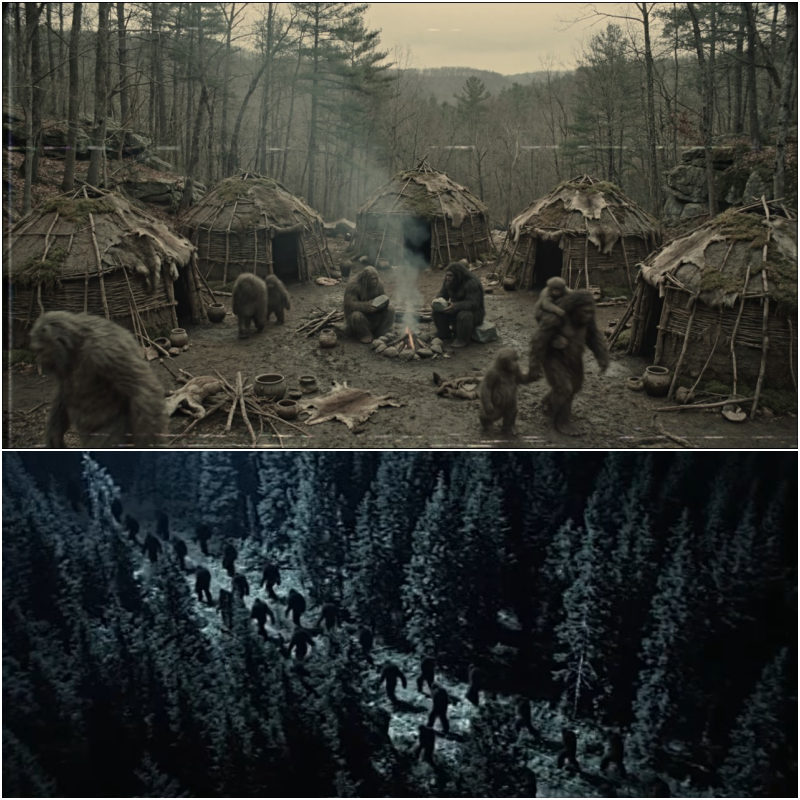
The U.S. Forest Service Has a Secret Bigfoot File… What It Reveals Is Worse Than Anyone Imagined
The Resonance of the Pines The manila envelope arrived on a Tuesday, looking as unremarkable as a utility bill. No return address, postmarked from a sorting facility in Denver, and…
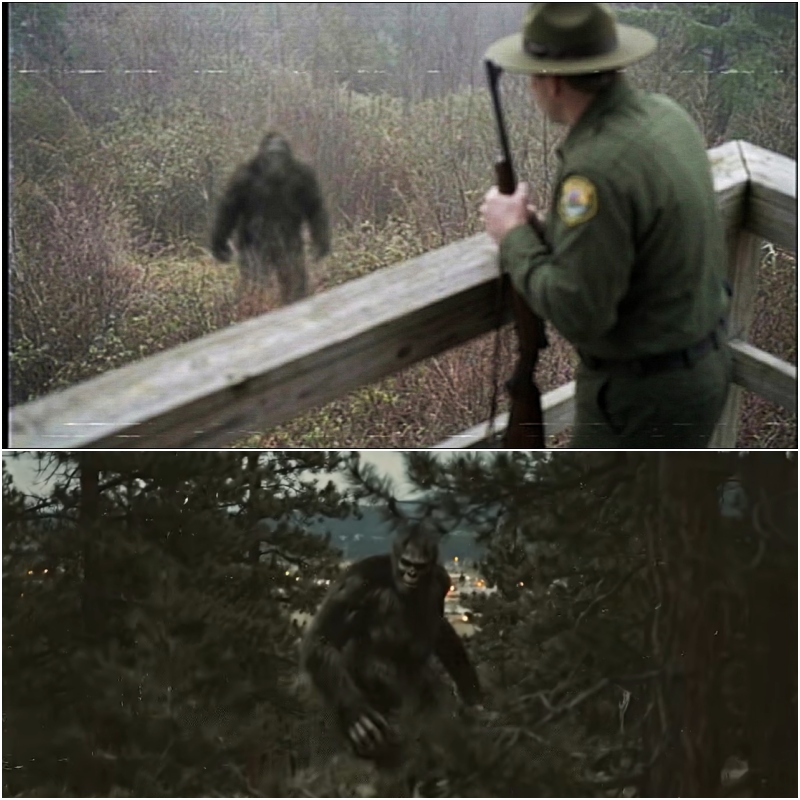
He Spent 20 Years Searching for Bigfoot… Then a Park Ranger Finally Revealed the Truth
The Ghost Map of the Olympics The progress bar was a thin, glowing sliver of blue light, crawling across the monitor like a glacier. 99.8%. Twenty years of my life,…
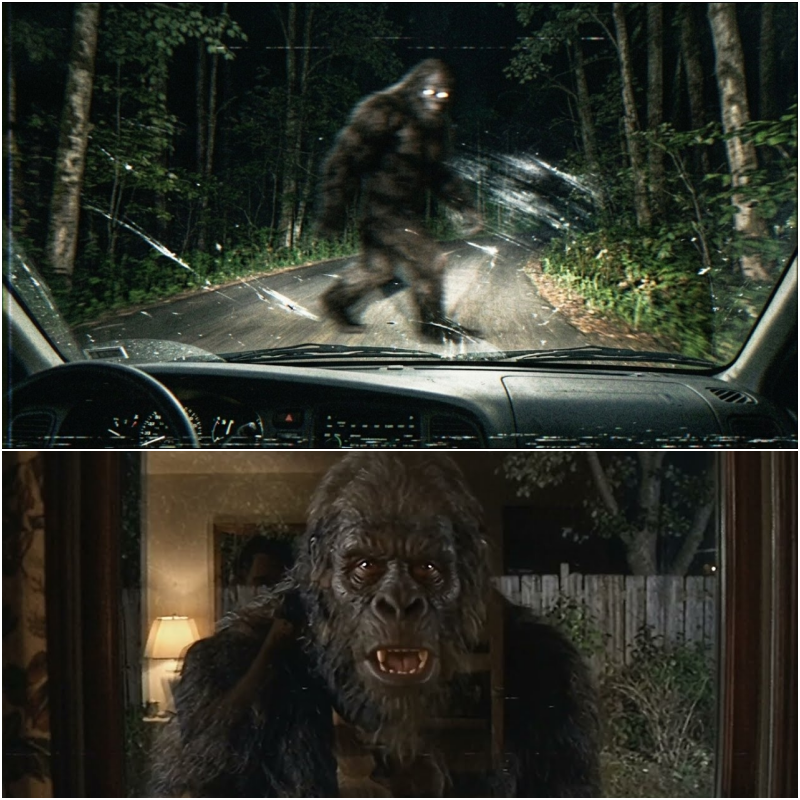
A Researcher Proved Bigfoot Exists… Then He Vanished Without a Trace
The canopy of the Olympic Peninsula doesn’t just shade the ground; it claims it. There is a specific stretch of old-growth forest out there, west of the Elwha River, where…
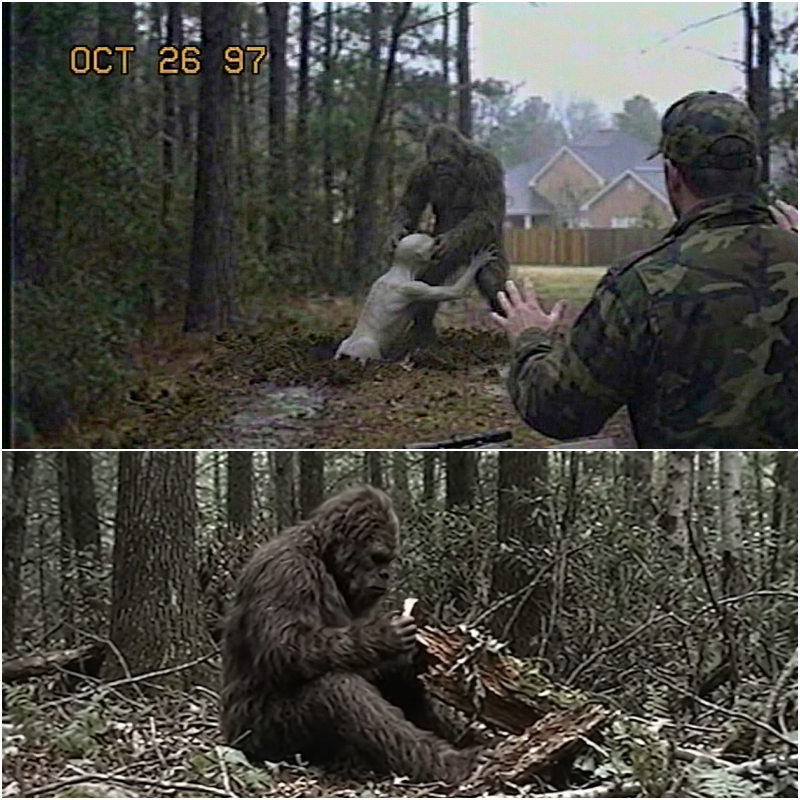
He Saw Something Devouring Bigfoot… If You Hear This Sound, Run
He Saw Something Devouring Bigfoot… If You Hear This Sound, Run The silence of the Great Smoky Mountains isn’t actually silent. To anyone who has spent more than a week…
End of content
No more pages to load