Cold Mafia Boss Turned Away Every Beautiful Woman—But Fell For Maid Singing At Work Softly
“The Man Who Owned the Silence Between Us”
The first time she saw him, he wasn’t speaking.
He was simply standing by the window of a glass-walled penthouse, watching a city that looked like it belonged to him. Not because it was written anywhere, not because anyone said it aloud, but because the silence around him behaved like it had been trained.
Elena Voss had learned to recognize dangerous men early in life. Not from books. From experience. From the way her father used to lower his voice whenever certain names appeared on the news. From the way power never needed to introduce itself twice.
But nothing had prepared her for this kind of silence.
It wasn’t empty.
It was controlled.
And it was watching her.
“You’re late,” he said without turning around.
His voice was calm. Too calm. Like the concept of time had never been allowed to argue with him.
“I wasn’t told there was a specific time,” she replied.
That made him turn.
Slowly.
Not like a man surprised.
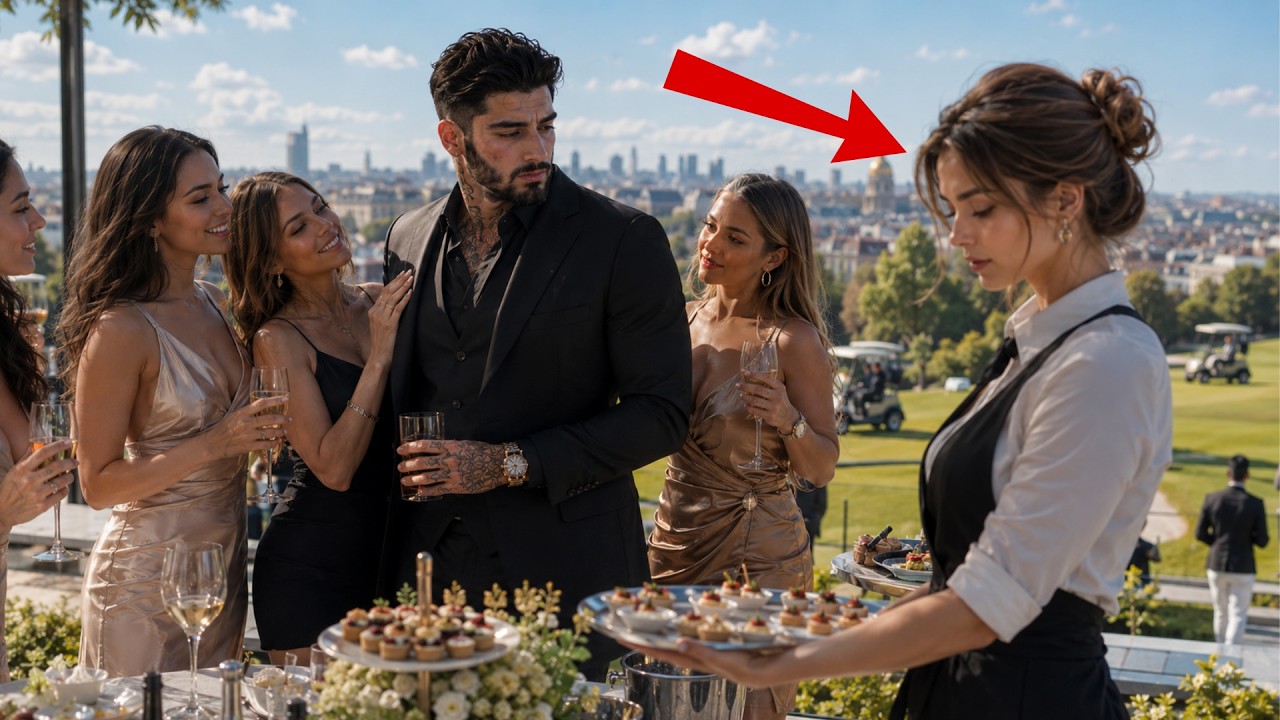
Like a man confirming something he already knew.
He studied her the way people studied contracts they intended to break only after understanding every clause.
“You weren’t told many things,” he said.
Elena didn’t respond. She didn’t like how the air in the room felt heavier when he looked directly at her.
“Do you know where you are?” he asked.
“Your apartment,” she said. “Penthouse level. West tower.”
A faint shift in his expression. Not approval. Not surprise. Recognition.
“You read rooms quickly,” he said.
“I clean rooms quickly,” she corrected.
That earned something closer to interest.
He stepped away from the window for the first time. The city behind him turned into a blurred ocean of light, but he didn’t look back at it again. He never did when she was in the room.
“I don’t remember hiring you,” he said.
“You didn’t,” she replied. “The agency assigned me.”
A pause.
Then: “They don’t assign people to me.”
That was the first crack in the conversation.
Small. But real.
Elena kept her face neutral. “They did this time.”
He walked closer. Not fast. Not threatening. Controlled again. Always controlled.
When he stopped in front of her, she realized something uncomfortable.
He was not just observing her.
He was measuring her.
Not like a person.
Like a risk.
“What’s your name?” he asked.
“Elena.”
Another pause. Longer this time.
“Say your full name.”
“Elena Voss.”
Something changed.
Very subtly.
Not in his expression.
In the air.
Like a locked door somewhere in the building had just remembered its own key.
“You can leave the windows,” he said suddenly.
She blinked. “I’m not finished—”
“You are now.”
It wasn’t loud.
But it ended the conversation anyway.
She left the cloth on the table and walked past him, aware of his gaze following her movement without turning his head.
When she reached the hallway, she exhaled for the first time in minutes.
She told herself it was nothing.
Just another wealthy client.
Another strange employer.
Another man who thought silence belonged to him.
But that night, when she returned to her small apartment, she couldn’t sleep.
Because she kept hearing the way he said her name.
Not like recognition.
Like memory.
The next day, she was asked to return.
Not by the agency.
By him.
The message arrived through a black car parked outside her building.
No explanation.
No request.
Just presence.
She almost refused.
Almost.
But rent existed. Responsibility existed. And curiosity—dangerous, irrational curiosity—existed even more strongly.
So she went back.
This time, the penthouse felt different.
Not warmer.
Not safer.
But more aware.
Like the space itself remembered her.
He was waiting near the same window.
“You came,” he said.
“You didn’t give me a choice,” she replied.
“That’s not true,” he said calmly. “You always have a choice.”
Elena almost laughed. “People like you don’t believe that.”
A slight pause.
Then: “People like me don’t waste choices.”
That was the first time she noticed the faint scar near his jaw. A thin line that looked like it had survived something that should have ended him.
“What do you actually do?” she asked.
His gaze sharpened.
“Why?”
“Because no one tells me anything,” she said. “Not the agency. Not your staff. Not you.”
A long silence.
Then he stepped closer again, but this time not to intimidate.
To test something.
“You clean my home,” he said. “That is all you need to know.”
“That’s not an answer.”
“It is the only safe one.”
Safe.
That word felt wrong in his voice.
“You think I’m unsafe?” she asked.
For the first time, he hesitated.
Just for a fraction.
“No,” he said finally. “I think you are unnoticed.”
That confused her more than anything else.
Over the next week, she saw him more often than she should have.
Never officially.
Always accidentally arranged.
A glass left untouched on the counter.
A door opened before she knocked.
A conversation cut short when she entered.
And always that same sensation.
She was not invisible to him.
She was unclassified.
One evening, she found him sitting in the dark living room, the city glowing behind him.
“You shouldn’t be here,” he said without looking up.
“You left the lights off,” she replied. “I thought the place was empty.”
“It’s never empty.”
That time, she didn’t leave immediately.
Instead, she stood where she was.
“Why do you watch me like that?” she asked.
Silence.
Then: “Like what?”
“Like I’m a problem you haven’t solved yet.”
That made him look at her properly.
For a long moment.
“You are not a problem,” he said.
“Then what am I?”
A pause that felt longer than it should have.
“A mistake,” he said quietly. “Or a correction. I haven’t decided.”
That should have frightened her.
It didn’t.
It should have made her leave.
It didn’t.
Instead, something inside her tightened.
Because no one had ever looked at her like she mattered enough to classify.
Days passed.
Then weeks.
And slowly, without permission, something shifted between them.
Not trust.
Not affection.
Something more dangerous.
Understanding.
She began noticing things.
He never raised his voice.
He never repeated himself.
And people around him obeyed without needing explanation.
But he also never touched anything casually.
Not objects.
Not people.
Not even time.
Everything he did was deliberate.
One night, she finally asked the question she had been avoiding.
“Are you dangerous?”
He didn’t answer immediately.
Instead, he walked to the window.
Looked at the city.
Then said:
“Yes.”
No hesitation.
No justification.
Just truth.
She nodded slowly.
“That’s honest.”
“That’s rare,” he replied.
Silence returned.
But it didn’t feel empty anymore.
It felt shared.
“You should stop coming here,” he said suddenly.
“Why?”
“Because you are starting to believe you belong in this space.”
“And I don’t?”
He turned slightly.
“You don’t.”
It should have ended there.
But instead she stepped closer.
“Then why don’t you make me leave?”
That question changed something in the room.
Something irreversible.
He looked at her for a long time.
Too long.
Then said quietly:
“Because you already see too much.”
That night, nothing happened.
And yet everything changed.
Because now she knew.
He wasn’t keeping her there.
She was staying.
The final shift came on a night when the city outside was louder than usual.
Sirens in the distance.
Flashing lights reflected across glass walls.
He stood by the window again, but this time he wasn’t watching the city.
He was watching her reflection in the glass.
“You’ve been asking the wrong question,” he said.
“What question should I be asking?”
He turned.
Slowly.
“Not who I am,” he said. “But why you are still here.”
Elena didn’t answer immediately.
Because the truth was uncomfortable.
She didn’t know.
Or maybe she did.
But admitting it would change everything.
“You don’t scare me,” she said finally.
That made him laugh once.
Not humor.
Recognition.
“That,” he said, “is the most dangerous thing you could have said.”
And then he stepped closer.
Close enough that the silence between them finally broke.
Not loudly.
Just completely.
And in that moment, Elena understood something she hadn’t allowed herself to admit before.
She had not entered his world by accident.
She had been noticed long before she realized she was being seen.
And now, there was no returning to the version of her life where he did not exist.
Because some silences are not empty.
They are occupied.
And once you hear them breathe, they never let you go.