
The UnXplained: What REALLY Happened to Malaysia Airlines Flight 370? (Special) | History
The UnXplained: What REALLY Happened to Malaysia Airlines Flight 370? (Special) | History
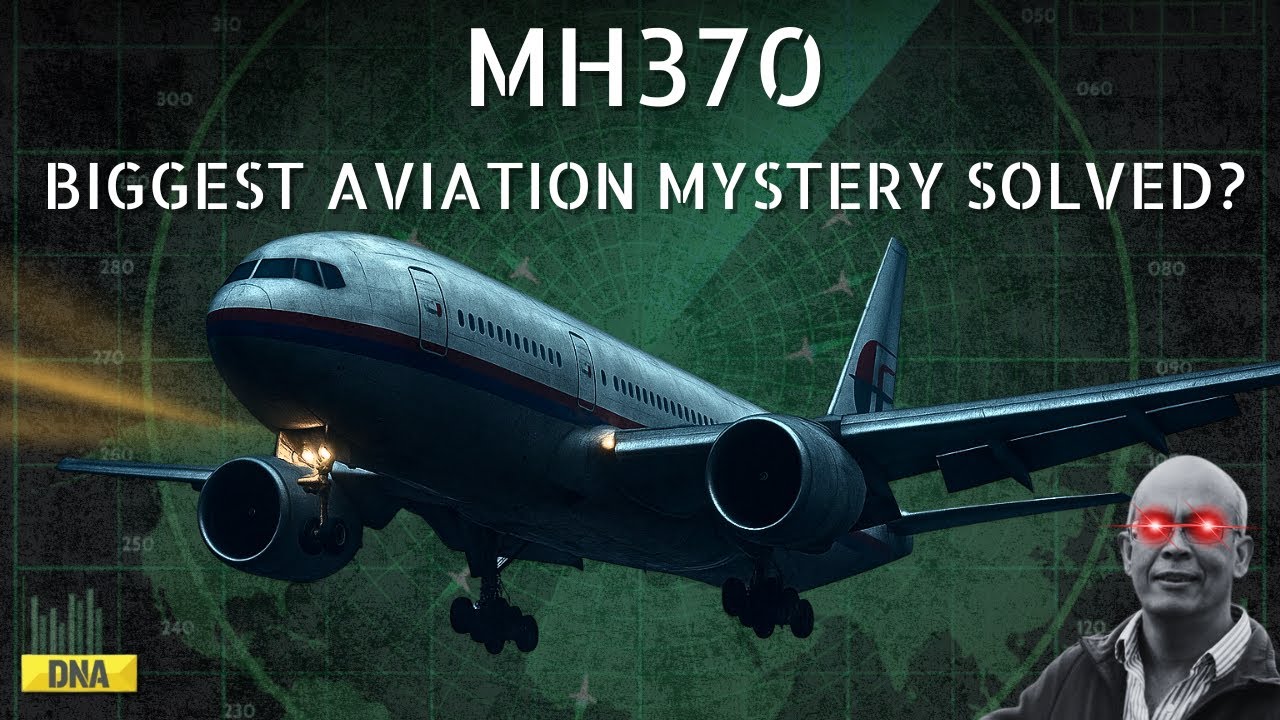
Introduction: A Disappearance That Defies the Modern World
On March 8, 2014, the world witnessed one of the most baffling events in aviation history—the disappearance of Malaysia Airlines Flight MH370. In an age defined by satellites, real-time tracking, and constant connectivity, the idea that a commercial airliner could simply vanish seemed almost impossible.
Yet that is exactly what happened.
Flight MH370 departed from Kuala Lumpur en route to Beijing with 239 people onboard. Within less than an hour, it disappeared from civilian radar. What followed was a global search effort, countless theories, and a mystery that remains unsolved to this day.
This blog explores the timeline, the evidence, the leading theories, and the enduring questions surrounding one of aviation’s greatest enigmas.
A Routine Flight Begins
The aircraft assigned to the journey was a Boeing 777—one of the safest and most reliable commercial jets ever built.
Everything about the flight appeared normal:
Departure from Kuala Lumpur International Airport
A planned route across the South China Sea
A scheduled arrival in Beijing
There were no distress calls, no reports of technical issues, and no indication that anything was wrong.
Passengers settled in. The crew performed their duties. The aircraft climbed steadily into the night sky.
Then, at approximately 1:20 a.m., everything changed.
The Moment It Went Dark
Air traffic control suddenly lost contact with the aircraft.
One moment, the transponder—a device that communicates the plane’s identity and altitude—was functioning normally. The next, it went silent.
This was not a gradual failure. It was abrupt.
Attempts to re-establish communication failed. Controllers called repeatedly. There was no response.
The aircraft had effectively disappeared from civilian radar.
This alone was deeply unusual. Modern aircraft are designed with multiple redundant systems. A total communications blackout is rare—and when it happens, it typically indicates deliberate action or catastrophic failure.
A Hidden Trail: Military Radar Data
While civilian systems lost track of the aircraft, military radar continued to monitor it—for a time.
What that radar revealed was astonishing.
Instead of continuing toward Beijing, the aircraft made a sharp turn—approximately 90 degrees—to the west. It then flew back across the Malay Peninsula and out over the Andaman Sea.
This was not a minor deviation. It was a deliberate and significant course change.
Even more puzzling:
The aircraft changed altitude multiple times
It followed a path consistent with navigation waypoints
It continued flying for nearly an hour after losing contact
At around 2:20 a.m., it vanished from radar completely.
At this point, the mystery deepened dramatically.
From Rescue to Recovery
Initially, authorities believed the aircraft had crashed somewhere in the South China Sea. Search and rescue operations began immediately.
Planes scanned the waters. Ships combed the surface. Crews searched for debris, survivors, or any sign of the aircraft.
But nothing was found.
As time passed, hope faded. The operation shifted from rescue to recovery.
Eventually, officials concluded that all 239 people onboard had perished.
But where?
The Satellite Clue: A Breakthrough
Months into the investigation, a critical piece of evidence emerged.
The aircraft’s ACARS (Aircraft Communications Addressing and Reporting System) had stopped transmitting shortly before the disappearance. However, another system—satellite “handshakes”—continued.
These signals were not detailed communications but simple pings indicating the aircraft was still active.
Analysis of these signals revealed something extraordinary:
The plane had continued flying for approximately six hours after it disappeared from radar.
Using timing and frequency data, investigators determined that the aircraft had traveled along one of two possible arcs:
A northern route toward Central Asia
A southern route into the remote Indian Ocean
Further analysis ruled out the northern path.
The conclusion: MH370 most likely flew south, deep into the Indian Ocean, until it ran out of fuel.
The Southern Indian Ocean: A Remote Graveyard
The southern Indian Ocean is one of the most isolated regions on Earth.
It is characterized by:
Vast, empty المياه
Extreme weather conditions
Deep ocean trenches
Minimal shipping traffic
If the aircraft crashed here, it would explain why it was not immediately found.
Search efforts shifted accordingly. This became one of the largest and most expensive aviation searches in history.
Yet despite years of effort, the main wreckage has never been located.
Theories: What Could Have Happened?
With limited evidence, multiple theories have emerged. Each attempts to explain the aircraft’s unusual behavior and ultimate fate.
1. Pilot Suicide Theory
One of the earliest and most controversial theories suggested that the pilot intentionally diverted the aircraft.
Supporters of this theory point to:
The deliberate course change
The disabling of communication systems
The controlled flight path
However, investigations into the pilot’s background found:
No history of mental illness
No signs of distress
No unusual behavior prior to the flight
While not entirely ruled out, this theory lacks definitive proof.
2. Mechanical Failure and “Ghost Flight”
Another theory proposes a catastrophic failure—such as a fire or depressurization—that incapacitated the crew.
In this scenario:
The crew becomes unconscious due to lack of oxygen
The aircraft continues flying on autopilot
It eventually runs out of fuel and crashes
This concept is often referred to as a “ghost flight.”
While plausible, this theory struggles to explain the deliberate turn and complex flight path observed early in the disappearance.
3. Hijacking Scenario
Some experts believe the aircraft may have been hijacked.
Evidence supporting this includes:
Sudden course changes
Variations in altitude and speed
Manual control indications
However, thorough background checks of passengers and crew revealed no clear suspects.
Additionally, no group ever claimed responsibility.
This leaves a critical question: if it was a hijacking, what was the motive?
4. System Failure or Cyber Interference
A more speculative theory involves technological failure or external interference.
This includes:
Electrical system malfunction
Software errors
Potential cyber intrusion
While intriguing, there is little concrete evidence to support these ideas.
The Debris: Pieces of the Puzzle
For over a year, there was no physical evidence of the aircraft.
Then, in July 2015, a breakthrough occurred.
A piece of the wing—known as a flaperon—washed ashore on the island of Réunion.
It was confirmed to be from MH370.
Over time, additional debris was found along the coasts of:
Madagascar
Mozambique
Tanzania
In total, 27 pieces were recovered, though only a few were definitively identified as belonging to the aircraft.
These findings confirmed that the plane had indeed crashed in the Indian Ocean.
However, they did not reveal why.
Why the Wreckage Matters
The main wreckage—and especially the flight recorders—holds the key to solving the mystery.
These include:
Cockpit Voice Recorder (CVR)
Flight Data Recorder (FDR)
Together, they could answer critical questions:
What happened in the cockpit?
Were there mechanical failures?
Was the aircraft under manual control?
Unfortunately, these devices are believed to lie deep on the ocean floor, beyond the reach of current searches.
The Search: A Historic Effort
The search for MH370 has been unprecedented in scale.
It involved:
Multiple countries
Advanced التكنولوجيا
Deep-sea exploration equipment
Despite covering vast areas of the ocean floor, the main wreckage remains undiscovered.
This has led to frustration, speculation, and renewed calls for continued поиски.
The Human Cost
Beyond the mystery lies a profound human tragedy.
239 lives were lost:
Families left without answers
Loved ones without closure
A global community seeking understanding
For many, the absence of definitive answers is as painful as the loss itself.
Why MH370 Still Matters
The disappearance of MH370 has had lasting impacts on aviation.
Changes include:
Improved tracking systems
Real-time data transmission
Enhanced safety protocols
It also serves as a reminder that even in a highly connected world, gaps still exist.
A Modern Mystery
What makes MH370 so compelling is not just the disappearance—but the unanswered questions.
How can a massive aircraft vanish?
Why did it change course?
What happened in those final hours?
Despite years of investigation, we are left with possibilities rather than conclusions.
Conclusion: Between Evidence and Uncertainty
The story of Malaysia Airlines Flight MH370 exists at the intersection of science, technology, and mystery.
We know the flight deviated from its path.
We know it continued flying for hours.
We know it likely ended in the Indian Ocean.
But we do not know why.
Until the main wreckage is found, the truth remains just out of reach—hidden beneath miles of ocean, waiting to be discovered.
And so, MH370 endures as one of the greatest unsolved mysteries of our time—a haunting reminder that even in the modern age, some questions remain unanswered.