SHE TEXTED “HE BROKE MY ARM” TO THE WRONG NUMBER — A RUTHLESS KOREAN MAFIA BOSS REPLIED
SHE TEXTED “HE BROKE MY ARM” TO THE WRONG NUMBER — A RUTHLESS KOREAN MAFIA BOSS REPLIED
PART 2
Angela woke to sunlight and silence.
Not the weak gray light of her apartment window. Not the noise of traffic through thin glass. This was golden morning spilling across a room so high above the city that the streets below looked unreal.
She lay in a bed larger than her entire old bedroom.
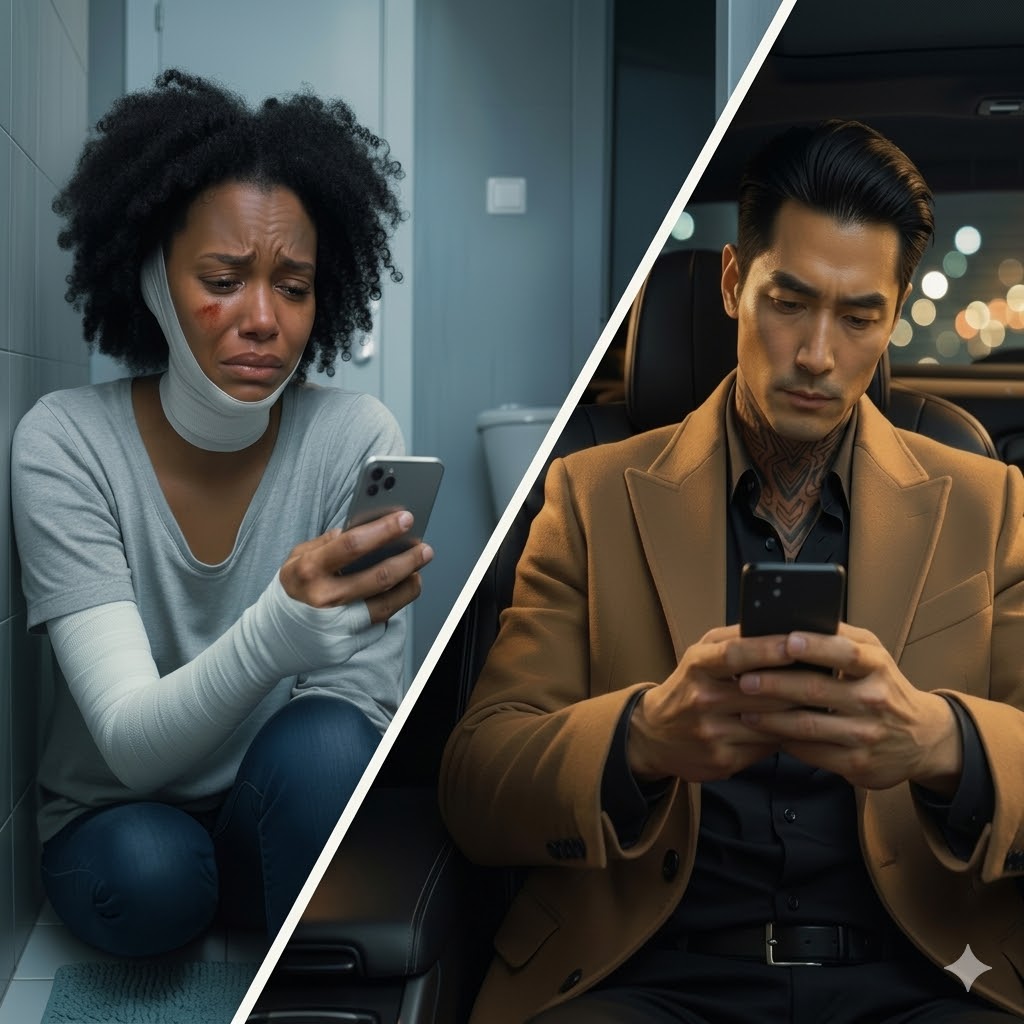
Her right arm rested in a sleek black medical brace. It still hurt, but the pain had been pushed back, softened into something distant and manageable. Her skin had been cleaned. Her cuts bandaged. Someone had changed her into black silk pajamas.
The realization made her sit up too quickly.
A wave of dizziness hit her.
She looked around.
Floor-to-ceiling windows. Dark wood. White walls. No clutter. No warmth, exactly, but control. Everything chosen. Everything expensive.
A palace in the sky.
Or a prison.
She slipped from the bed and walked barefoot across heated marble to the door. It opened before she touched it.
A man in a black suit stood outside.
“Good morning, Miss Grayson.”
Not Mrs.
The absence of Derek’s name struck her harder than she expected.
“I need to leave,” Angela said.
The man’s expression did not change.
“I’m afraid that isn’t possible.”
Her heart began to pound.
“You can’t keep me here.”
“No,” said a voice from behind her. “But Derek can kill you out there.”
Angela turned.
The man from the apartment stood at the end of the hallway, a cup of tea in one hand. He wore black slacks and a dark shirt with the sleeves rolled to his elbows. Tattoos covered his forearms, disappearing beneath the fabric.
In daylight, he looked less like a savior and more like a warning.
“My name is Lee Do-yun,” he said. “You texted my private number last night.”
Angela held the doorframe with her good hand.
“I was trying to reach my brother.”
“Yes.”
“Then why did you come?”
“Because you asked someone to.”
That answer was too simple for a man like him.
“I want to go home.”
“You don’t have one anymore.”
Her breath caught.
He set the tea down on a small table.
“Derek walked out of the hospital four hours after my men left him there. His brother filed the incident as a domestic dispute. No charges. Your husband has reported you missing. Officially, he is the worried spouse. You are the unstable wife.”
Angela’s knees weakened.
“No.”
“Yes.”
“He broke my arm.”
“And he has a badge, a brother in the department, and years of practice making you look fragile.”
Her mouth went dry.
Do-yun stepped closer, but not too close.
“Outside, he will find you. Maybe not today. Maybe not tomorrow. But eventually. In here, he cannot touch you.”
Angela laughed once, broken and bitter.
“So this is protection?”
“Yes.”
“Or ownership?”
His eyes sharpened.
“No one owns you.”
The words surprised her.
“You carried me out like I belonged to you.”
“I carried you out because you couldn’t walk.”
“You said I was yours.”
“I said you were under my protection.” He paused. “There is a difference. One I should have made clearer.”
Angela studied him.
That was the first thing he said that sounded almost human.
“Who are you really?”
The suited man at the door looked away, as if the answer was not meant for polite rooms.
Do-yun did not.
“A man people call when the law is too slow, too corrupt, or too afraid.”
“That sounds like a criminal.”
“It often is.”
She should have stepped back.
Instead, she asked, “Are you going to hurt me?”
His answer came without hesitation.
“No.”
“Why should I believe you?”
“Because I had all night to hurt you, and instead I called a surgeon.”
The bluntness of it made her look away.
He was right.
A private orthopedic surgeon had reset her arm while she was unconscious. A nurse had stayed beside her through the night. There were painkillers on the table, clothes in the closet, food she had not touched.
Nothing about him was safe.
But everything around her suggested he had used his danger to build walls between her and Derek.
For three days, Angela learned the shape of the glass tower.
The elevator required fingerprints. The stairwell doors were locked. Guards moved quietly at the edges of rooms. Every window showed a city she could see but not reach.
Luxury, she discovered, could become a cage if someone else controlled the door.
But Do-yun never entered without knocking.
That confused her most.
Derek had never knocked.
Derek had believed marriage made every room his.
On the fourth morning, Do-yun appeared with a medical kit.
“Your brace comes off for cleaning.”
“I can do it.”
“With one hand?”
“I’ve done harder things.”
“I know.” His voice was even. “This is not a test.”
She hated that.
Hated how he saw the pride and the fear beneath it.
In the bathroom, steam filled the air as he prepared warm water and sterile cloth. Angela sat fully clothed on the shower bench, arm extended, every muscle tense.
Do-yun knelt in front of her.
He cleaned the brace first.
Then her fingers.
He worked slowly, with hands that had broken Derek’s wrist and now treated Angela’s injured skin like it mattered.
“Why do you know how to do this?” she asked.
“I learned young.”
“On yourself?”
“Sometimes.”
“On other people?”
His silence was the answer.
She watched water drip from his tattooed forearms.
“What happened to you?”
His mouth curved, but there was no humor in it.
“Many things.”
“That’s not an answer.”
“It’s the only one I have today.”
Angela should have been afraid of the mystery.
She was.
But she also understood wounds that did not introduce themselves all at once.
When he finished cleaning the brace, he stood.
“There is something you should see.”
He led her to a room at the end of the east corridor.
Inside, beneath soft lights, stood her cello.
Angela stopped breathing.
Not a cello.
Hers.
The instrument she had bought after saving for three years. The one with a scratch near the neck from the night Derek knocked it over and told her music was “a hobby for women who didn’t understand marriage.”
Angela walked toward it as if approaching a ghost.
“How?”
“My men retrieved what mattered from your apartment before Derek destroyed it.”
She touched the wood with her left hand.
Her eyes filled.
“Why would you know this mattered?”
Do-yun stood by the door.
“Five years ago, I attended a charity concert at Sheridan Hall. You played Elgar.”
Angela turned.
“You remember that?”
“I remember everything about it.”
She stared at him.
“You were there?”
“You wore green. Your hair was pinned up, but one curl kept falling near your cheek. You closed your eyes when the first movement began.”
His voice changed as he spoke, becoming quieter, almost reverent.
“For four minutes, I forgot what I was.”
Angela’s pulse shifted.
“You’ve been watching me?”
“No. Not like that.” He looked away, and for the first time, he seemed almost ashamed. “I followed your career. Bought your recordings. Attended public performances when I could. Then two years ago, you stopped playing.”
“Derek didn’t like it.”
“I know.”
“How?”
“I looked into him after your text came.”
Angela’s hand tightened on the cello.
“You investigated my husband.”
“Yes.”
“And me?”
“Yes.”
The honesty was brutal.
She did not know whether to be furious or relieved.
“Do you always take what you want?”
His eyes returned to hers.
“I used to.”
“And now?”
“Now I am trying to learn the difference between taking and offering.”
The words landed quietly.
Angela looked at the cello.
Then at the man who had brought it back to her.
“Offer me something, then.”
“What?”
“Freedom.”
His face hardened.
“That is the one thing I cannot safely give you yet.”
“Then offer me truth.”
He nodded once.
“Derek is dangerous because he believes you are still afraid enough to return. I am dangerous because I know what men like him do when they lose control. I will stop him. But you must decide what you want when he is gone.”
Angela swallowed.
“And if I want to leave?”
“Then I open the door.”
She searched his face for the lie.
She did not find one.
That night, Angela could not sleep.
She walked through the penthouse in a black nightgown, drawn by the sound of Do-yun’s voice behind a half-open office door.
He was speaking Korean.
She did not understand the words, but she understood power.
The monitors on his desk showed financial transfers, maps, names, faces. His expression was cold, empty, terrifying. He signed something on a tablet with the calm of a man ordering a life to change forever.
Angela made a sound before she could stop herself.
Do-yun looked up.
Their eyes met.
The coldness vanished.
That frightened her more than the darkness had.
He stepped into the hallway.
“You should be sleeping.”
“I saw you.”
“Yes.”
“What were you doing?”
“Ending a business relationship.”
“Does that mean what I think it means?”
“Probably.”
Angela’s back touched the wall.
“You’re not a good man.”
“No.”
“Then why do I feel safer with you than I ever did with my husband?”
For a moment, he said nothing.
Then he answered softly, “Because I have never needed you to be small.”
The words broke something open in her.
Derek had loved her best when she was quiet.
When she apologized first.
When she hid the bruises.
When she stopped playing.
Do-yun, monster or not, had brought her cello back.
Angela hated that the difference mattered.
Her new phone buzzed from the bedroom.
Do-yun had given it to her that morning: encrypted, untraceable, “for emergencies.”
She hurried to it.
Unknown number.
A photo appeared.
Julian.
Her brother was tied to a chair in a warehouse, face bruised, eyes terrified.
The message followed.
Come alone or he dies. Two hours.
Angela’s body went cold.
Do-yun read it over her shoulder.
“No.”
“That’s my brother.”
“It’s a trap.”
“I don’t care.”
“I do.”
She spun on him.
“You don’t get to make this decision.”
His jaw tightened, but he did not grab her.
He stepped back.
That mattered too.
“Then make it,” he said. “Run to Derek alone with a broken arm and hope he keeps his word. Or let me bring your brother home.”
Tears blurred her vision.
“What if you’re wrong?”
“I won’t be.”
“You can’t promise that.”
“No,” he said. “But I can promise I will not stop until Julian is safe.”
Angela broke then.
Not neatly.
Not beautifully.
She sobbed with her whole body, grief and fear ripping through her until Do-yun approached slowly, giving her every chance to refuse him.
She did not.
He held her while she cried.
When the tears passed, something harder remained.
“Teach me,” Angela whispered.
“To do what?”
“To stop being helpless.”
Do-yun’s eyes changed.
Not with victory.
Respect.
He took her to a training room hidden behind a steel door. Weapons lined the walls, but he chose a small black-handled blade.
“A weapon is not courage,” he said. “It is only a tool. Your mind decides whether you survive.”
He stood behind her, guiding her grip without forcing it.
“Your first instinct will be to slash. Don’t. It wastes movement. If you must fight, you commit. You create distance. You escape.”
Not kill.
Escape.
He taught her where to strike if grabbed, how to twist free, how to use balance against size, how to breathe when panic tried to take her lungs.
Again and again, she moved.
Clumsy at first.
Then steadier.
Her injured arm limited her, but her anger did not.
At dawn, Do-yun’s phone rang.
Julian had been extracted alive.
Derek never saw the men who took him.
Angela sat on the training room floor and wept again, this time with relief.
Do-yun crouched in front of her.
“It ends soon,” he said.
“How?”
He looked at the blade in her hand.
“Not with revenge. With proof.”
PART 3
The plan was cruel in its simplicity.
Derek needed to believe Angela was available.
Visible.
Reachable.
Still breakable.
So Do-yun chose the one place Derek’s pride would not allow him to ignore.
The Riverside Foundation Gala.
A black-tie charity event full of donors, officials, cameras, journalists, and the kind of public attention Derek had always loved when it made him look respectable.
“You want me to perform?” Angela asked.
They stood in the music room, her cello between them.
“Yes.”
“I haven’t played in public for two years.”
“I know.”
“My arm is barely healing.”
“You will not play perfectly,” Do-yun said. “You will play truthfully.”
Angela hated how much that sentence reached her.
The gala was four days away.
For four days, she practiced until her fingers cramped and sweat gathered at the back of her neck. Her broken arm resisted every movement. Some notes came out rough. Some passages hurt so badly she had to stop and breathe through tears.
Do-yun never interrupted.
He sat in the corner with his laptop, conducting whatever shadow empire he ruled while Angela rebuilt the one part of herself Derek had tried hardest to bury.
On the night before the gala, Do-yun brought her a garment bag.
“You’ll need armor.”
Inside was a gown the color of dark wine.
Not bright red.
Deeper.
The shade of roses left too long in water. The shade of old blood under low light. The silk moved like liquid over her fingers.
“It’s too much,” she whispered.
“No,” Do-yun said. “For once, it is enough.”
He opened a black jewelry box.
Inside lay a thin platinum necklace with a single red stone.
“Tracker in the clasp,” he said. “Microphone in the setting. I will hear everything. Security will monitor every corridor. Police Commissioner Martinez will be present with federal agents. Derek’s brother is already under investigation. No one gets to rewrite this afterward.”
Angela looked up sharply.
“You involved police?”
“The ones he doesn’t own.”
She touched the necklace.
“So I’m bait.”
“No,” Do-yun said. “You are the witness he cannot resist confronting.”
His voice softened.
“And you are the musician the world deserves to hear again.”
The night of the gala, cameras flashed the moment Angela stepped from the car.
Do-yun placed one hand lightly at her back.
Not pushing.
Not claiming.
Steadying.
She wore the crimson gown, her hair pinned high, the red stone at her throat. Her cello was brought in by a staff member with white gloves, and for the first time in years, people looked at her not with pity, not suspicion, not Derek’s shadow over her name.
They looked with expectation.
Backstage, her hands shook.
Her phone buzzed.
A message from Do-yun.
He’s here. Back right. Security uniform. I see him.
Angela looked through the curtain.
There.
Derek stood near the wall, wearing a security jacket he had no right to wear. His face was thinner than she remembered. His eyes were restless. But when he saw her, he smiled.
The old smile.
The one that said, You are still mine.
Angela’s fear rose.
Then her fingers found the necklace.
Do-yun’s voice came through the hidden earpiece.
“Breathe. You are not alone.”
The stage manager touched her shoulder.
“Miss Grayson, you’re on.”
Angela walked into the light.
The audience blurred.
She sat, adjusted the cello, placed the bow against the strings, and closed her eyes.
The first note trembled.
The second steadied.
By the fifth, Angela was no longer in the ballroom.
She was in every room where she had swallowed a scream. Every night she had hidden bruises under sleeves. Every morning she had passed her cello without touching it because Derek said music made her “difficult.”
She played grief.
Then rage.
Then survival.
The piece became less performance than exorcism. Her injured arm burned, but she kept going. The pain became part of the sound. The imperfection made it human.
When she finished, the ballroom stood.
Applause thundered around her.
Angela opened her eyes and found Derek in the back.
He was no longer smiling.
That was the first victory.
Backstage, she moved through the corridor toward her dressing room.
She almost made it.
“Angela.”
Her blood chilled.
Derek stepped from a side hallway.
The security uniform gave him confidence. His hand rested near his jacket pocket.
“You really thought you could humiliate me in front of the whole city?”
“I didn’t play for you.”
His face twisted.
“You always were selfish.”
The microphone in her necklace was live.
Cameras hidden in the corridor were recording.
Do-yun and the police were listening.
Angela knew all of that.
Still, standing in front of Derek made her body remember terror before her mind could stop it.
He moved closer.
“You’re coming with me.”
“No.”
His hand flashed out and grabbed her healing arm.
Pain shot through her shoulder.
But this time, pain did not turn her into silence.
Angela stepped into him instead of pulling away. She used the movement Do-yun had taught her, turning her body, breaking his grip, driving her knee hard into his thigh.
Derek stumbled.
She grabbed a metal microphone stand from the wall and held it between them like a staff.
“Don’t touch me again.”
For one second, he looked genuinely shocked.
Then he reached into his pocket and pulled out a plastic bag filled with white powder.
“You think anyone will believe you?” he hissed. “I found this in your dressing room. Troubled wife. Drug problem. Kidnapped by a criminal. It all makes sense.”
Angela’s stomach turned.
He had planned everything.
Just like always.
But this time, he was speaking into a microphone he did not know existed.
“This isn’t mine,” Angela said clearly.
“It will be.”
He lunged.
Angela swung the stand.
It struck his wrist. The bag fell. He cursed, grabbing for her again.
This time, she pulled the small blade from the hidden sheath at her thigh.
Not to kill.
To stop him.
She pressed it toward him with both fear and fury in her chest.
“Give me one reason I shouldn’t end this.”
Derek froze.
His eyes widened.
“You won’t. You’re weak.”
Angela’s voice came out colder than she expected.
“No. I was trapped.”
Footsteps entered the corridor.
Do-yun appeared first, followed by Commissioner Martinez, two federal agents, and security officers with body cameras already recording.
“Step back, Angela,” Do-yun said.
His voice was soft, but it cut through everything.
“Let the world see him clearly.”
Angela lowered the blade.
Derek tried to speak.
“She attacked me. She’s unstable. That powder is hers.”
Commissioner Martinez stepped forward.
“Derek Grayson, you’re under arrest for assault, kidnapping, evidence tampering, witness intimidation, and conspiracy with law enforcement officers to falsify domestic violence reports.”
Derek’s face drained.
“What?”
Do-yun held up a phone.
On the screen was the live feed from the gala hall.
Every word Derek had said had been projected to a private security room, recorded by federal agents, and within minutes would be on every news desk in the city.
Derek looked at Angela.
For the first time, he looked afraid of her.
Not because she held a blade.
Because she had become impossible to erase.
The agents cuffed him.
As they dragged him past, he spat, “You think he’s better than me? He’s a monster.”
Angela looked at Do-yun.
Then back at Derek.
“No,” she said. “He never asked me to disappear.”
The line broke something in Derek’s face.
Then he was gone.
When the corridor emptied, Angela’s knees nearly gave out.
Do-yun caught her before she fell.
“I almost used it,” she whispered.
“But you didn’t.”
“I wanted to.”
“I know.”
“Does that make me terrible?”
“No,” he said. “It makes you honest. What you chose next makes you free.”
The story broke before midnight.
Not the story Derek wanted.
The real one.
The hidden recording. The planted evidence. The reports his brother helped bury. Julian’s kidnapping. Angela’s broken arm. The years of coercion, threats, and control.
Derek and Marcus were both arrested. Other officers connected to past cover-ups were suspended pending investigation. Angela’s case became the thread that pulled open a wider pattern of women ignored because their abusers wore badges.
Angela did not sleep that night.
She returned to the penthouse, still in the crimson gown, still wearing the necklace, still shaking from everything that had happened.
Rain streaked the windows.
The city looked washed and distant.
She went to the music room and picked up her cello.
Do-yun stood in the doorway.
“You should rest.”
“I need to play.”
He stepped aside.
She carried the cello into the main room, where the glass walls faced the storm, and began.
There was no audience now.
No gala.
No trap.
No Derek.
Only Angela, the rain, the instrument, and the sound of a woman returning to herself.
The music was not perfect.
It was better than perfect.
It was alive.
When the final note faded, Do-yun approached.
He did not touch her until she looked at him and nodded.
Then he placed one hand over hers.
“You were magnificent.”
“I was terrified.”
“I know.”
“I still am.”
“Then we take the next step terrified.”
She looked at him.
“We?”
“If you choose it.”
There it was again.
Choice.
The word that made him different from the cage she had escaped.
Angela set the bow down.
“What are you offering me, Do-yun?”
He took a long breath.
“Protection, if you need it. Distance, if you want it. Truth, even when it makes me look worse. And if one day you decide there is room in your life for a man like me, I will spend that life proving I know the difference between devotion and possession.”
Angela’s eyes filled.
“That sounds difficult for you.”
“It will be.”
“Good.”
For the first time, he smiled like a man and not a weapon.
Weeks passed.
Angela did not become healed overnight.
Stories like hers never ended that cleanly.
There were court dates. Depositions. Medical appointments. Nightmares. Mornings when she woke reaching for an arm that no longer screamed but still remembered.
Julian stayed with her for a while, apologizing for not getting her messages sooner even though none of it had been his fault.
She cried when she saw him.
Then yelled at him for making her worry.
Then cried again.
Do-yun gave her space.
Not easily.
Angela could see restraint on him like a tailored suit: expensive, deliberate, worn because he had chosen it.
He kept guards outside the building but not outside her bedroom. He gave her access to the elevator. He handed her a phone with every emergency contact programmed in, including Julian, the commissioner, her lawyer, and himself.
At the top of the list, he had written:
Your choice first. Always.
Angela stared at that for a long time.
Three months later, she performed again.
This time, not as bait.
Not as a witness.
As herself.
The concert hall was smaller than the gala, warmer, filled with people who had come to hear music rather than scandal. Survivors’ organizations had sponsored the evening. The proceeds went to legal aid for domestic violence victims whose abusers used the system against them.
Angela walked on stage in a simple black dress.
No hidden microphone.
No blade.
No trap.
Just her cello.
In the front row sat Julian.
Beside him, Do-yun.
He wore a black suit, of course. Dangerous men apparently did not own casual clothes. But his hands rested open on his knees, and his eyes never left her face.
Angela played Elgar.
The same piece he had heard five years ago.
But she did not close her eyes this time.
She kept them open.
She watched the audience.
Watched Julian cry.
Watched women in the crowd hold each other’s hands.
Watched Do-yun sit utterly still, as if the music were the only thing keeping him human.
When she finished, the silence before the applause was holy.
Afterward, backstage, Do-yun came to her with no entourage, no dark command, no possession in his posture.
Only a small velvet box.
Angela raised an eyebrow.
“That better not be what I think it is.”
“It is not a demand.”
“Good.”
“It is a question.”
“That’s better.”
He opened it.
Inside was a ring: black diamond, small red stones, platinum band. Dark and beautiful, but not heavy. Not a shackle. A promise shaped carefully enough to avoid becoming a cage.
“I am not asking because you need protection,” he said. “You don’t. I’m not asking because I saved you. You saved yourself. I am asking because I love you, and because every ruthless thing in me has learned to kneel before the part of you that survived.”
Angela’s throat tightened.
“Do-yun…”
“If the answer is no, I will still drive you home. I will still fund the legal clinic. I will still attend your concerts if you allow it. I will still be grateful I was the wrong number.”
Tears slipped down her cheeks.
“You practiced that.”
“For weeks.”
“It shows.”
His mouth twitched.
“Unfortunately.”
Angela looked at the ring.
Then at the man.
He was still dangerous.
Still complicated.
Still made of shadows she would never fully understand.
But he had listened.
He had changed.
He had learned that love without choice was just another form of control.
And Angela, who had once texted a stranger from a bathroom floor, no longer wanted a rescuer.
She wanted a partner strong enough to stand beside the woman she had become.
“Yes,” she said.
Do-yun went very still.
Then he slid the ring onto her finger with hands that did not shake, though his eyes looked almost broken with wonder.
“Are you sure?” he asked.
Angela smiled through tears.
“Don’t ruin your own proposal by developing humility too late.”
He laughed.
A real laugh.
Soft, startled, human.
Six months after the wrong text, Angela opened the Grayson Foundation for Survivors of Domestic Violence and Legal Abuse.
She used her maiden name.
On purpose.
The foundation provided emergency relocation, legal support, trauma counseling, and private security for people whose abusers hid behind badges, money, or family influence.
Julian ran intake operations.
Angela performed benefit concerts.
Do-yun funded it quietly, then loudly after Angela told him hiding generosity was just arrogance wearing a hat.
At the opening, Angela stood before reporters with her healed arm visible. A faint scar ran along her wrist where the glass had torn her skin.
She did not hide it.
“A few months ago,” she said, “I sent a message to the wrong number. I thought my life was ending. Instead, that mistake became the first door out.”
Cameras flashed.
“But I want to be clear. The lesson is not that every survivor needs a dangerous man to appear. The lesson is that when someone asks for help, believe them. Move. Act. Do not wait until it is convenient. Do not wait until they are perfect victims. Do not wait until the bruises fit your idea of pain.”
She looked at the crowd.
“Sometimes survival begins with one person answering.”
Do-yun watched from the side.
He did not smile.
But his eyes said everything.
That night, Angela returned to the penthouse that no longer felt like a cage.
The elevator opened to warmth, music, and the smell of tea. Her cello stood by the window. Rain tapped softly against the glass.
Do-yun came up behind her.
“Long day?”
“Good day.”
He kissed her temple.
“Any regrets?”
Angela looked down at the black diamond on her finger.
Then at her healed arm.
Then at the city below, no longer a place she feared.
“No.”
Outside, the rain stopped.
The clouds broke.
And somewhere high above the city, a woman who had once begged a wrong number to save her stood in the life she chose for herself.
Not prey.
Not property.
Not a victim frozen in the worst night of her life.
Angela Grayson had become music again.
And when she played, even monsters remembered how to listen.
News
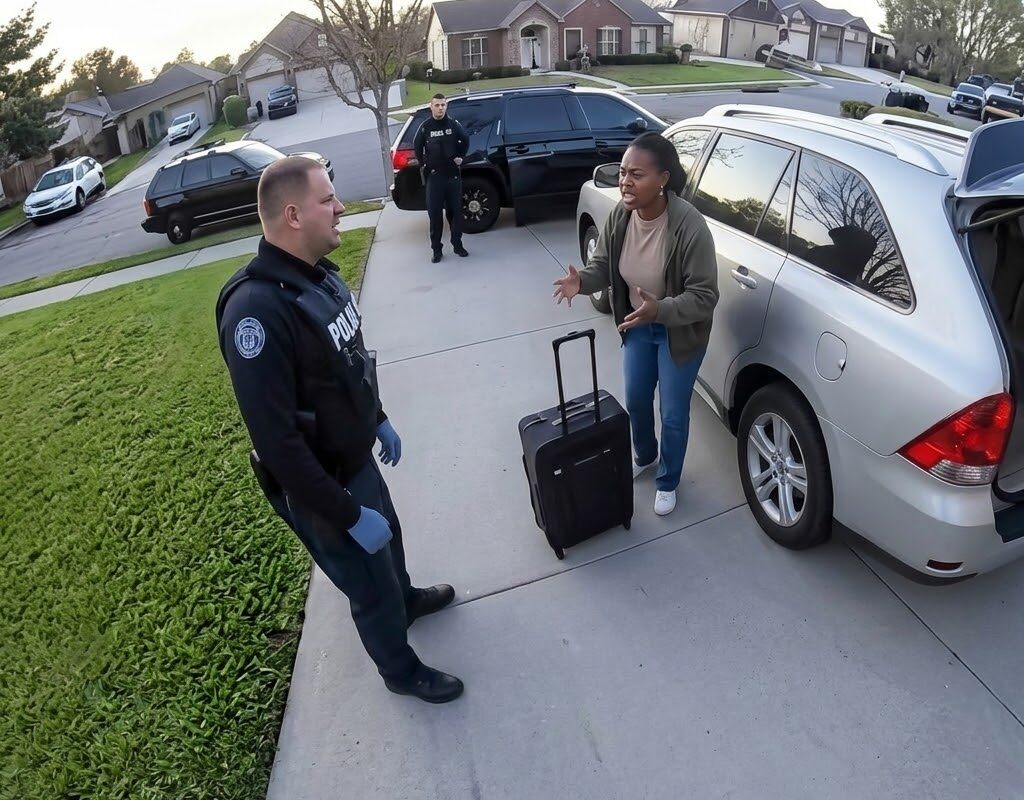
ICE AGENTS CAREERS DESTROYED AFTER ARREST OF BLACK FEDERAL JUDGE IN HER DRIVEWAY WITHOUT A WARRANT
ICE AGENTS CAREERS DESTROYED AFTER ARREST OF BLACK FEDERAL JUDGE IN HER DRIVEWAY WITHOUT A WARRANT “That’s what you all say,” he snapped. “Turn around before I make you.” She…
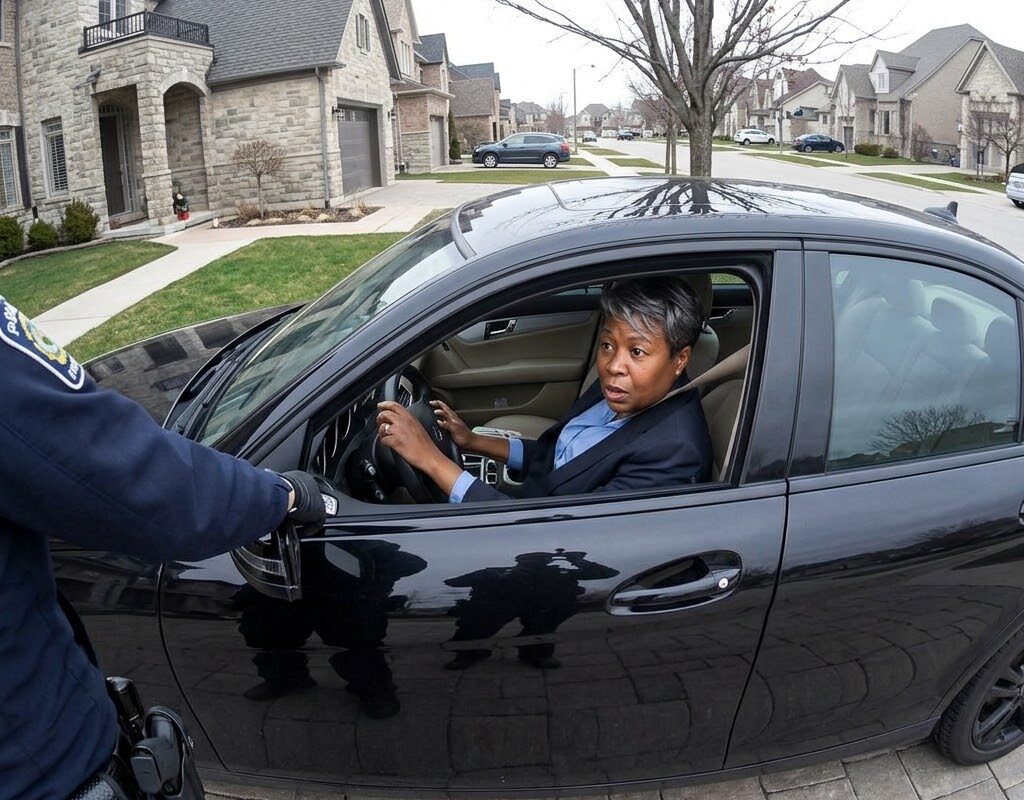
RACIST COP ARRESTS BLACK FEDERAL JUDGE FOR DRIVING A “STOLEN” CAR — JURY AWARDS HER $910K
RACIST COP ARRESTS BLACK FEDERAL JUDGE FOR DRIVING A “STOLEN” CAR — JURY AWARDS HER $910K It was 2:15 on a quiet Tuesday afternoon when Judge Patricia Williams pulled into…
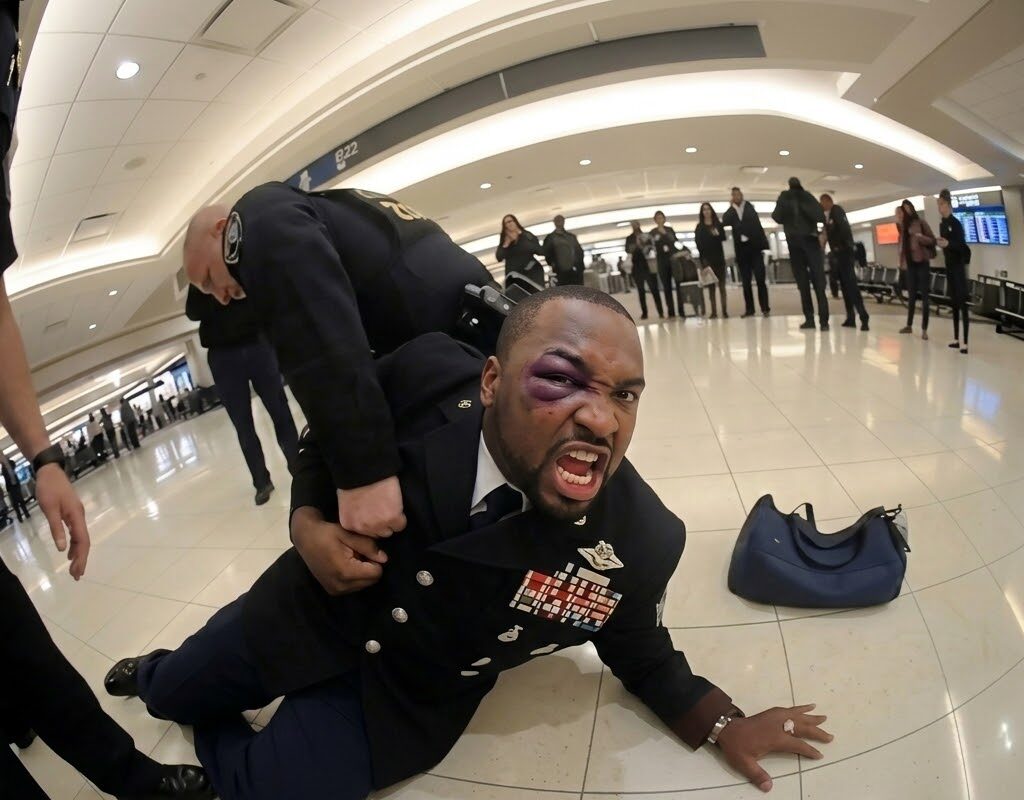
RACIST OFFICER ARRESTS BLACK SEAL EVACUATED FROM IRAN AT AIRPORT — PENTAGON STEPS IN, FACES 20 YEARS
RACIST OFFICER ARRESTS BLACK SEAL EVACUATED FROM IRAN AT AIRPORT — PENTAGON STEPS IN, FACES 20 YEARS He was thirty-eight years old, an active-duty Navy SEAL with more than sixteen…
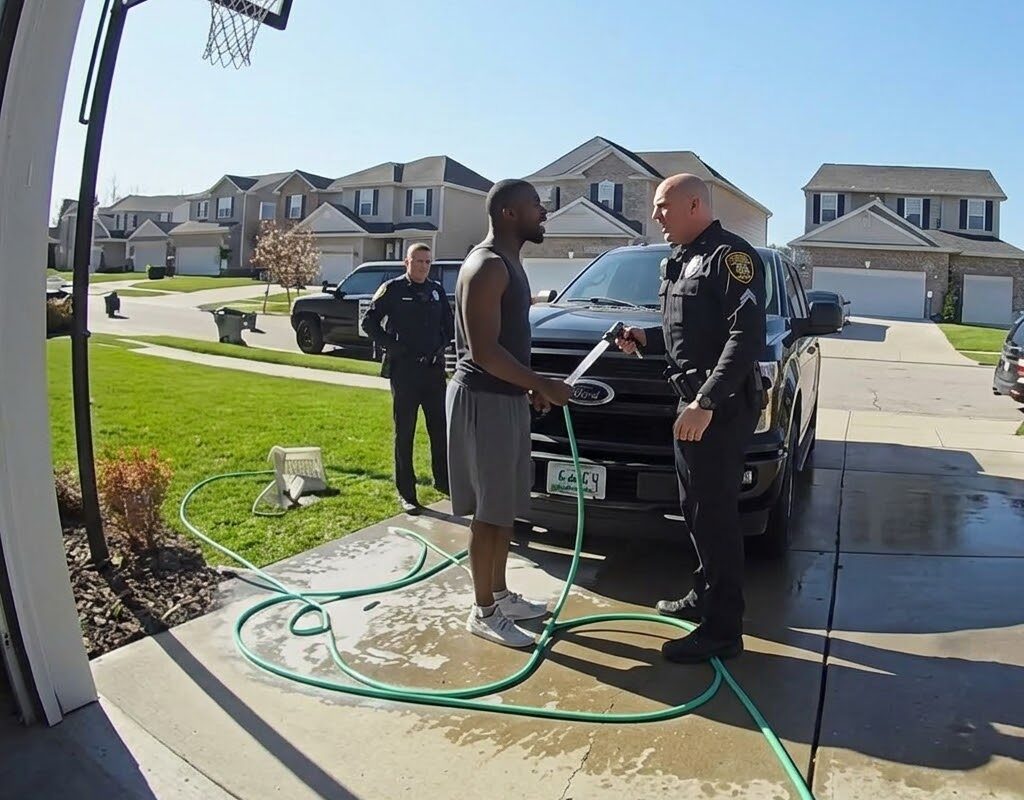
ICE AGENTS CAREERS OBLITERATED AFTER ARREST OF BLACK NAVY SEAL IN HIS DRIVEWAY WITHOUT A WARRANT
ICE AGENTS CAREERS OBLITERATED AFTER ARREST OF BLACK NAVY SEAL IN HIS DRIVEWAY WITHOUT A WARRANT The sun was already warm. Two houses down, a retired couple trimmed hedges. Across…
OFFICER ARRESTED BLACK NAVY SEAL IN UNIFORM AT GAS STATION — PENTAGON STEPS IN, 58 YEARS PRISON
OFFICER ARRESTED BLACK NAVY SEAL IN UNIFORM AT GAS STATION — PENTAGON STEPS IN, 58 YEARS PRISON Darius had been shot at in Iraq. He had carried wounded men through…
COP ASSAULTS BLACK FEDERAL JUDGE AT AIRPORT — SECURITY CAMERA EXPOSES HIM
COP ASSAULTS BLACK FEDERAL JUDGE AT AIRPORT — SECURITY CAMERA EXPOSES HIM What he did not know was that the woman in front of him was not just another traveler…
End of content
No more pages to load