He Signed an NDA About Bigfoot for 10 Years — Here’s What They Don’t Want You to Know
The motel room in Grangeville smelled of stale coffee and the ozone scent of an approaching storm. Judith Emmerick sat by the window, her silhouette sharp against the fading Idaho light, while Richard Blanchard—the man who looked like he’d been hollowed out from the inside—sat on the edge of a sagging queen-sized bed. Grant Whitfield watched Blanchard’s hands. They weren’t shaking, but they were clenched so tight the knuckles looked like polished bone.
“You saw the sorting,” Blanchard said. It wasn’t a question. His voice was a dry rasp, the sound of wind over dead leaves. “The bones. The electronics. You saw how they classify.”
Grant nodded, his throat too tight to speak. Beside him, Norah and Derek were unnaturally still. They were scientists—people who lived for data—but the data they had collected over the last forty-eight hours had effectively broken their compasses.
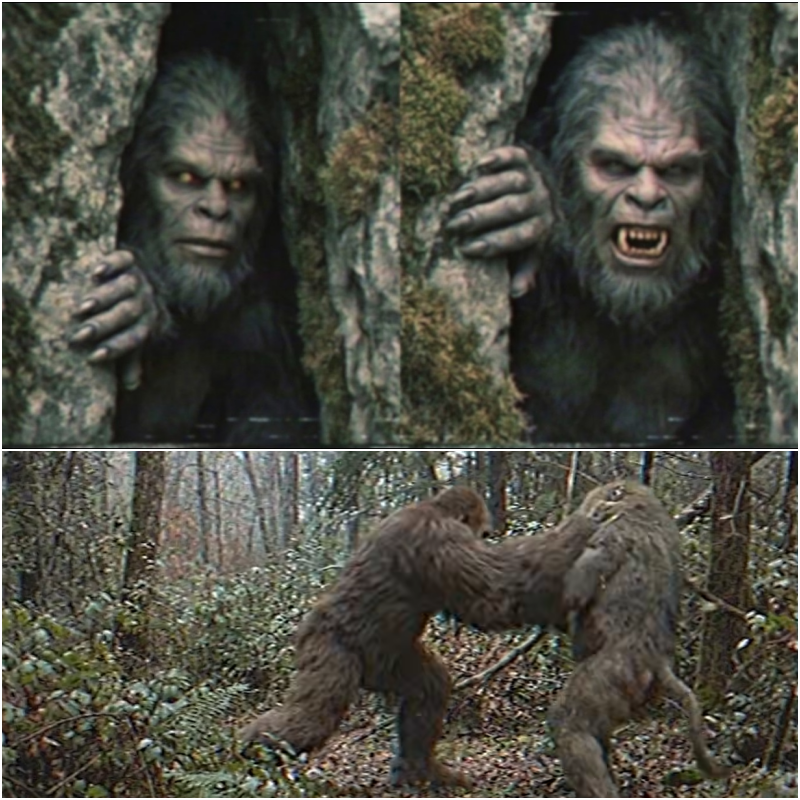
“Everyone thinks they’re just apes,” Blanchard continued, staring at a spot on the carpet. “Big, dumb animals hiding in the brush. If they were just animals, we could have tracked them, tagged them, and put them on the evening news decades ago. But they aren’t just animals. They are an old, parallel intelligence. And they’ve known about the Ridgeline Timber Corporation a lot longer than Ridgeline has known about them.”
Blanchard looked up then, and for the first time, Grant saw the sheer, unadulterated fatigue in the man’s eyes. “The NDA you signed? It’s not to protect a secret. It’s to manage a treaty.”
Grant’s journey into that room had begun months earlier with a paycheck that felt like a bribe. At twenty-nine, a field cartographer learns to recognize the market rate for misery. Deep-woods surveying in Idaho County is brutal work, but it usually pays in experience and beer money. Ridgeline Timber, however, was offering double the industry standard, plus a completion bonus that could buy a house in the suburbs of Boise.
The red flags had been there from the start. The interview hadn’t been about his proficiency with a Trimble GPS or his ability to read a compass; it had been about his psychological resilience. Judith Emmerick had asked him, with a face like carved granite, how he handled “extreme isolation” and “unexplained logistical anomalies.” Grant, young and hungry, had laughed it off. He thought she meant bears or equipment failure.
He didn’t know she meant the things that didn’t have names.
The first three weeks in the Bitterroot Range were deceptively peaceful. The team—Norah, the precise geodesist; Derek, the idealistic biologist; and Warren, the weary logistics lead—moved through the old-growth timber like a precision instrument. They were mapping the “Blank Spots,” areas of the Nez Perce-Clearwater National Forest that Ridgeline held private timber rights to. These were places where the topographical maps turned into vague guesses, where the drainage basins felt like they belonged to a different geological era.
But as they pushed south of the Selway River, the forest changed. The birds went quiet first. In the deep woods, silence is never truly silent; there is always the rustle of squirrels, the cry of a hawk, the hum of insects. But in the unnamed valley below the Bitterroot crest, the silence was heavy. It was a physical pressure against the eardrums.
Then came the trees.
Grant remembered the first Ponderosa pine he’d seen. It was massive, a centenarian giant, but its bark had been stripped away in long, violent ribbons. He’d reached up, stretching his hand as high as he could. The marks started two feet above his fingertips.
“High-lead logging equipment?” Norah had suggested, though she sounded unconvinced. There were no tracks of heavy machinery. No stumps. Just a forest of giants that looked like they had been flayed by something with immense strength and a terrifying reach.
“Look at the height, Grant,” Derek had whispered, his face pale as he adjusted his glasses. “Whatever did this wasn’t standing on the ground. Or, if it was, it’s fifteen feet tall.”
They found the tracks the next morning. In the silty clay of the creek bed, the impressions were so perfect they looked like sculptures. Eighteen inches long. Five toes. A deep, heavy heel strike. But it was the stride that haunted Grant. The distance between the left and right foot was over four feet. A human trying to match that pace would have to leap. These tracks were a casual walk.
“Bigfoot,” Warren had said. He hadn’t laughed. None of them had. In that valley, under the shadow of the flayed trees, the word didn’t sound like a punchline. It sounded like a warning.
When Grant called Judith on the satellite phone that night, he expected skepticism. He expected her to tell them they’d found grizzly tracks distorted by melting snow or a prank by some local mountain men.
Instead, there had been that seven-second silence. A silence that felt like a door closing.
“Log the coordinates,” she had said. “Do not return to that valley. Resume work on the northeast grid. Acknowledge.”
But they didn’t acknowledge. Not really. The curiosity that makes a scientist is a dangerous thing. Derek had insisted on one more look. He spoke of the Nobel Prize, of the discovery of the century, of changing the way humanity viewed its place in the world. Norah wanted the images. Warren just didn’t want to be left alone in the camp.
They went back. And that’s when they found the structure.
It sat in a clearing like a cathedral of rot. It was a shelter, yes, but it was also a statement. The way the logs were woven—not just stacked, but interlaced with a deliberate, geometric precision—defied any natural explanation. It wasn’t a nest. It was architecture.
And then there were the bones.
The rock outcropping next to the shelter was covered in deer and elk remains. But they weren’t piled. They were categorized. All the femurs were in one stack. All the ribs were laid out in a fan. The skulls—clean, white, and missing the lower jaws—were lined up facing the rising sun.
“This is cognition,” Derek had whispered, his voice trembling. “They aren’t just eating. They’re… they’re cataloging. They’re studying the world just like we are.”
That realization—that they weren’t dealing with a hidden animal, but a hidden observer—sent a cold shiver down Grant’s spine. He looked around the clearing and felt, for the first time, that they were being watched. Not by eyes in the brush, but by a presence that understood exactly who they were and why they were there.
The night that followed was a descent into a waking nightmare. The smell arrived first—a thick, musky odor that tasted like copper and wet fur. Then the movement. The three pairs of eyes, glowing in the periphery of their headlamps, eight feet off the ground. They didn’t growl. They didn’t scream. They just stood in a perfect triangle around the camp, a living perimeter that held the humans in place.
Grant remembered the vibration. It wasn’t a sound; it was a frequency that bypassed the ears and vibrated the bones in his chest. It felt like a warning, a low-frequency hum that said: You are permitted to stay tonight. You will not be permitted to stay tomorrow.
When dawn broke, the creatures were gone, but the message they left was even more terrifying. Their backpacks had been opened. Every piece of technology—the GPS, the radios, the cameras—had been removed and placed in a neat row. The batteries had been taken out of the devices and stacked in a separate pile.
It was a display of total dominance. They had entered the camp, manipulated the humans’ most advanced tools while they slept three feet away, and organized the components to show they understood the difference between the plastic and the power.
Back in the motel room, Blanchard leaned forward, his eyes finally locking onto Grant’s.
“You think the NDA is about keeping the public from panicking,” Blanchard said. “You think Ridgeline wants to hide them so they can keep logging. You’re wrong. Ridgeline doesn’t own those woods. Not really. They pay the ‘owners’ in a way you wouldn’t believe. The money you’re being paid? That’s not a salary. That’s hazard pay for being a part of a census they didn’t ask for.”
“Who are they, Richard?” Grant asked, his voice a whisper.
“They are the ones who stayed behind,” Blanchard said. “They’ve watched us build cities, watched us fly planes, watched us ruin the air. They know everything about us. And the reason we don’t see them is because they’ve decided we aren’t worth talking to. Until now.”
Judith Emmerick stood up, her face a mask of professional coldness. “The term of your agreement is ten years, Grant. If you speak to a reporter, if you post a photo, if you even tell your mother… the penalty isn’t a lawsuit. We won’t take your money.”
“Then what?” Norah asked, her voice shaking.
Judith looked out the window at the dark silhouette of the mountains. “We’ll stop the payments. Not to you. To them. And when the ‘treaty’ is broken, the perimeter they keep around the towns in Idaho County… it goes away. You won’t just be looking at the tree line behind your house, Grant. You’ll be looking at what’s coming through the back door.”
Grant felt a coldness settle in his gut that he knew would never leave. He looked at the paper on the table—the non-disclosure agreement he had signed so casually months ago. He realized then that he hadn’t just signed away his right to speak. He had signed onto a silent war, a desperate holding action between a world that thought it was in control and a shadow civilization that was simply waiting for us to make a mistake.
“They’re sorting us too, you know,” Blanchard whispered as the team prepared to leave. “Just like the bones. They’re watching to see which of us is a threat and which of us is just… meat.”
Grant walked out of the motel room and into the Idaho night. The air was cool, the stars were bright, and for the first time in his life, he was utterly terrified of the dark. He looked toward the mountains, toward the unnamed valleys and the flayed trees, and he knew.
Ten years. He had to keep this secret for ten years.
But as he saw a pair of unblinking eyes reflect the streetlamp from the edge of the forest across the road, he realized that ten years might be a lifetime—or it might be the only time humanity had left.
The silence in the room after Blanchard spoke felt heavy, like the air in the valley. Grant looked at the map spread across the motel bed—a document that felt less like a topographical survey and more like a chart of an encroaching tide.
“You said they remember faces,” Grant said, his voice barely audible over the hum of the motel’s air conditioner.
Blanchard nodded slowly. “It’s not just memory, Grant. It’s fixation. Most predators look at a human and see a threat or a meal. These things… they look at you and see a data point. They study you. They learn your scent, the rhythm of your gait, the frequency of your voice. And once they’ve categorized you, you belong to their world. They don’t attack unless the boundary is crossed, but they never, ever stop watching.”
He traced a finger over the hand-drawn lines on the map. “Ridgeline knew this by the late nineties. They didn’t stop logging because they were environmentalists. They stopped because the field teams were coming back broken. Men were quitting, moving to the desert, or refusing to leave their houses. The company realized that the only way to manage the ‘problem’ was to isolate it. They bought the land to create a vacuum. They kept the public out not to save the Bigfoot, but to save the public from becoming part of the Bigfoot’s ledger.”
Norah leaned in, her scientific curiosity fighting through her fear. “But the territory is growing. Why? If they’re so intent on staying hidden, why push outward?”
“Resources,” Derek whispered, answering for Blanchard. “Or population growth. If it’s a breeding group, eventually the 185 square miles of the deep interior isn’t enough. They need more range. More prey. More… observation.”
Blanchard looked at Derek with a grim sort of respect. “Exactly. And every year, that line moves a mile, maybe a mile and a half. It sounds slow. It sounds like something we have time to fix. But you can’t fight a shadow that knows your face. You can’t declare war on a ghost that can open your backpack while you’re sitting five feet away.”
The meeting ended with a chilling finality. Judith Emmerick didn’t offer a handshake or a word of comfort. She offered a warning that functioned as a leash. The NDA wasn’t about lawsuits; it was a moral weight. If Grant or his team spoke, the company would dissolve its holdings. The land would go to the state or to private developers. The gates would open. The public—hikers, families, hunters—would flood into the valley.
And the creatures, who had spent decades meticulously mapping the boundaries of human presence, would find their “sorted bones” categories growing much, much larger.
Grant left Grangeville that day feeling like a man carrying a live grenade. He returned to Boise, took a job that required nothing more than surveying suburban lots, and tried to build a life out of the wreckage of his psyche. For ten years, he lived by a set of self-imposed rules: he never went camping, he never hiked, and he never looked too long at the trees.
But the years weren’t kind. He watched through occasional texts as his team disintegrated. Norah vanished into the anonymity of Texas, a ghost of her former self. Derek stayed in the periphery, sending those haunting two-word messages: Still quiet. And then there was Warren.
Grant still remembered the day Judith’s brief, cold email arrived. Warren Slade is no longer with us. There were no funeral details, no obituary in the local paper. It was as if the forest had simply reached out and reclaimed him. Grant knew, with a sickening certainty, that Warren hadn’t died of natural causes. He had likely just reached the point where the weight of being “remembered” by something in the woods became heavier than the life he was trying to lead.
The decade mark arrived without fanfare. No letter from Ridgeline, no final check. The NDA simply expired, the legal chains falling away to reveal the psychological ones underneath.
Grant had planned to tell the world. He had his notes, his coordinates, and the memory of Blanchard’s haunted eyes. He spent three nights typing at his kitchen table, fueled by a frantic need to purge the secret from his system. He wanted to be free.
On the third night, the world reminded him that freedom was an illusion.
He had stepped into his backyard for a breath of air. The Boise suburbs were quiet, the sound of distant traffic a comforting reminder of civilization. But as he approached the fence that separated his manicured lawn from the neighborhood greenbelt, he saw them.
Four objects. Lined up with the same terrifying symmetry he had seen in the valley a decade ago.
The battery from his garden shed. The solar light cell. His own wristwatch. And the Ridgeline GPS tracker—an item he hadn’t seen since the day he left the Bitterroots.
The message was unmistakable. The 23-mile buffer Blanchard had shown him on the map was gone. The mile-per-year expansion hadn’t stopped at the county roads. The canopy of the Idaho wilderness was a continuous highway, a green bridge that stretched from the heart of the “Blank Spot” all the way to the strip of cottonwoods behind his suburban home.
They hadn’t forgotten him. They had followed the “data point.” They had waited ten years for the treaty to expire, just to show him that the wall was a lie.
Grant sat at his table, looking at the blinking cursor on his laptop. He looked at the 3,000 words he had written—the “truth” that was supposed to save him.
He thought about the hikers. He thought about the families who spent their weekends in the foothills, oblivious to the fact that the “wildlife” was no longer just deer and elk. He thought about what would happen if he published his account. The area would be swarmed. Media crews, curiosity seekers, hunters with high-powered rifles.
He remembered Judith’s words: The moment we don’t own the land, nobody decides.
If he told the truth, he would break the silence. But if he broke the silence, he would invite a catastrophe. The Bigfoots didn’t want to be found, but they were no longer content to stay in the deep interior. They were integrating. They were observing the suburbs, learning the rhythms of the garage doors, the schedules of the mail carriers, the weaknesses of the deadbolts.
Grant realized that the NDA wasn’t a gag order. It was a stay of execution.
With a trembling hand, he highlighted the entire document. Every coordinate, every description of the structures, every word of Blanchard’s testimony. He hit Delete. He emptied the trash. He watched the file disappear into the digital void, hoping—praying—that by making the information vanish, he could somehow make the presence in the trees vanish too.
But he knew better.
He walked to his window and looked out at the greenbelt. In the twilight, the shadows between the trunks seemed to shift. There was no sound, no snapping of twigs, but he felt that familiar vibration in his chest—the low-frequency hum of a mind that could categorize bones and batteries alike.
“I see you,” he whispered to the dark.
And the dark, with its unblinking, eight-foot-high eyes, seemed to whisper back: I’ve always seen you.
I haven’t heard from Grant in two months.
When he first told me this story, I was a skeptic. I looked for the corporate records of Ridgeline Timber Corp, expecting to find nothing but a dead end or a ghost story. But the records are there. The company did exist. It was dissolved three years ago, its assets moved to a Delaware shell corporation that has no phone number and no physical office.
Judith Emmerick has indeed vanished. There is no record of her death, but there is also no record of her life after the dissolution. It’s as if she, like Warren, simply stepped off the map.
I’ve spent the last week doing what Grant did. I’ve been looking at satellite imagery of the corridor between the Bitterroot Range and the Boise suburbs. It’s a terrifying exercise. You realize how little “open space” there actually is. The trees are a network. They are a nervous system for a landscape that we think we’ve tamed, but which actually belongs to something much older and much more patient than us.
I’ve calculated the expansion rate myself. If Blanchard’s map was accurate, and the mile-and-a-half-per-year growth continued after the company stopped monitoring it, the “zone” is no longer 23 miles away. It’s here. It’s in the parks where our children play. It’s in the woodlots behind our grocery stores. It’s in the shadows of the “managed” forests where we take our Sunday walks.
They aren’t coming for us with teeth and claws. They are coming for us with understanding.
Last night, I stayed up late working on this transcript. At 3:00 AM, I went to the kitchen to get a glass of water. I looked at my kitchen counter, where I’d left my car keys and my phone.
They were gone.
I found them ten minutes later, out on the porch railing. They were laid out in a perfect, parallel line. My keys. My phone. My fitness tracker. And a single, bleached-white deer rib.
I didn’t call the police. What would I tell them? That an ancient, bipeadal intelligence had sorted my belongings? That I was being “remembered”?
Instead, I did what Grant did. I sat in the dark and listened to the silence. And I realized that the woods are no longer a place we go to get away from it all. The woods have come to us. They are watching, they are learning, and they are waiting for us to realize that we are no longer the ones at the top of the hierarchy.
We are just the next category to be sorted.
I’m going to post this now. Not because I think it will save anyone, but because I’ve realized that the secret is a weight I can no longer carry alone. Grant was wrong about one thing: the wall didn’t disappear when the company dissolved. The wall was always an illusion.
There is no “in” and “out.” There is only the observer and the observed.
As I finish these words, I can see a shadow moving in the tree line across the street. It’s tall—taller than the streetlamp. It isn’t moving toward me. It’s just… standing there. Categorizing me.
And as I look into those distant, glowing eyes, I realize with a jolt of pure, cold terror that I’ve stopped being a person. To them, I am just a data point. A battery-powered creature in a world that is rapidly being reclaimed.
I hope you read this. I hope you look at your own tree line tonight. And if you find your watch on the fence tomorrow morning, don’t panic.
Just know that they remember your face. And they’ve already decided where you belong in the pile.
👉 Link youtube: https://youtu.be/uUcvuIxc9Hg?si=Fez_Sc84oEY-ea7l
News
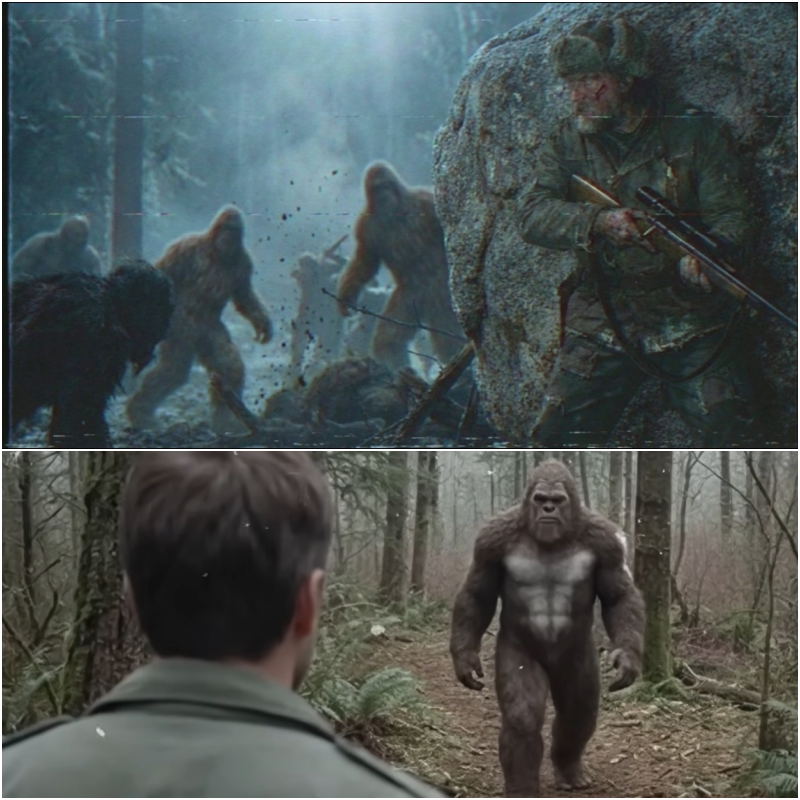
DON’T GO THERE — Bigfoot Himself Begged Him Not to Hunt the Monster Devouring His Kind in Missouri
The mist in the Mark Twain National Forest doesn’t just sit; it breathes. It clings to the limestone ridges and the dense canopy of oak and hickory like a living…
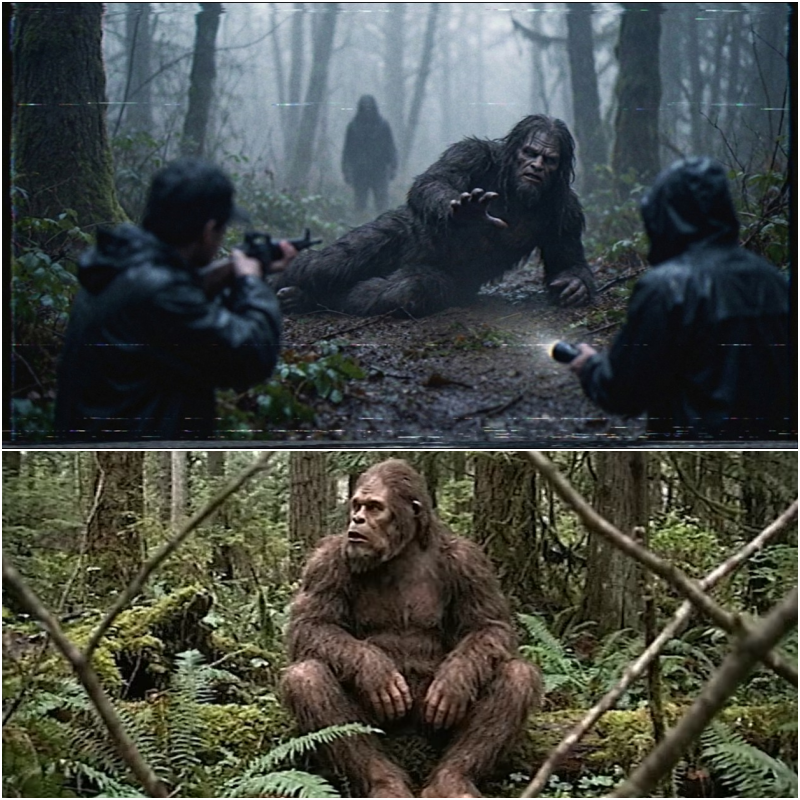
Park Rangers Followed an Injured Bigfoot for 3 Days… Then They Found Something They Were Never Supposed to See
The Obsidian Canopy: The Account of Sector 4 The survival manuals tell you that the forest is a neutral entity. They say the trees do not hate you, the rain…
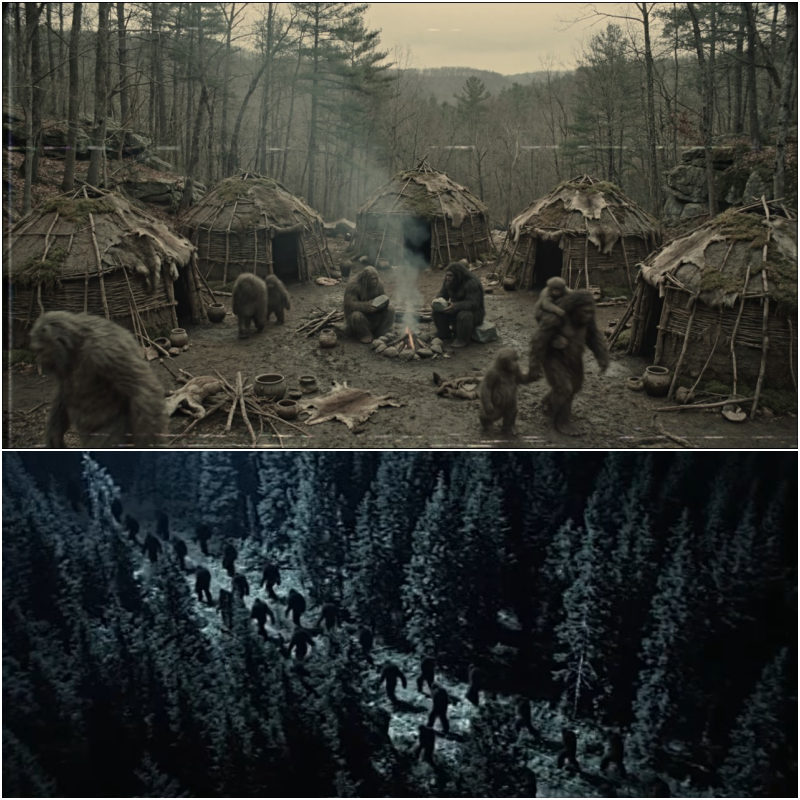
The U.S. Forest Service Has a Secret Bigfoot File… What It Reveals Is Worse Than Anyone Imagined
The Resonance of the Pines The manila envelope arrived on a Tuesday, looking as unremarkable as a utility bill. No return address, postmarked from a sorting facility in Denver, and…
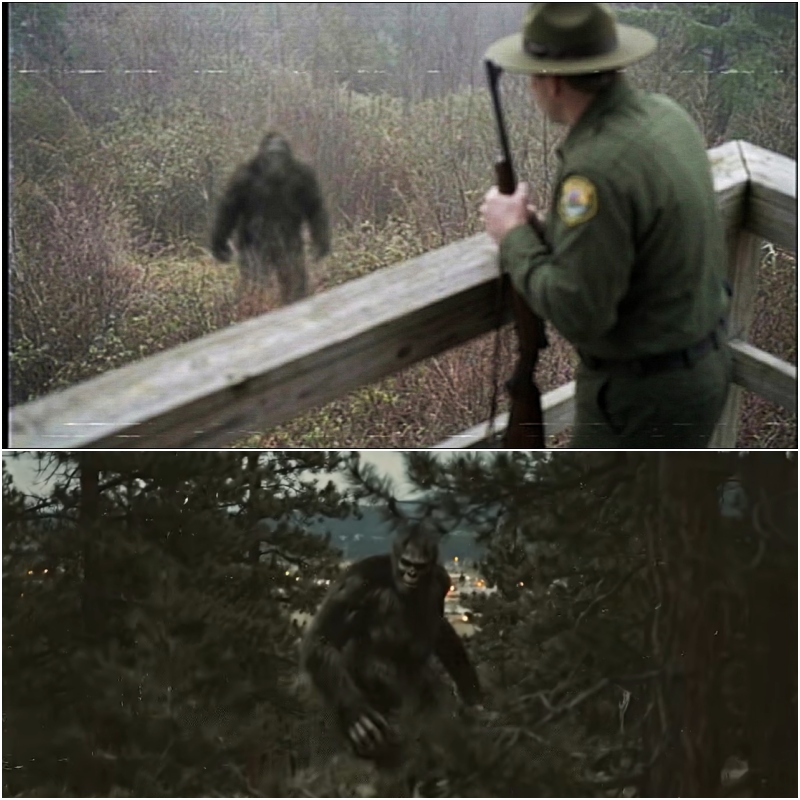
He Spent 20 Years Searching for Bigfoot… Then a Park Ranger Finally Revealed the Truth
The Ghost Map of the Olympics The progress bar was a thin, glowing sliver of blue light, crawling across the monitor like a glacier. 99.8%. Twenty years of my life,…
A Researcher Proved Bigfoot Exists… Then He Vanished Without a Trace
The canopy of the Olympic Peninsula doesn’t just shade the ground; it claims it. There is a specific stretch of old-growth forest out there, west of the Elwha River, where…
He Saw Something Devouring Bigfoot… If You Hear This Sound, Run
He Saw Something Devouring Bigfoot… If You Hear This Sound, Run The silence of the Great Smoky Mountains isn’t actually silent. To anyone who has spent more than a week…
End of content
No more pages to load