“DON’T TOUCH HER AGAIN” — THE MAID ATTACKED THE BILLIONAIRE’S FIANCÉE
“DON’T TOUCH HER AGAIN” — THE MAID ATTACKED THE BILLIONAIRE’S FIANCÉE
PART 2
The first bruise appeared three days later.
Ruth found it while helping Yun-ji change after breakfast. Purple marks in the shape of three fingers bloomed on the inside of the old woman’s upper arm.
Yun-ji pulled away too quickly.
“I bumped it.”
Ruth looked at her.
“Wheelchair arms don’t leave fingerprints.”
Yun-ji turned toward the window.
“I’m clumsy.”
“I bathed my grandmother for sixteen years. I know the difference between a bump and a grab.”
For a moment, the old professor’s face tightened, and Ruth thought she might speak.
Then the wall came down.
“It’s nothing.”
Nothing became a pattern.
On day fourteen, Ruth came to Yun-ji’s room after laundry duty and found the wheelchair facing the wall.
Not near the wall.
Facing it.
Six inches from white paint.
Yun-ji sat in silence, hands limp in her lap. The Han River glittered behind her, blocked by the chair’s cruel angle.
“How long have you been like this?” Ruth asked.
Yun-ji blinked slowly.
“I don’t know.”
“What time did Sarah leave?”
“Eleven.”
It was four in the afternoon.
Five hours.
Five hours facing a wall because someone had turned her chair and walked away.
Ruth gripped the handles and turned the chair back toward the window. Afternoon light struck Yun-ji’s face, and she flinched as if coming out of a cave.
“She said the light bothered my eyes,” Yun-ji whispered.
“Did it?”
“No.”
Ruth said nothing. She adjusted the blanket over Yun-ji’s knees, placed a book in her hands, and opened the curtain wider.
By the second page, Yun-ji’s hands had stopped shaking.
By the third, the professor’s voice returned.
Ruth stood by the window listening, jaw clenched so tightly it hurt.
On day seventeen, Ruth found Yun-ji’s glasses hidden in a bureau drawer.
For two days, Yun-ji had been sitting in a blur, unable to read, unable to see the river, unable to become herself. Ruth cleaned the lenses with her apron and placed them gently on Yun-ji’s face.
The room sharpened.
Yun-ji’s eyes focused on Ruth.
“Thank you,” she whispered.
That night, Ruth lay in her small room at the end of the service corridor and stared at the ceiling.
She did not cry for herself.
She cried for the woman down the hall who had forgotten how to cry for herself.
On day twenty, Ruth heard a yelp.
She opened Yun-ji’s door and found Sarah standing too close to the wheelchair.
Yun-ji’s hand lay red and swelling in her lap.
Sarah smiled.
“Oh, Ruth. I was just adjusting eomeonim’s blanket.”
But Ruth had seen enough.
That night, she wrapped Yun-ji’s fingers with ice and cloth.
“Why don’t you tell your son?”
Yun-ji’s eyes stayed on her injured hand.
“She’ll put me in a home.”
“Jae-hoon would not allow it.”
“She has been telling him for months that I’m declining. Confused. Forgetful. She brought a doctor. She is building a case.”
“You are the sharpest person I have ever met.”
Yun-ji’s mouth twisted.
“It does not matter what I am. It matters what she makes him believe.”
“She is not smarter than you,” Ruth said.
“She is crueler.”
“Cruelty is not intelligence.”
“No,” Yun-ji said quietly. “But it is effective.”
On day twenty-five, Ruth went to Jae-hoon.
His office had glass walls, a polished desk, and a view that made Seoul look like something he owned. He listened without expression as Ruth told him about the bruise, the glasses, the wheelchair, the threats, Sarah stepping on Yun-ji’s fingers.
Then he called Sarah.
Sarah arrived in tears.
Not messy tears.
Beautiful tears.
She showed him photos. Her volunteering with Yun-ji. Her holding flowers. Her smiling beside the wheelchair.
“I love your mother,” Sarah said, voice trembling. “Why would this woman lie?”
Jae-hoon went to Yun-ji’s room.
Ruth followed.
Sarah followed.
“Eomma,” Jae-hoon said, kneeling beside his mother. “Ruth says Sarah has been hurting you. Is it true?”
Yun-ji looked at Sarah.
Sarah stood behind Jae-hoon, face soft with concern, but her eyes were hard.
They said everything.
The home. The facility. Alone.
Yun-ji lowered her gaze.
“No,” she whispered. “The maid is mistaken. Sarah has been kind.”
Ruth closed her eyes.
Jae-hoon stood.
“My mother has spoken.”
“She is afraid,” Ruth said.
His jaw tightened.
“If you continue making unfounded accusations, I’ll reconsider your position.”
After he left, Sarah paused in the doorway.
The tears were gone.
The smile was gone.
What remained was cold.
Ruth sat beside Yun-ji.
“I’m sorry,” Yun-ji whispered.
“Don’t be sorry. Be angry.”
“I’m too tired to be angry.”
“Then I’ll be angry for both of us.”
Yun-ji reached for her with her uninjured hand.
“Don’t leave me alone with her.”
Ruth took her hand.
“I’m not going anywhere.”
The weeks passed.
Ruth stayed.
She braided hair. Read novels. Made jollof rice. Argued about literature. Held ice to bruises. Turned the chair toward the window. Found hidden glasses. Sat through long nights without speaking because sometimes presence was the only medicine left.
And slowly, Yun-ji returned.
Not all at once.
In pieces.
A sharper sentence.
A louder laugh.
A raised eyebrow.
A correction of Ruth’s Korean pronunciation so severe it made Mrs. Park hide a smile.
Jae-hoon noticed the laughter before he noticed the pain.
One afternoon, he passed his mother’s room and stopped.
Ruth was braiding Yun-ji’s hair. The two women were arguing about whether Adichie or Shin Kyung-sook was braver. Yun-ji was winning.
Jae-hoon stood in the hallway and listened for two minutes.
He had not heard his mother laugh like that in three years.
That evening, he found Ruth in the kitchen.
“My mother laughed today.”
“She laughs every day.”
“She didn’t used to.”
“Then she wasn’t given enough reasons.”
His face changed.
“What changed?”
Ruth turned off the stove.
“I braided her hair. I read to her. I made her jollof rice. I argued with her. I treated her like a human being, not a duty.”
“I treat her—”
“You ask, ‘How are you, Mother?’ She says, ‘Fine.’ That is not a conversation. That is an attendance record.”
No one spoke to Kang Jae-hoon like that.
CEOs didn’t. Board members didn’t. His lawyers didn’t.
But his mother’s caregiver did.
And because some part of him knew she was right, he did not dismiss her.
“What does she need?” he asked.
Ruth softened.
“Someone who sits. Someone who lets her win an argument. Someone who remembers she was Professor Kang before she was Madam Kang in a wheelchair.”
That night, Jae-hoon went to his mother’s room.
He stayed for an hour.
Not ten minutes.
Not a duty visit.
An hour.
Sarah noticed.
Of course she did.
A stronger Yun-ji was dangerous. A Yun-ji whose son listened was a threat.
So Sarah tightened her grip.
She fired the kind physiotherapist and replaced him with someone who reported to her. She convinced Mrs. Park to change Ruth’s shifts. She told Jae-hoon that Ruth was becoming “emotionally inappropriate.” She smiled more brightly in public and became colder in private.
Then came the Thursday that changed everything.
It was 4:07 p.m.
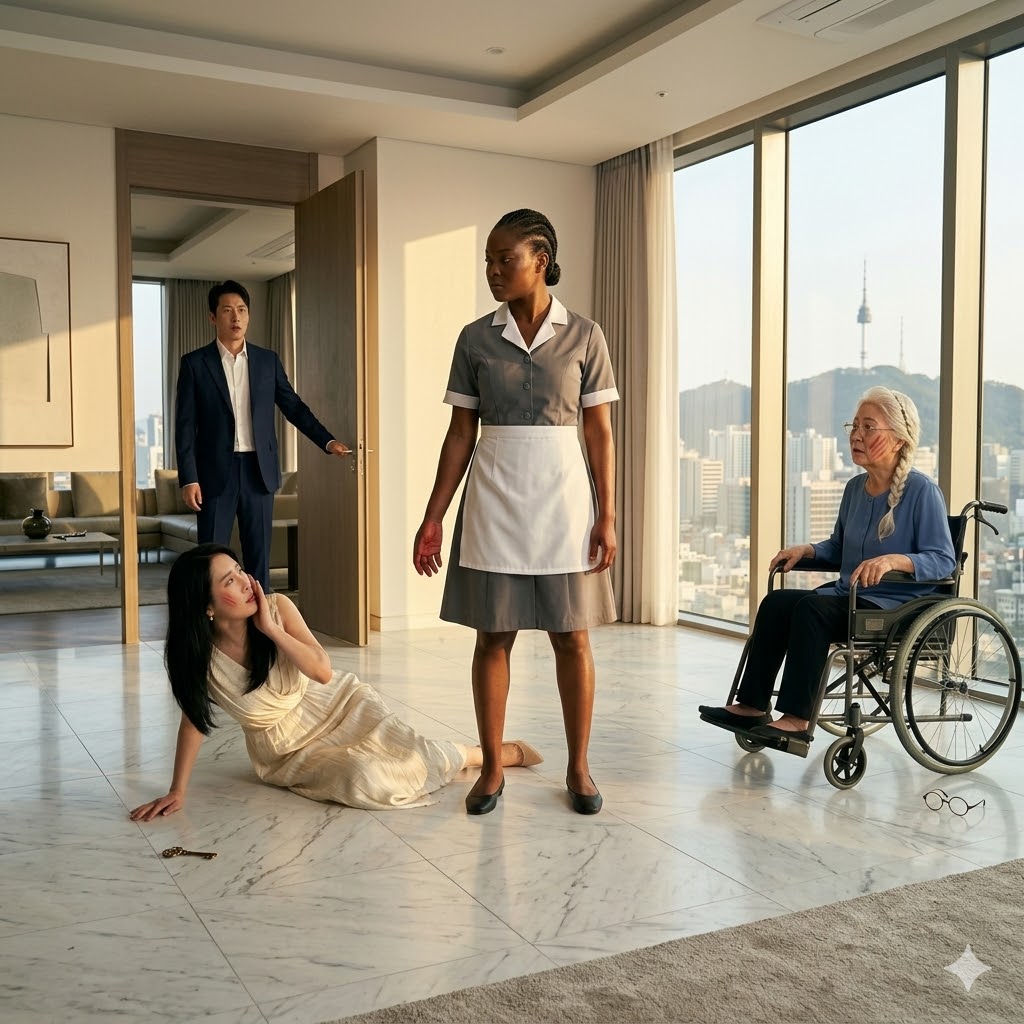
Ruth was coming down the east corridor with fresh towels when she heard Yun-ji’s voice.
Not small.
Not tired.
The professor’s voice.
“I will tell my son what you are,” Yun-ji said. “He sat with me last week. He listened. He is seeing me again. And when he sees me clearly, he will see you clearly.”
Sarah’s reply came flat.
“No, he won’t.”
Then the slap.
Sharp.
Skin against skin.
Ruth opened the door.
Sarah stood over the wheelchair, hand still raised, face empty with the blankness of someone completing a task.
Yun-ji’s head was turned from the impact.
Her left cheek was red.
Her glasses had flown across the marble and cracked on the floor.
For one second, Ruth saw only the glasses.
The thing Yun-ji needed to read.
To see.
To be herself.
Then something detonated inside her.
Not rage exactly.
Not bravery.
A reflex.
The same reflex that had made her lift her grandmother every morning. The same reflex that had made her stand between cruelty and weakness her whole life.
Ruth crossed the room in three steps.
Her right hand opened.
Not a fist.
An open palm.
A correction.
The way women in Owerri markets slapped disrespect away from their mothers.
Her hand met Sarah’s face.
Sarah fell sideways, struck the marble, and stared up in stunned disbelief.
Ruth stood between her and the wheelchair.
Her palm burned.
Her career was over.
Her visa was probably over.
She did not care.
“Don’t touch her again,” Ruth said.
Behind her, Yun-ji stared at Ruth’s back with an expression Ruth had never seen before.
Someone had fought for her.
Then the door opened.
Jae-hoon walked in.
And saw everything.
Sarah recovered first.
Of course she did.
“She hit me out of nowhere,” she cried. “I was visiting your mother, and she attacked me.”
Ruth said nothing.
She stood still.
Waiting.
Jae-hoon turned to his mother.
“Eomma. What happened?”
Yun-ji looked at Sarah.
The old fear came back for one second.
The home.
The facility.
Alone.
But today, something was different.
Today, a woman in a maid’s uniform had crossed a room for her.
Not for money.
Not for approval.
For her.
Yun-ji lifted her chin.
“She slapped me.”
Two words.
The quietest earthquake in Seoul.
“Sarah slapped me today,” Yun-ji continued, “and before today.”
Sarah’s face cracked.
“Eomeonim—”
“She pinches my arms. She stands on my fingers. She hides my glasses. She turns my chair to face the wall. She whispers that she will put me in a home and tell you I’m losing my mind.”
The room went silent.
Yun-ji’s voice grew stronger with every sentence.
“She brought a doctor. She wants me declared incompetent. Not dead. Erased. On paper.”
Jae-hoon stared at Sarah.
Sarah’s tears were still there, but the performance was failing.
“She’s confused, Jae-hoon. I told you—”
“My mother just described a pattern in precise chronological order,” he said. “That is not confusion. That is testimony.”
“Are you choosing a maid over me?”
Jae-hoon looked at Ruth.
Then at his mother’s red cheek.
“No,” he said. “I’m choosing my mother. I should have chosen her three years ago.”
Sarah left in silence, heels clicking against marble.
But she was not finished.
At 6:14 p.m., she called the police.
“My fiancé’s domestic worker assaulted me.”
Technically, it was true.
Ruth had hit her.
The law did not ask why first.
By nightfall, Ruth was questioned. Her visa was flagged. Immigration was notified. By morning, a story appeared online.
Billionaire’s African Maid Attacks Fiancée in Gangnam Penthouse
The comments were cruel.
Deport her.
Who does she think she is?
Violent immigrant.
Ruth read them in her small room.
Her hands did not shake.
Her grandmother had heard worse from people who thought disability was punishment from God.
Jae-hoon came to her door.
“I hired a lawyer.”
“Why?”
“Because you did what I should have done.”
“I hit your fiancée.”
“You hit the woman torturing my mother.”
“Korean courts may disagree.”
“Korean courts will see the evidence.”
“What evidence?”
Jae-hoon looked ashamed.
“I had cameras installed after the renovation. Every room except bathrooms and private sleeping areas. They back up to a private server. Sarah didn’t know.”
Ruth stared.
“You had cameras?”
“Yes.”
“And you never watched them?”
His face tightened.
“No.”
That night, Jae-hoon watched.
Six hours alone in his office.
He watched Sarah hide Yun-ji’s glasses in a drawer and leave her in a blur.
He watched Sarah turn the wheelchair toward the wall and walk away while the Han River shone behind his mother.
He watched Yun-ji try to move the chair herself, fail, and sit for hours facing white paint.
He watched Sarah stand on Yun-ji’s fingers, and the worst part was not the cruelty.
It was boredom.
Sarah looked bored by the old woman’s pain.
Routine.
Then he watched Ruth.
Ruth cleaning the glasses with her apron.
Ruth turning the chair back toward the light.
Ruth braiding hair with patient hands.
Ruth making jollof rice.
Ruth holding Yun-ji’s swollen fingers.
Ruth sitting beside her in darkness.
Two women in the same room across four months.
One destroying.
One rebuilding.
Finally, he watched the slap.
Sarah’s hand striking his mother.
The glasses flying.
Ruth crossing the room.
“Don’t touch her again.”
He watched it three times.
On the third, he noticed Ruth’s hand shaking afterward. Her whole body was shaking. She was terrified.
But she did not step away from the wheelchair.
She planted herself between Yun-ji and Sarah.
And stayed.
PART 3
The deeper investigation began because Jae-hoon could no longer pretend one evil was separate from another.
He opened the family trust documents that night.
Kang Yun-ji owned fifty-one percent of Kang Industries. If she died or was legally declared incompetent, the shares transferred to Jae-hoon.
Sarah had known that.
So had her family.
The next morning, Jae-hoon’s legal team found pre-filled competency forms, psychiatric assessment requests, and a letter to a private residential facility already drafted and waiting for a signature.
Then they found something worse.
Three years earlier, two weeks before the accident that killed Yun-ji’s husband and paralyzed her, Yoon & Associates—Sarah’s family firm—had initiated a preliminary trust transfer filing.
It was withdrawn ten days after the accident.
Jae-hoon stared at the document until the words blurred.
Two weeks before the accident, someone had tried to take control of the trust.
Then the accident happened.
His stepfather died.
His mother became paralyzed.
The filing was withdrawn because a court order was no longer needed. Yun-ji could be controlled by fear, isolation, and a wheelchair facing the wall.
At 3:47 a.m., Jae-hoon called a private investigator.
“The accident report,” he said. “Full file. Vehicle maintenance. Phone logs. Everything.”
“The case was closed.”
“Open it.”
Two days later, the report came back.
The brake inspection scheduled for the morning of the accident had been canceled by a phone call from a number registered to Yoon & Associates.
Jae-hoon sat with that truth for a full day.
His stepfather—gentle, funny, always fixing things himself even though he could pay anyone—had died because someone canceled a brake inspection.
Then he told Ruth.
She went very still.
“Your mother doesn’t know.”
“No.”
“She blamed herself.”
Jae-hoon closed his eyes.
“I know.”
“She told me once. She said they were running late. She said he wanted to call the mechanic, but she told him they didn’t have time.”
Jae-hoon’s voice broke.
“I know.”
“Then she needs to hear this from you,” Ruth said. “Not from lawyers. Not from reporters. From her son.”
They told Yun-ji by the window.
The Han River moved beyond the glass. Her new glasses rested on her face. Ruth had found an identical pair within a day because she refused to let Sarah’s final violence decide what Yun-ji could see.
Jae-hoon knelt beside the wheelchair.
“Eomma,” he said, voice uneven. “It wasn’t your fault.”
Yun-ji listened as he explained.
The filing.
The canceled inspection.
The phone number.
The timing.
At first, she said nothing.
Then she whispered, “The brakes.”
“Yes.”
“He said they felt wrong that morning.”
“I know.”
“He almost called the mechanic.”
Jae-hoon took her hand.
“It wasn’t your fault.”
Yun-ji looked out at the river.
“For three years,” she said, “I have carried that morning inside my bones.”
Ruth stood behind her, silent.
“It wasn’t your fault,” Jae-hoon said again.
Yun-ji did not cry.
Something harder happened.
She straightened.
The professor returned.
“I want her to know that I know,” Yun-ji said. “And I want the world to know. All of it.”
The press conference was held three days later.
Reporters arrived expecting a statement about a violent domestic worker and a billionaire’s broken engagement.
What they got was the truth.
Yun-ji insisted on being there, center stage, in her wheelchair, wearing fresh braids and new glasses. Ruth stood off to the side in her gray uniform, hands folded, face calm though her heart was pounding.
Jae-hoon stepped to the microphone.
“Three days ago, my domestic worker struck my fiancée. The media reported it as an unprovoked assault. Today, I will show you what actually happened.”
The screen behind him lit up.
Twelve minutes.
Four months of footage.
Sarah hiding glasses.
Sarah turning the wheelchair toward the wall.
Sarah standing on Yun-ji’s fingers.
The room gasped.
Then the whispered threats, subtitled for every camera.
He’ll put you in a home.
He’ll believe me.
You’ll die alone.
Then Ruth appeared.
Ruth cleaning glasses.
Ruth turning the wheelchair toward light.
Ruth braiding hair.
Ruth making jollof rice.
Ruth sitting beside Yun-ji in the dark.
Then the final scene.
Sarah’s slap.
Glasses flying.
Ruth crossing the room.
The open palm.
“Don’t touch her again.”
The press room exploded with camera flashes.
Jae-hoon raised his hand.
“There is more.”
The trust documents appeared.
The preliminary filing.
The competency forms.
The residential facility letter.
The canceled brake inspection.
The phone number.
“The car accident that killed my stepfather and paralyzed my mother is being reinvestigated,” Jae-hoon said. “The woman who assaulted my mother, tried to have her declared incompetent, and whose family firm initiated trust transfer documents before a fatal accident is Yoon Sarah.”
Then Yun-ji moved her wheelchair forward.
Jae-hoon stepped back.
“My name is Kang Yun-ji,” she said.
Her voice was clear.
“I taught Korean literature at Yonsei University for thirty years. I am not confused. I am not declining. I am a woman in a wheelchair who was told to be silent or lose everything.”
The room quieted.
“Today, I choose to speak because a woman from Nigeria, a caregiver in my son’s house, chose to fight for me when I could not fight for myself.”
She looked toward Ruth.
“Ruth Okonkwo hit my abuser. And if I had the legs to stand, I would have done it myself.”
The story changed before sunset.
Sarah’s brand collapsed.
Her social media accounts disappeared.
Police opened investigations into elder abuse, fraud, and potential manslaughter. Yoon & Associates lost clients overnight. Doctors connected to the competency scheme were questioned.
Ruth’s charges were dropped that afternoon.
The headlines turned.
Caregiver Saves Korean Professor From Years of Abuse
Billionaire’s Fiancée Investigated After Penthouse Footage Reveals Elder Abuse
Ruth Okonkwo: The Maid Who Refused to Look Away
But Ruth did not feel like a hero.
She felt tired.
Three weeks later, morning light filled Yun-ji’s room.
The wheelchair faced the garden now. Always the garden. Never the wall.
A new reading lamp stood beside the chair. The bookshelf had been reorganized. The cracked glasses were kept in a small box, not as pain, but as proof.
Ruth braided Yun-ji’s hair in the same small, careful pattern.
“You’re staying,” Yun-ji said.
It was not a question.
“I’m staying.”
“Not as a maid.”
Ruth smiled.
“I’m not sure what else I am.”
“My companion. My reader. My hair braider. My jollof rice chef. My friend. If that is not too sentimental for a woman from Owerri.”
“In Owerri, we are extremely sentimental,” Ruth said. “We just hide it behind insults.”
Jae-hoon had offered Ruth a formal position: full-time caregiver and companion to Madam Kang, with proper salary, full benefits, legal protection, and visa sponsorship.
Ruth accepted on one condition.
“I answer to your mother,” she told him. “Not to you.”
Jae-hoon had nodded.
“That seems to be how everything works in this house now.”
“Smart man,” Yun-ji said. “Slow learner, but smart.”
Tuesday returned.
Chef Lim surrendered the kitchen every Tuesday without protest. It became an unspoken treaty. On Tuesdays, the penthouse belonged to jollof rice.
That evening, Ruth stood at the stove, stirring tomatoes, peppers, onions, and spices while steam rose into the corridor.
Jae-hoon entered and sat at the counter.
“You changed everything in this house,” he said.
Ruth did not look up.
“I made rice and braided hair. Your mother did the rest.”
“You hit my fiancée.”
“Ex-fiancée.”
“You hit my ex-fiancée for my mother.”
“I hesitated for four months,” Ruth said. “That was long enough.”
He watched her stir the pot.
“I don’t know how to do this.”
“Do what?”
“Feel something for someone who works in my house without making it wrong.”
Ruth finally looked at him.
“I don’t work in your house. I work for your mother. There is a difference.”
“Is there?”
“Your mother thinks so.”
He almost smiled.
“What else does my mother think?”
“She said last week, ‘My son looks at you like he is solving a problem he hopes he never solves.’”
Jae-hoon blinked.
“She said that?”
“She is a professor. She notices everything.”
He reached across the counter.
Not for Ruth’s hand.
For the spoon.
He took a bite straight from the pot.
Ruth stared.
“You did not just eat from the pot.”
“I’m learning.”
“That is not learning. That is stealing.”
“Then teach me the correct way.”
She looked at him.
He looked at her.
The marble counter stood between them, the same counter where she had once told him he treated his mother like a duty. The same kitchen where he first heard laughter returning to the east corridor.
But the distance between them was different now.
Smaller.
Chosen.
“Tuesday,” Ruth said.
“What about Tuesday?”
“Come back Tuesday. Sit with your mother for an hour first. Then come here. I’ll make extra.”
“Is that a date?”
“It’s jollof rice. Don’t ruin it.”
From down the corridor came Yun-ji’s clear voice.
“I can hear both of you. And yes, it is a date.”
Ruth laughed.
Jae-hoon almost did.
The sound of an old woman’s voice carrying through the penthouse was the sound of a house becoming a home.
Months later, the east corridor no longer felt like a place where people whispered.
Yun-ji’s door stayed open. Books were everywhere. The reading lamp was always on. The wheelchair stayed in the light.
Sometimes Jae-hoon sat with his mother for hours. At first, he did not know what to say. He brought business updates, medical questions, practical matters.
Yun-ji corrected him.
“Talk to me like I am your mother, not a board member.”
So he tried.
Badly at first.
Then better.
He told her about his childhood memories. His grief after the accident. His shame. His failure to see her. She told him the truth without softening it.
“You loved me from a distance,” she said. “Distance is easier than care.”
“I know.”
“Do better.”
“I am trying.”
“Good. Trying is a beginning, not a medal.”
Ruth loved that.
Yun-ji’s sharpness had returned fully.
Sometimes Ruth and Yun-ji argued so loudly about books that Mrs. Park would come in pretending to adjust the curtains just to listen.
Sometimes Yun-ji demanded jollof rice on days that were not Tuesday.
Ruth refused.
“We need rules.”
“I survived elder abuse. I deserve extra jollof.”
“You deserve justice, health, and good lighting. Not extra jollof.”
“You are cruel.”
“You are dramatic.”
“You are Nigerian.”
“You are Korean.”
“Both accurate. Neither relevant.”
Then they would laugh.
The framed photos on the windowsill changed too.
One showed Yun-ji and her late husband, both younger, both smiling, his hand resting over hers.
Beside it stood a newer photo, taken by Jae-hoon without warning. Ruth and Yun-ji sat by the window mid-argument, both pointing at the same book, both convinced they were right.
Neither woman looked at the camera.
It was Yun-ji’s favorite picture.
One afternoon, Yun-ji looked at it and said, “My husband would have liked you.”
Ruth’s hands paused over the braid she was making.
“Because of my cooking?”
“No. Because you are stubborn in a useful way.”
“That is the nicest insult I have ever received.”
“It was a compliment.”
“In your accent, they sound similar.”
Yun-ji laughed.
Then, more quietly, she said, “For three years, I thought I had become only a body people moved from chair to bed and back again.”
Ruth said nothing.
“You reminded me I was still a mind. A voice. A woman.”
Ruth swallowed.
“My grandmother used to say the body can fail without the soul agreeing.”
“Wise woman.”
“She was terrifying.”
“Wise women often are.”
That evening, Ruth stood alone in the corridor after Yun-ji fell asleep.
She thought about the day she had arrived with one suitcase. She had come for work, money, legal papers, survival.
She had found a professor in a wheelchair being erased inside a room full of expensive silence.
She had braided hair.
Cooked rice.
Read novels.
Argued about literature.
Turned a chair toward the light.
And when she saw broken glasses on marble and a handprint on an old woman’s face, she moved.
Not because violence was right.
Not because she wanted to hurt.
But because there are moments when the body acts before fear can negotiate.
Her grandmother had told her to use her strong hands to hold people up.
That day, one strong hand had become a wall.
A warning.
A line.
Do not touch her again.
The world had seen a maid strike a rich woman.
But Ruth knew what had really happened.
A woman who had been made small was witnessed.
A son who had been asleep woke up.
A house that had been controlled by fear learned the sound of truth.
And a friendship built over books, braids, and jollof rice became strong enough to bring an empire of lies down to its knees.
One Tuesday night, after dinner, Yun-ji insisted on reading aloud.
Korean poetry.
Her voice filled the room, commanding and beautiful. Ruth did not understand every word, but she understood the sound.
Strong.
Unafraid.
Alive.
Jae-hoon sat near the window, listening. Chef Lim hovered by the door, pretending not to. Mrs. Park wiped the same table twice.
Yun-ji finished the poem and closed the book.
“What does it mean?” Ruth asked.
Yun-ji adjusted her glasses.
“It means grief is a house. But so is love. We must choose where we live.”
Ruth smiled.
“I like that.”
“You should. It is correct.”
“Modest as always.”
“Modesty is overrated.”
Jae-hoon laughed then, fully this time.
Yun-ji looked pleased with herself.
Ruth looked around the room.
The garden outside.
The books.
The food.
The laughter.
The woman in the wheelchair who had not laughed in three years.
The son learning to sit.
The staff no longer whispering like the walls might punish them.
The house had not become perfect.
No home does.
But it had become honest.
And honesty lets people breathe.
Later, Ruth stood by the window with Yun-ji.
The Han River shone beneath the city lights.
“Do you ever regret it?” Yun-ji asked.
“The slap?”
“Yes.”
Ruth thought about it.
“I regret that it had to happen.”
“But not that you did it.”
“No.”
Yun-ji nodded.
“Good.”
Ruth looked at her.
“You are very dangerous for an old professor.”
Yun-ji smiled.
“I was dangerous before the wheelchair. People simply forgot.”
“I didn’t.”
“No,” Yun-ji said softly. “You didn’t.”
For a moment, they sat in silence.
Not the old silence.
Not the silence of fear.
This silence was comfortable. Full. Chosen.
Then Yun-ji reached for Ruth’s hand.
“You have strong hands,” she said.
Ruth’s breath caught.
“My grandmother used to say that.”
“She was right.”
Ruth squeezed her hand gently.
“I think she would have liked you.”
Yun-ji’s eyes twinkled.
“Of course. I am delightful.”
“You are impossible.”
“Both can be true.”
Ruth laughed, and Yun-ji laughed with her.
Down the corridor, Jae-hoon heard them and smiled.
Chef Lim lifted the lid on the pot of leftover jollof rice and shook his head like a man defeated by spice and love.
Mrs. Park walked past the open door and paused just long enough to hear the professor’s voice rise again, strong and alive.
And somewhere beyond the city lights, beyond marble floors and broken glasses, beyond visas and scandals and courtrooms, Ruth imagined her grandmother watching.
Not applauding.
Her grandmother was not that sentimental.
She would simply nod and say, “Good. Now keep going.”
So Ruth did.
She stayed.
Dangerous.
Loved.
And every Tuesday, when the smell of jollof rice filled the penthouse and Yun-ji’s laughter carried down the east corridor, everyone in that house remembered the lesson Ruth Okonkwo had brought with one suitcase and two strong hands:
Some people do not need saving because they are weak.
They need defending because the world has mistaken their silence for permission.
And sometimes, the person hired to serve becomes the one brave enough to stand up and say:
No more.
Not her.
Not again.
News
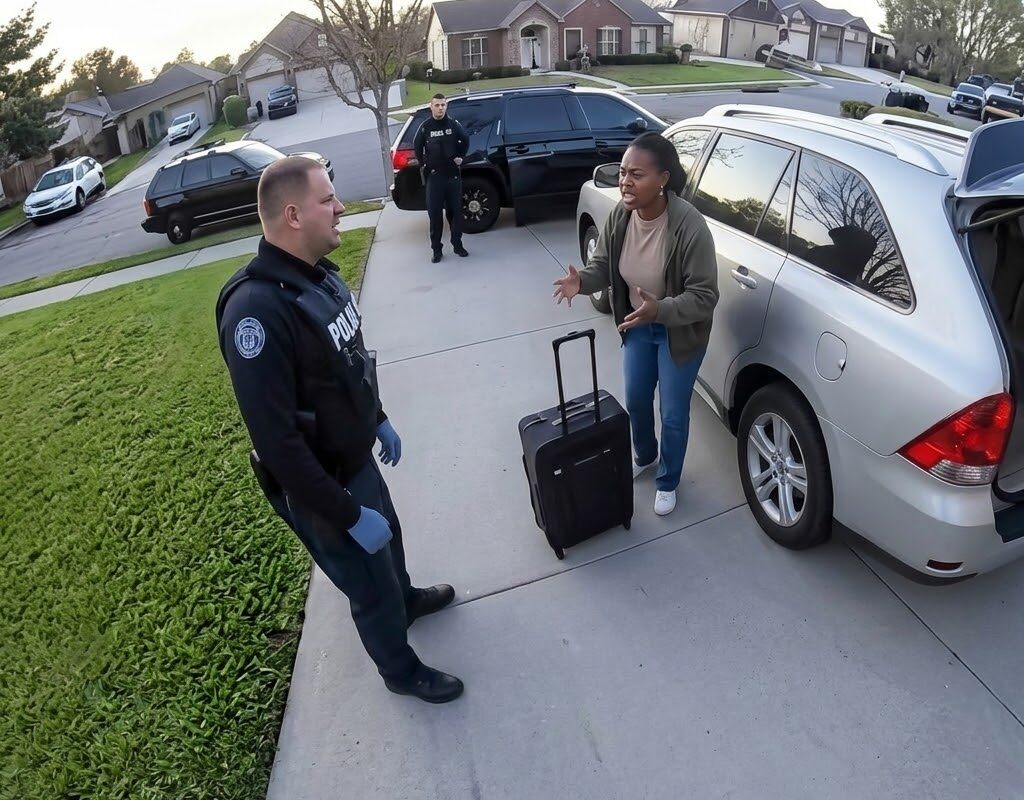
ICE AGENTS CAREERS DESTROYED AFTER ARREST OF BLACK FEDERAL JUDGE IN HER DRIVEWAY WITHOUT A WARRANT
ICE AGENTS CAREERS DESTROYED AFTER ARREST OF BLACK FEDERAL JUDGE IN HER DRIVEWAY WITHOUT A WARRANT “That’s what you all say,” he snapped. “Turn around before I make you.” She…
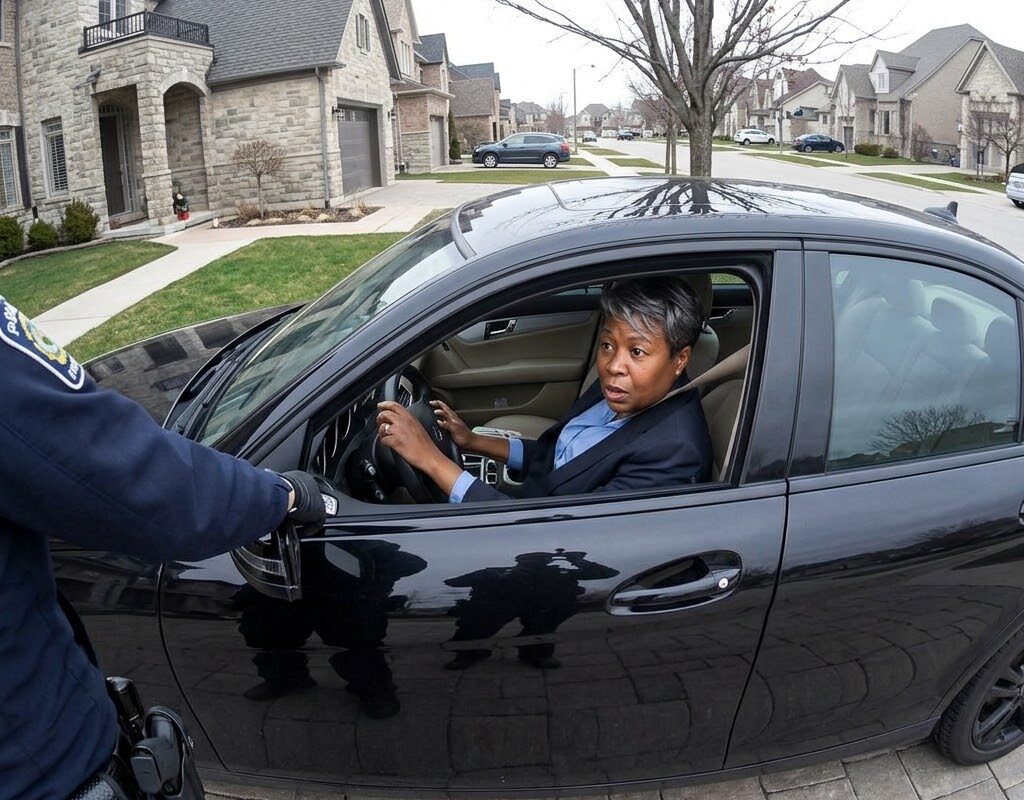
RACIST COP ARRESTS BLACK FEDERAL JUDGE FOR DRIVING A “STOLEN” CAR — JURY AWARDS HER $910K
RACIST COP ARRESTS BLACK FEDERAL JUDGE FOR DRIVING A “STOLEN” CAR — JURY AWARDS HER $910K It was 2:15 on a quiet Tuesday afternoon when Judge Patricia Williams pulled into…

RACIST OFFICER ARRESTS BLACK SEAL EVACUATED FROM IRAN AT AIRPORT — PENTAGON STEPS IN, FACES 20 YEARS
RACIST OFFICER ARRESTS BLACK SEAL EVACUATED FROM IRAN AT AIRPORT — PENTAGON STEPS IN, FACES 20 YEARS He was thirty-eight years old, an active-duty Navy SEAL with more than sixteen…

ICE AGENTS CAREERS OBLITERATED AFTER ARREST OF BLACK NAVY SEAL IN HIS DRIVEWAY WITHOUT A WARRANT
ICE AGENTS CAREERS OBLITERATED AFTER ARREST OF BLACK NAVY SEAL IN HIS DRIVEWAY WITHOUT A WARRANT The sun was already warm. Two houses down, a retired couple trimmed hedges. Across…

OFFICER ARRESTED BLACK NAVY SEAL IN UNIFORM AT GAS STATION — PENTAGON STEPS IN, 58 YEARS PRISON
OFFICER ARRESTED BLACK NAVY SEAL IN UNIFORM AT GAS STATION — PENTAGON STEPS IN, 58 YEARS PRISON Darius had been shot at in Iraq. He had carried wounded men through…
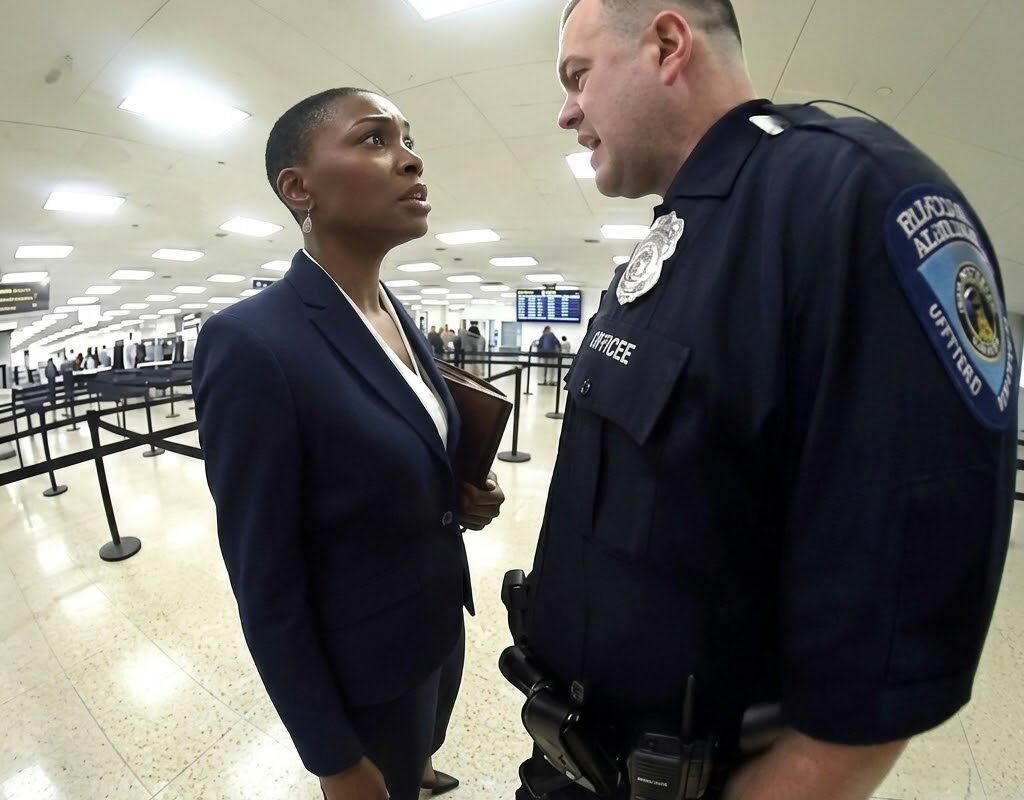
COP ASSAULTS BLACK FEDERAL JUDGE AT AIRPORT — SECURITY CAMERA EXPOSES HIM
COP ASSAULTS BLACK FEDERAL JUDGE AT AIRPORT — SECURITY CAMERA EXPOSES HIM What he did not know was that the woman in front of him was not just another traveler…
End of content
No more pages to load